 EN
 IT Italiano
 ES Español
 FR Français
 DE Deutsch
Description
What it is
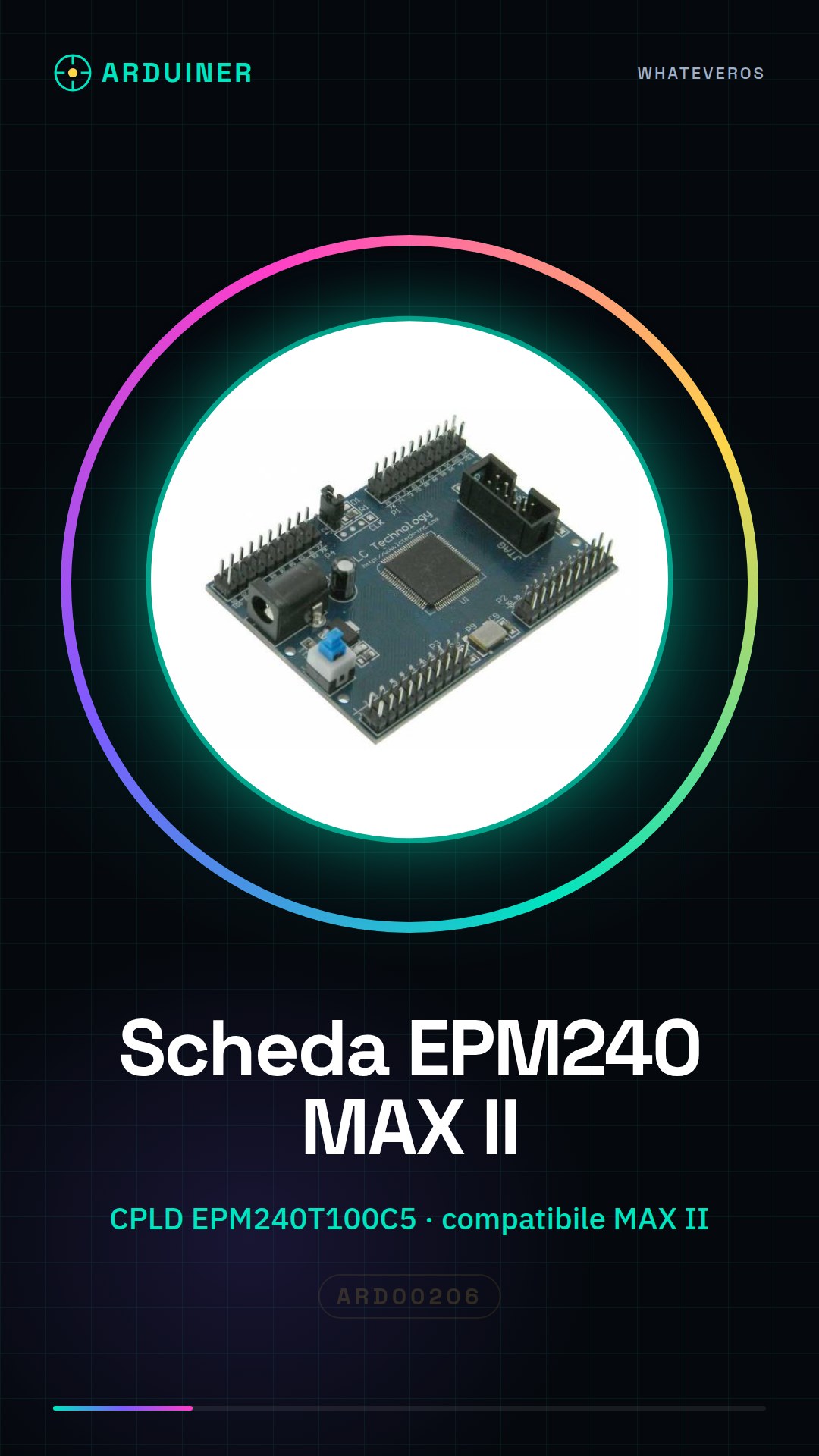
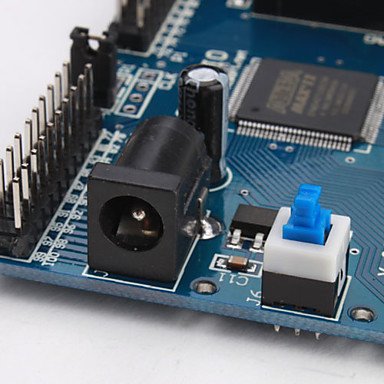
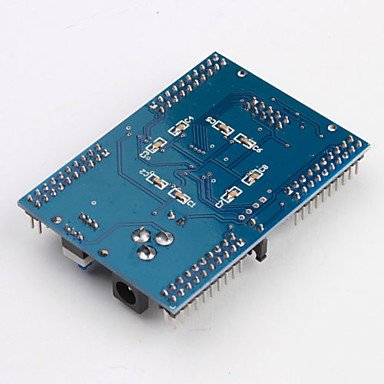
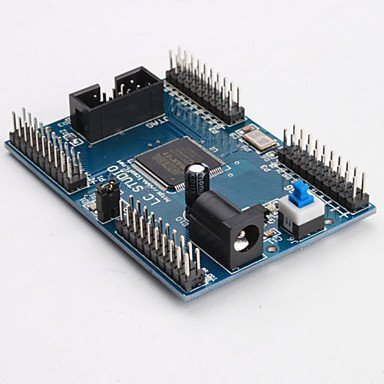
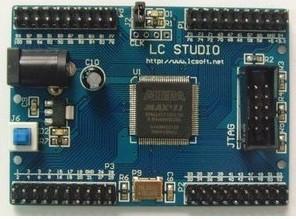
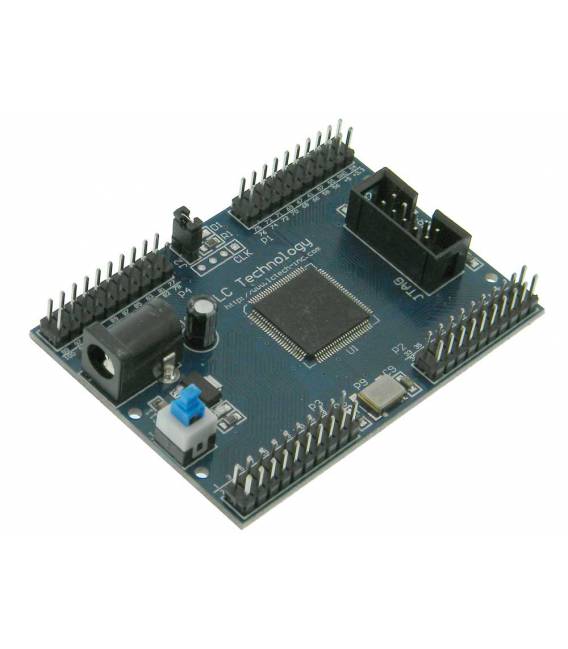
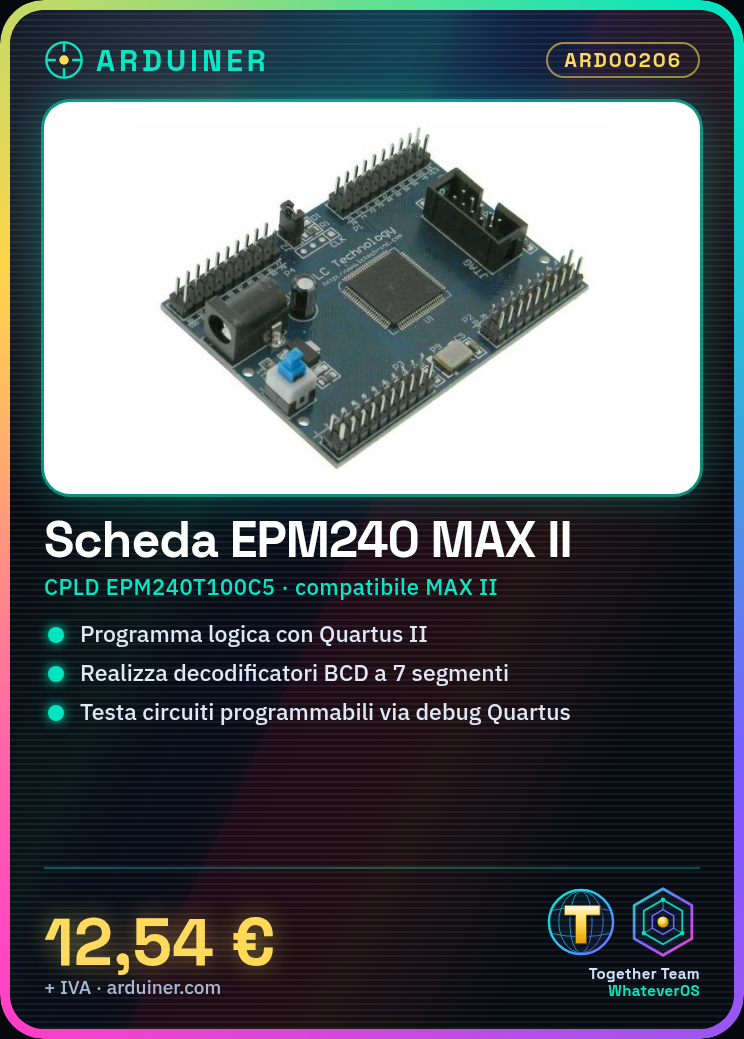
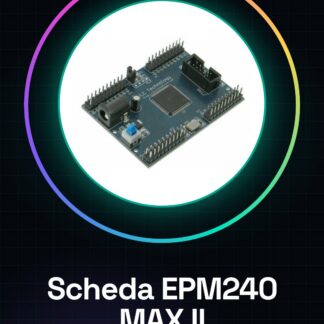
The Experiment Board CPLD EPM240 Altera MAX II is a development board dedicated to the CPLD EPM240T100C5 by Altera. It allows for experimenting and developing advanced electronic projects by leveraging the capabilities of a programmable logic circuit.
Features
- Board Chip EPM240T100C5
- Compatible with Altera MAX II
What it is for
The board is ideal for makers and students who wish to learn how to work with programmable logic circuits. It can be used for projects such as the creation of 7-segment BCD decoders, allowing for understanding the mapping of complex logic into programmable logic circuits.
Tutorial: How to use Experiment Board CPLD EPM240 Altera MAX II
The EPM240 Altera MAX II CPLD Experiment Board is ideal for makers and students who want to start working with programmable logic circuits. This board allows you to develop advanced digital processing projects without having to build a fixed circuit.
What you need
- Computer with USB connector
- USB A-Micro B cable
- Quartus II or equivalent programming software
Steps
- Install the Quartus II development software on your computer.
- Connect the CPLD board to your computer via USB cable.
- Open Quartus II and create a new project.
- Check the board specifications in the datasheet to properly set up the project.
- Write or load a VHDL/Verilog script that defines the desired logic.
- Compile and download the code to the CPLD.
- Test the functionality of the programmed circuit with debugging tools available in the software.
Mini project
[‘Design a simple 7-segment BCD decoder. This project will help you understand how to map complex logic into programmable logic circuits.’]
Common mistakes
- Do not check the board specifications before writing the code.
- Omit debugging steps during project compilation.
- Use incompatible software for programming the board.
Recommended accessories
- USB A-Micro B cable
- Quartus II software
Frequently asked questions
What is the advantage of using this board compared to an FPGA?
CPLDs offer a faster and less complex implementation for small to medium-sized projects.
Can I use other languages besides VHDL/Verilog?
Yes, but check compatibility with the development software you are using.
Reviews
There are no reviews yet.