 EN
 IT Italiano
 ES Español
 FR Français
 DE Deutsch
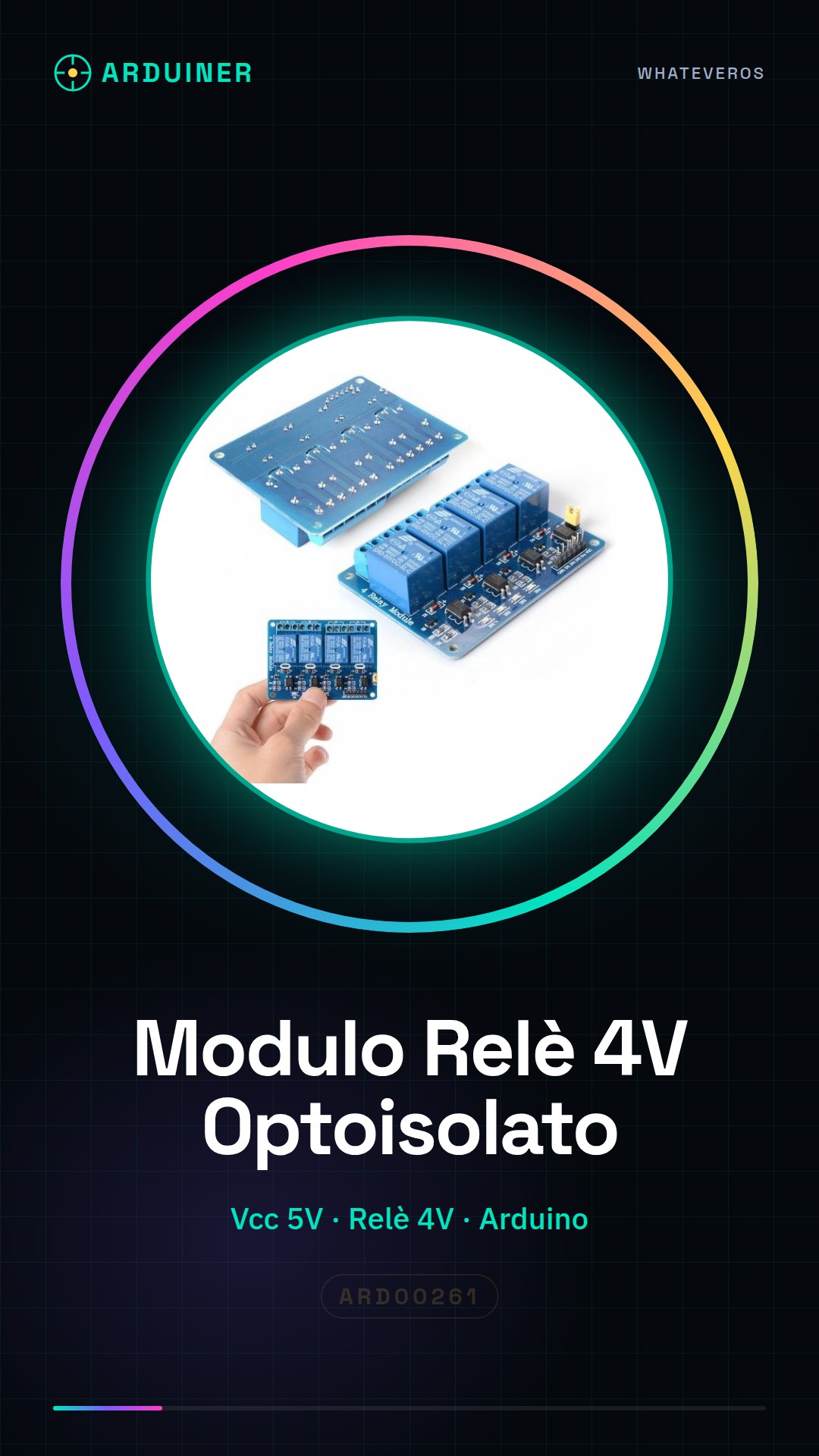
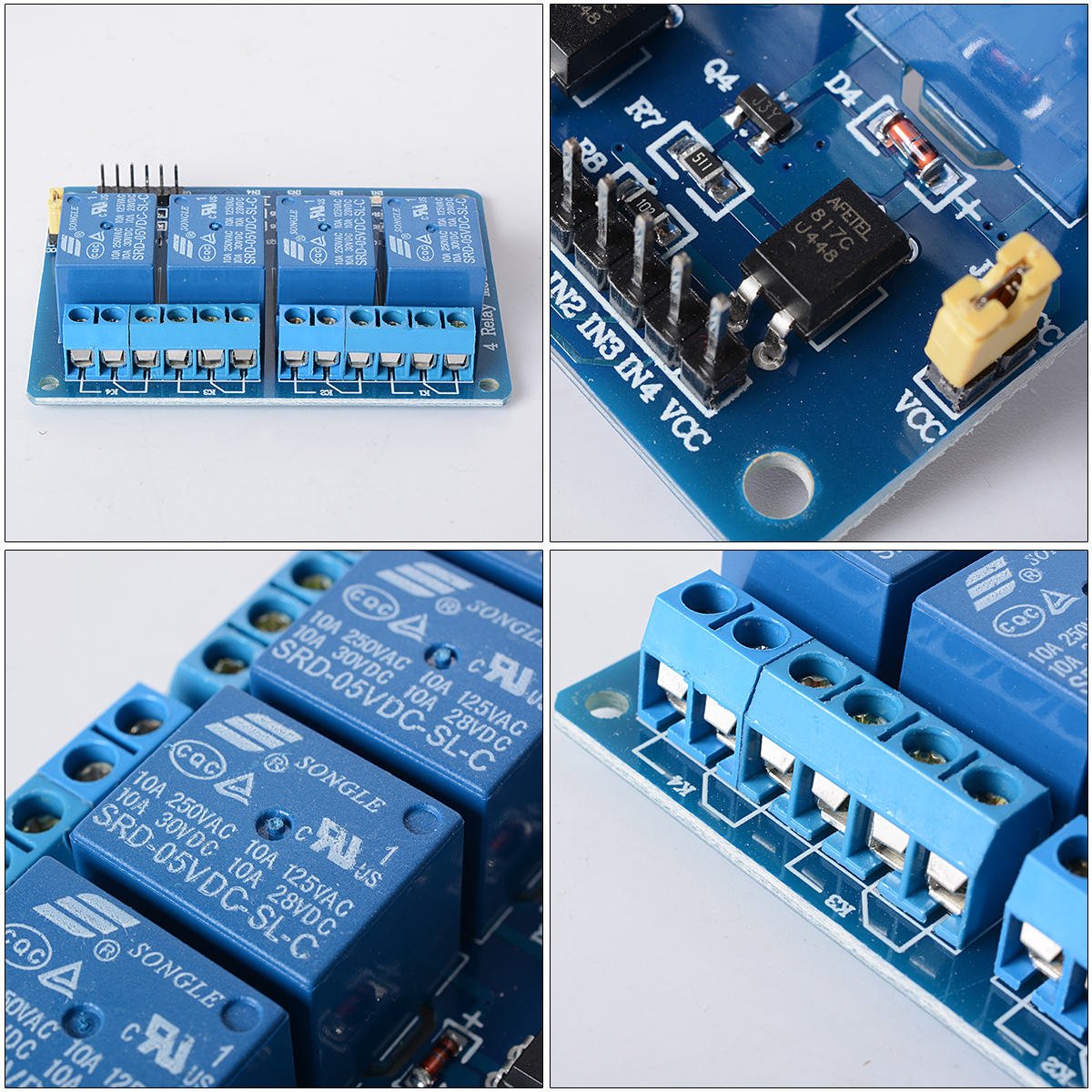
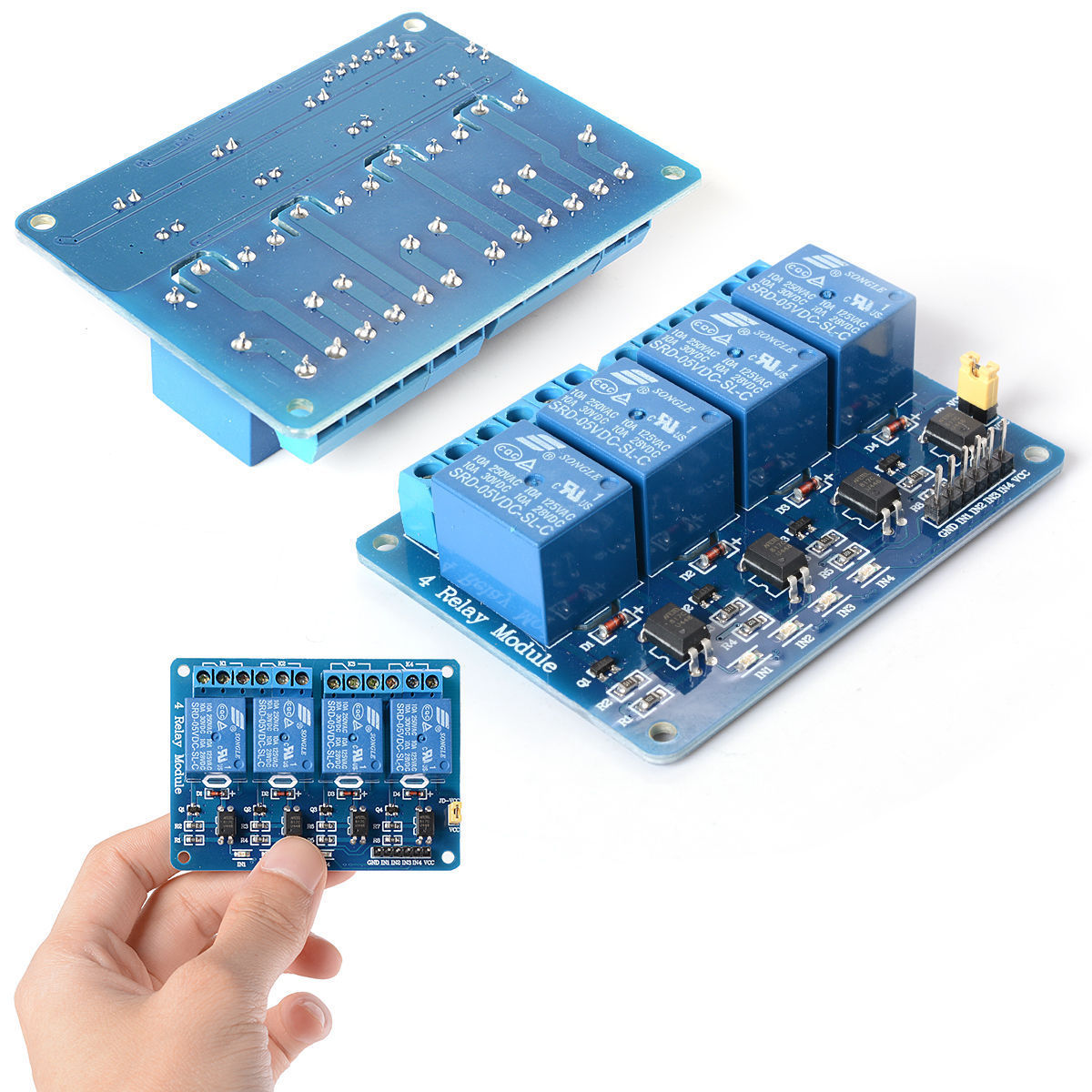
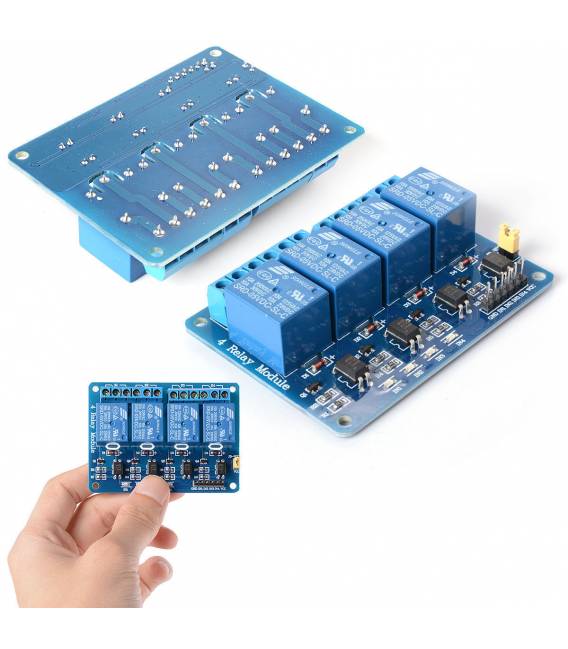
Description
What it is
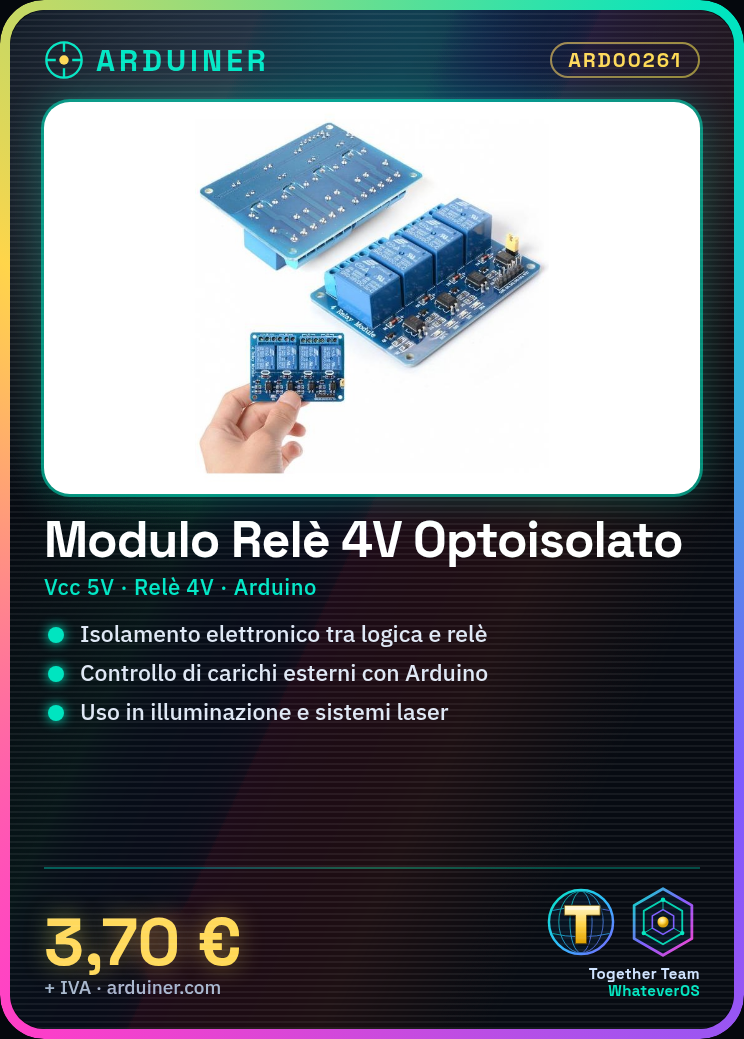
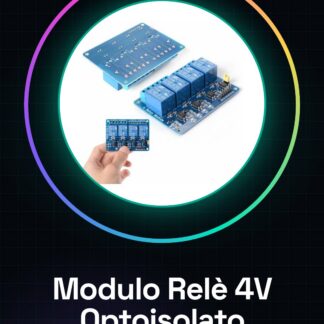
The 4V optoisolated 5V relay module is a device that allows external electrical devices to be controlled from an Arduino board. This module provides electronic isolation between the Arduino logic and the relay circuit, making it safe for projects that require the activation of electrical loads.
Features
- Works with Arduino, PIC, ARM, AVR and DSP
- Operational Vcc: 5V
- Relay capacity: 4V (check the datasheet)
What it is for
Relay modules are useful for Arduino-controlled lighting projects, changing the light intensity based on variables such as temperature. Additionally, they can be integrated with laser systems and other applications that require the control of external electrical devices.
Tutorial: How to use 4V Optoisolated Relay Module
Learn to control external devices from Arduino. For beginners and makers.
What you need
- Arduino Uno
- Relay Module ARD00261
- USB cable
- Connection to PC
Steps
- Connect the module to the 5V pin of Arduino
- Connect GND of the module to GND of Arduino
- Connect IN1, IN2, IN3 and IN4 to the digital pins of Arduino
- Download and upload the example sketch
- Check that the relays are activated/deactivated correctly
Example code
void setup() { pinMode(2, OUTPUT); } void loop() { digitalWrite(2,HIGH); delay(1000); digitalWrite(2,LOW); delay(1000); }Mini project
Create an Arduino-controlled lighting system. Change the light intensity based on temperature.
Common mistakes
- Connect the module without insulation
- Use voltage higher than 5V
- Do not check the relay specifications
- Forget to upload the sketch
Recommended accessories
- Light sensors
- Pull-up resistors
- Relays for specialized applications
- MOSFET driver
Frequently asked questions
The module refuses to work.
Check all connections and the supplied voltage.
Which digital pins should I use?
You can choose any available digital pin on Arduino.
Reviews
There are no reviews yet.