 EN
 IT Italiano
 ES Español
 FR Français
 DE Deutsch
Description
What it is
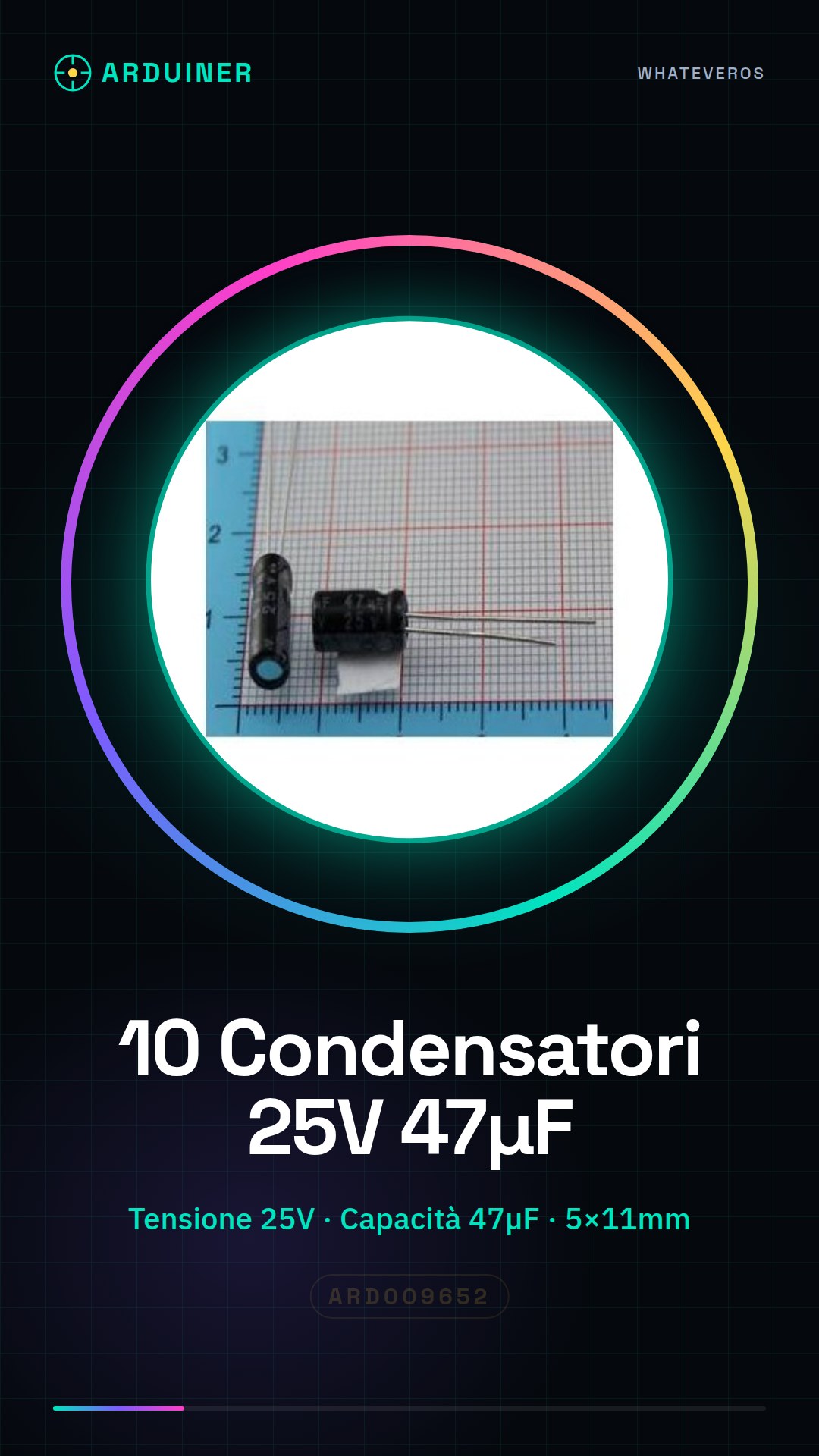
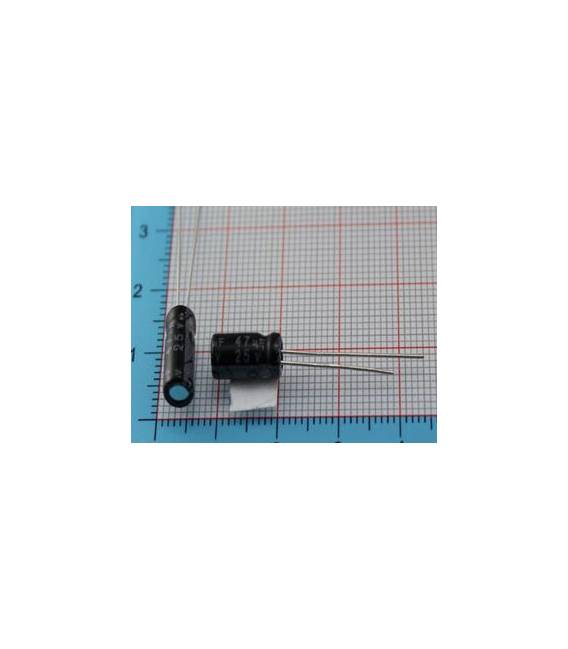
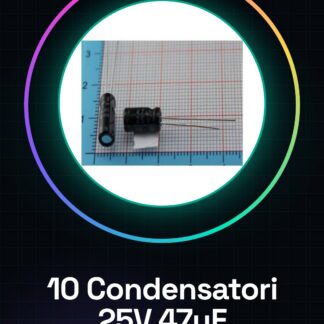
Electrolytic capacitors are fundamental components for managing electrical currents and filtering voltages in electronic projects, such as those based on Arduino. This specific item includes 10 pieces of electrolytic capacitors with a capacitance of 47 microfarads (µF) and a maximum voltage rating of 25 volts.
Features
- Maximum Voltage: 25V
- Capacitance: 47 µF
- Physical Dimensions: 5*11 (check the datasheet)
What it is for
Electrolytic capacitors are used to create simple passive filters, filtering the square wave generated by a signal generator when connected in series with a resistor. They are particularly suitable for Arduino projects that require the management of electrical currents or the filtering of voltages.
Tutorial: How to use Electrolytic Capacitor 25V 47UF
This electrolytic capacitor is ideal for Arduino projects that require the management of electrical currents or the filtering of voltages. It is particularly useful for beginners who are learning to work with circuits.
What you need
- Passive filtering
- Damping square waves
- Voltage regulation
Steps
- Check the polarity of the capacitor (positive and negative).
- Connect the positive terminal to the power supply circuit.
- Connect the negative terminal to the ground or earth of the circuit.
- If necessary, connect a second capacitor in parallel to increase the total capacitance.
- Ensure that the voltage and capacitance values are appropriate for the project.
Mini project
Create a simple passive filter with this capacitor. Connect it in series with a resistor to filter the square waves generated by a signal generator.
Common mistakes
- Incorrect polarity connection
- Using capacitance that is too high or too low for the project’s needs
- Ignoring voltage limits
Recommended accessories
- Variable resistors
- Signal generator
- Digital multimeter
- Prototype board
Frequently asked questions
What is the maximum capacitance I can use?
Check the datasheet for the maximum allowed capacitance.
Can it be used in variable voltage circuits?
Yes, but make sure the voltage value does not exceed 25V.

Reviews
There are no reviews yet.