 EN
 IT Italiano
 ES Español
 FR Français
 DE Deutsch
Description
What it is
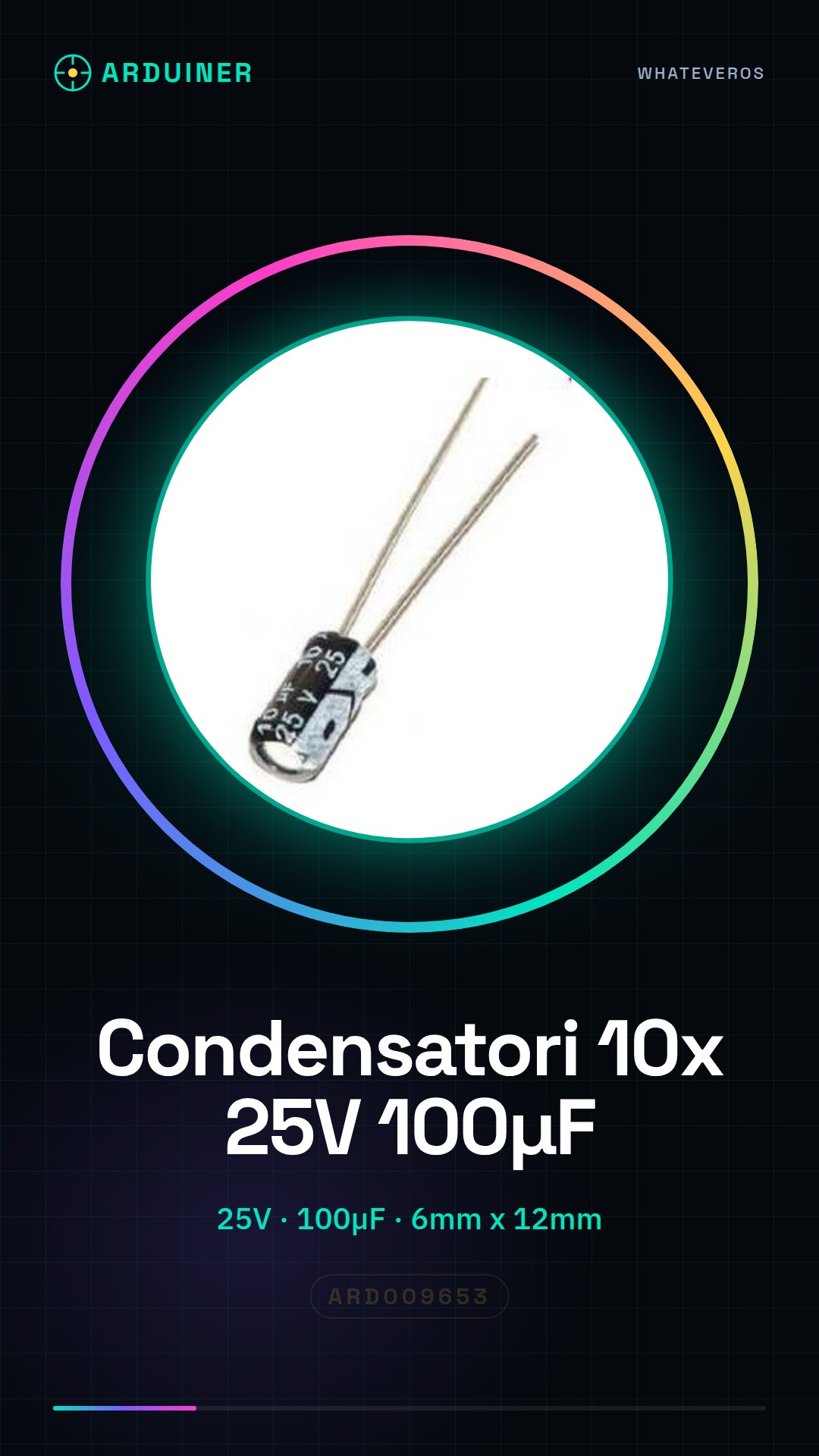
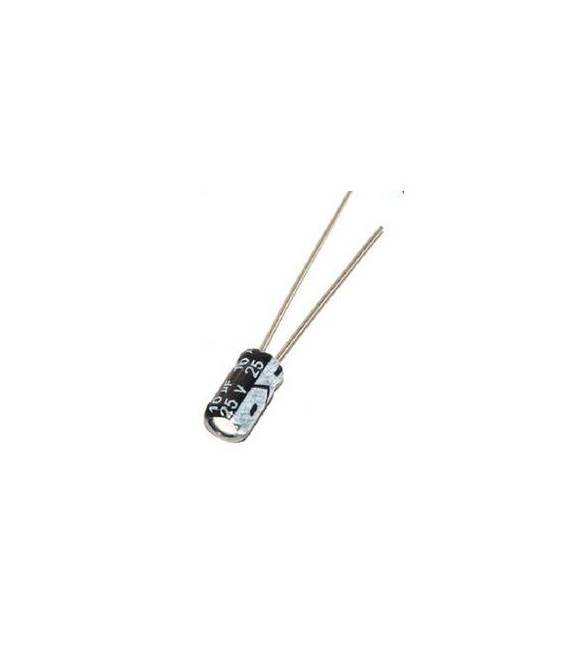
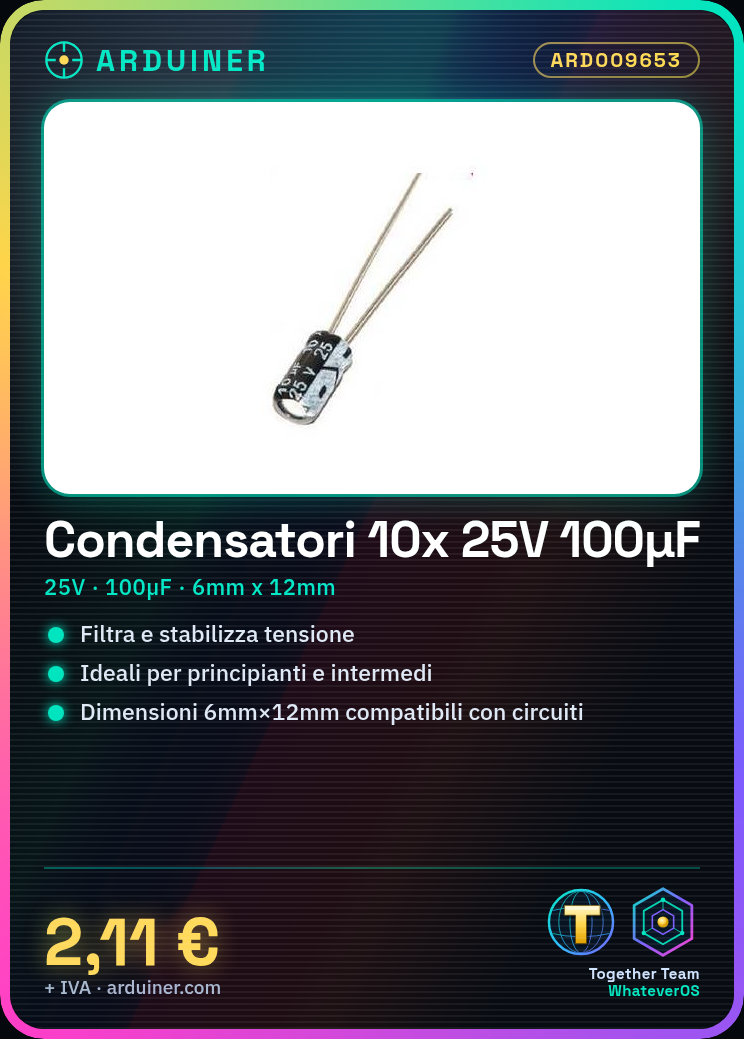
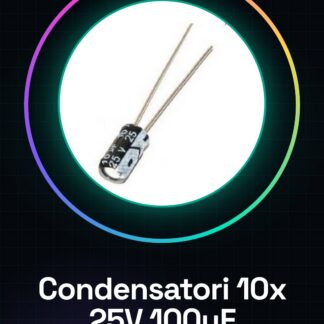
Electrolytic capacitors are fundamental components for filtering and stabilizing voltage in electronic circuits. This specific product is a set of ten electrolytic capacitors with maximum voltage and capacitance values indicated.
Features
- Maximum Voltage: 25V
- Capacitance: 100µF
- Physical Dimensions: 6mm x 12mm
What it is for
Electrolytic capacitors are used to filter voltage in Arduino circuits or other electronic projects. They are particularly suitable for beginners and intermediates working with electronic components.
Tutorial: How to Use 10 Pieces Electrolytic Capacitor 25V 100µF 6×12
Electrolytic capacitors are essential for filtering and stabilizing voltage in electronic circuits. Ideal for beginners and intermediates working with Arduino.
What you need
- Electrolytic Capacitors 25V 100µF 6×12
- Multimeter
- Screwdriver
- Test Leads
Steps
- Check the datasheet for the capacitor specifications.
- Prepare the capacitors and necessary tools.
- Identify the capacitor pins: positive (+) and negative (-) terminals.
- Connect the negative (-) terminal to the circuit ground.
- Connect the positive (+) terminal to a power supply point.
- Verify the correct polarity with a multimeter.
- Test the capacitor with a multimeter in resistance test mode.
- Verify the functionality of the capacitor in the circuit.
Mini project
Build a simple voltage filter for an Arduino circuit using the capacitors.
Common mistakes
- Connect the capacitors with reversed polarity.
- Omit the capacitor test before inserting it into the circuit.
- Do not use an appropriate multimeter for testing.
- Ignore the capacitor test after installation.
Recommended accessories
- Multimeter
- Test connections
- Screwdriver
- Test circuit
Frequently asked questions
How can I check the polarity of the capacitors?
Use the multimeter in resistance measurement mode. The longer pin is the negative pole (-).
Can I use these capacitors to stabilize voltage on an Arduino?
Yes, but check the maximum voltage and capacitance on the datasheet.
What are the risks of connecting the capacitors backwards?
The capacitor could be damaged or explode due to incorrect polarity.


Reviews
There are no reviews yet.