 EN
 IT Italiano
 ES Español
 FR Français
 DE Deutsch
Description
What it is
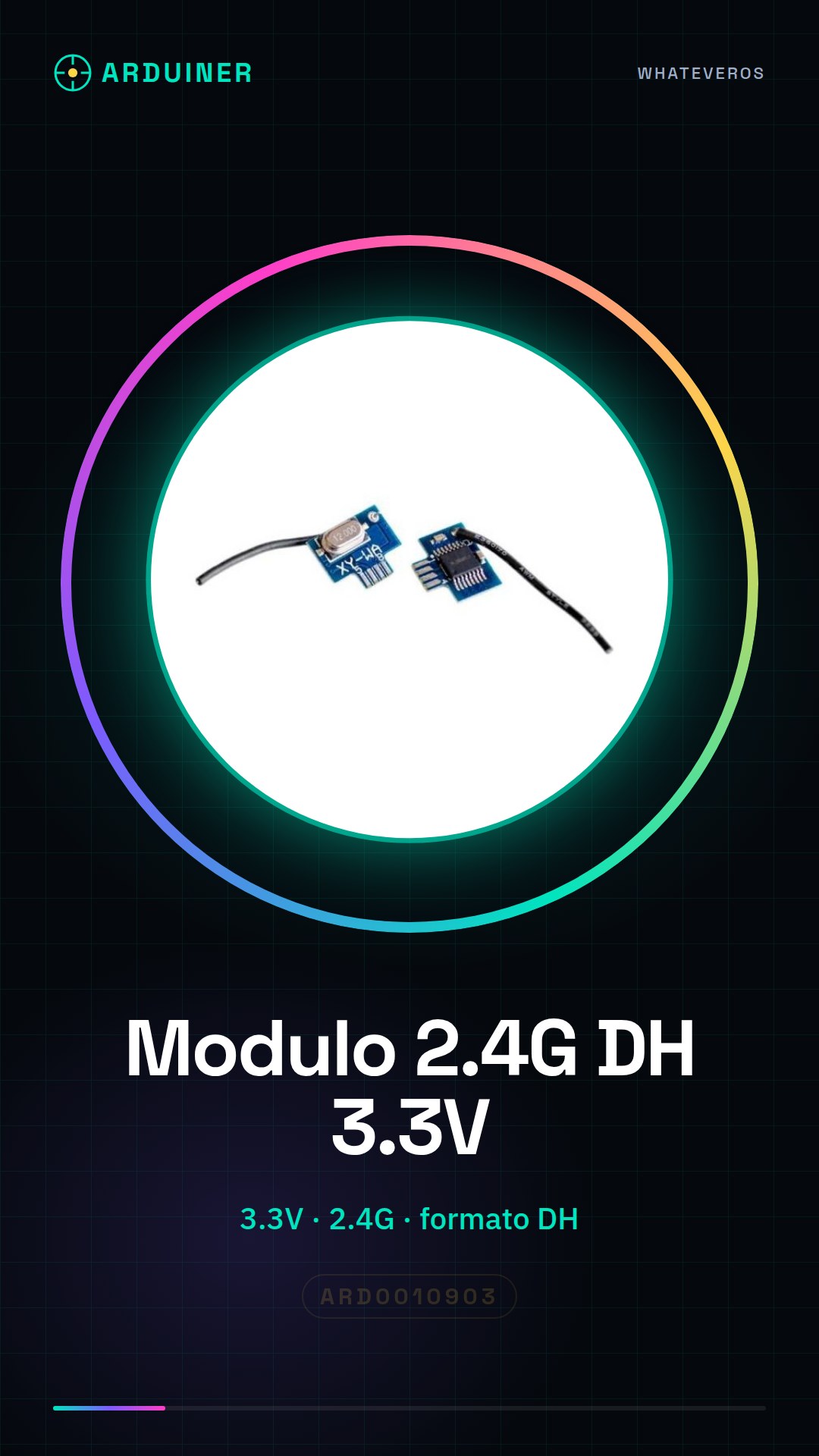
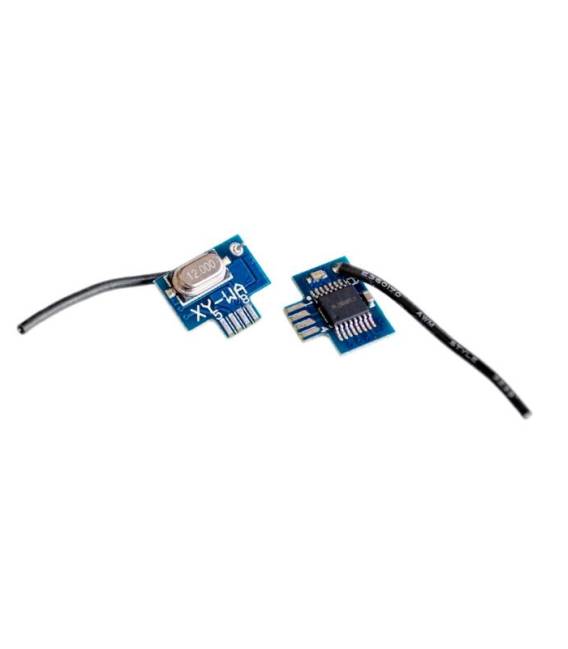
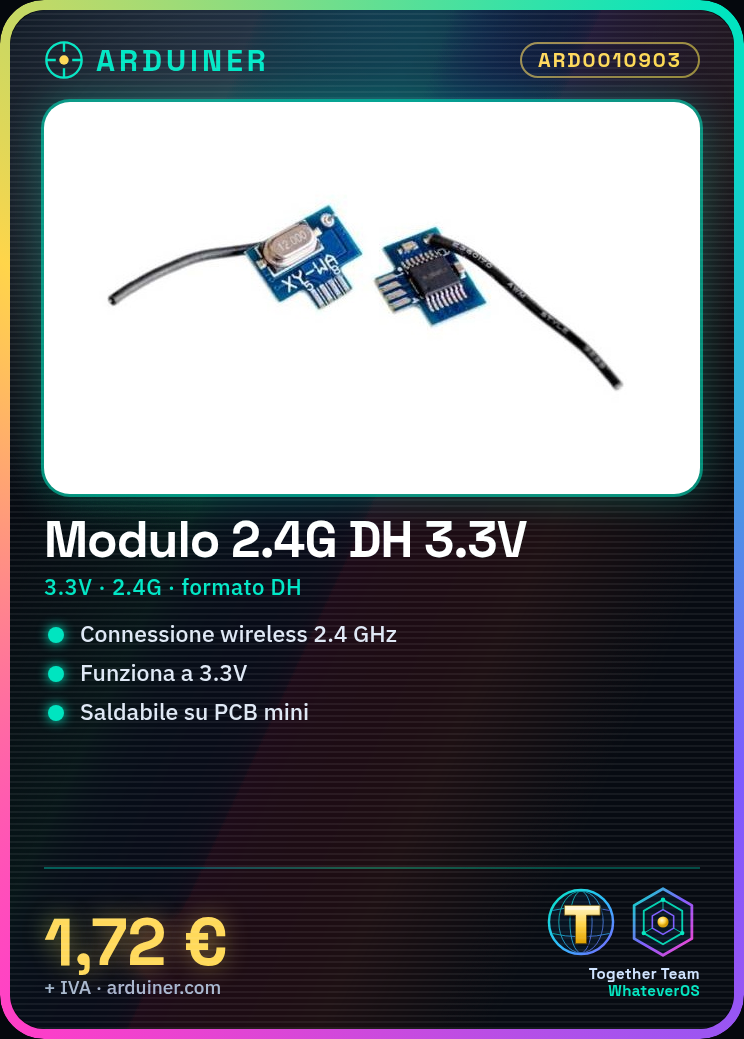
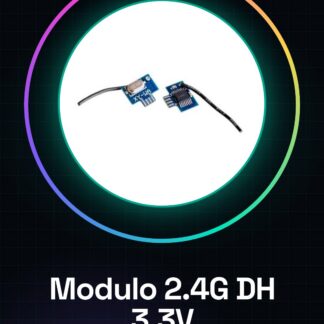
The XY-WA 2.4G wireless transceiver module is an electronic component designed for wireless connection between devices. It can be soldered onto printed circuit boards (PCB) and operates at a 3.3V voltage. The module uses the 2.4 GHz frequency band for wireless communication.
Features
- Version 2.4G
- DH Form Factor
- Operating Voltage: 3.3V
- Compatible with Mini PCB
What it is for
This 2.4G module is ideal for connecting devices in a mesh network without wires. It can be used in IoT, robotics, and control system projects. For example, it can be used to create a remote control system for a lamp or to communicate between multiple Arduino devices.
Tutorial: How to Use the XY-WA 2.4G Wireless Transceiver Module Mini PCB
This 2.4G module is ideal for connecting devices in a mesh network without wires. Useful for IoT, robotics, and control system projects.
What you need
- XY-WA PCB mini transceiver module
- Arduino or compatible microcontroller
- 3.3V power supply cable
- Antennas (if necessary)
Steps
- 1. Check the module specifications in the datasheet.
- 2. Mount the module on the PCB circuit.
- 3. Connect the 3.3V power supply to the module.
- 4. Connect the antenna to the module (if necessary).
- 5. Connect the module to the Arduino or microcontroller.
- 6. Check the receive and transmit pins.
- 7. Load the example code onto the microcontroller.
- 8. Test the communication between transmitter and receiver.
Example code
void loop() {}Mini project
Create a remote control system for a lamp.
Common mistakes
- Do not check the specifications in the datasheet.
- Connect the power supply to 5V instead of 3.3V.
- Forget to connect the antenna.
- Connect the receive and transmit pins in reverse.
Recommended accessories
- Arduino Uno
- 2.4G Antenna
- 3.3V Power Supply Cable
- Prototype PCB
Frequently asked questions
Does the module require 5V power supply?
No, the required power supply is 3.3V.
Can I use any 2.4G antenna?
Yes, but check compatibility in the datasheet.
How long does communication last?
Communication time depends on distance and environmental conditions.
Reviews
There are no reviews yet.