 EN
 IT Italiano
 ES Español
 FR Français
 DE Deutsch
Description
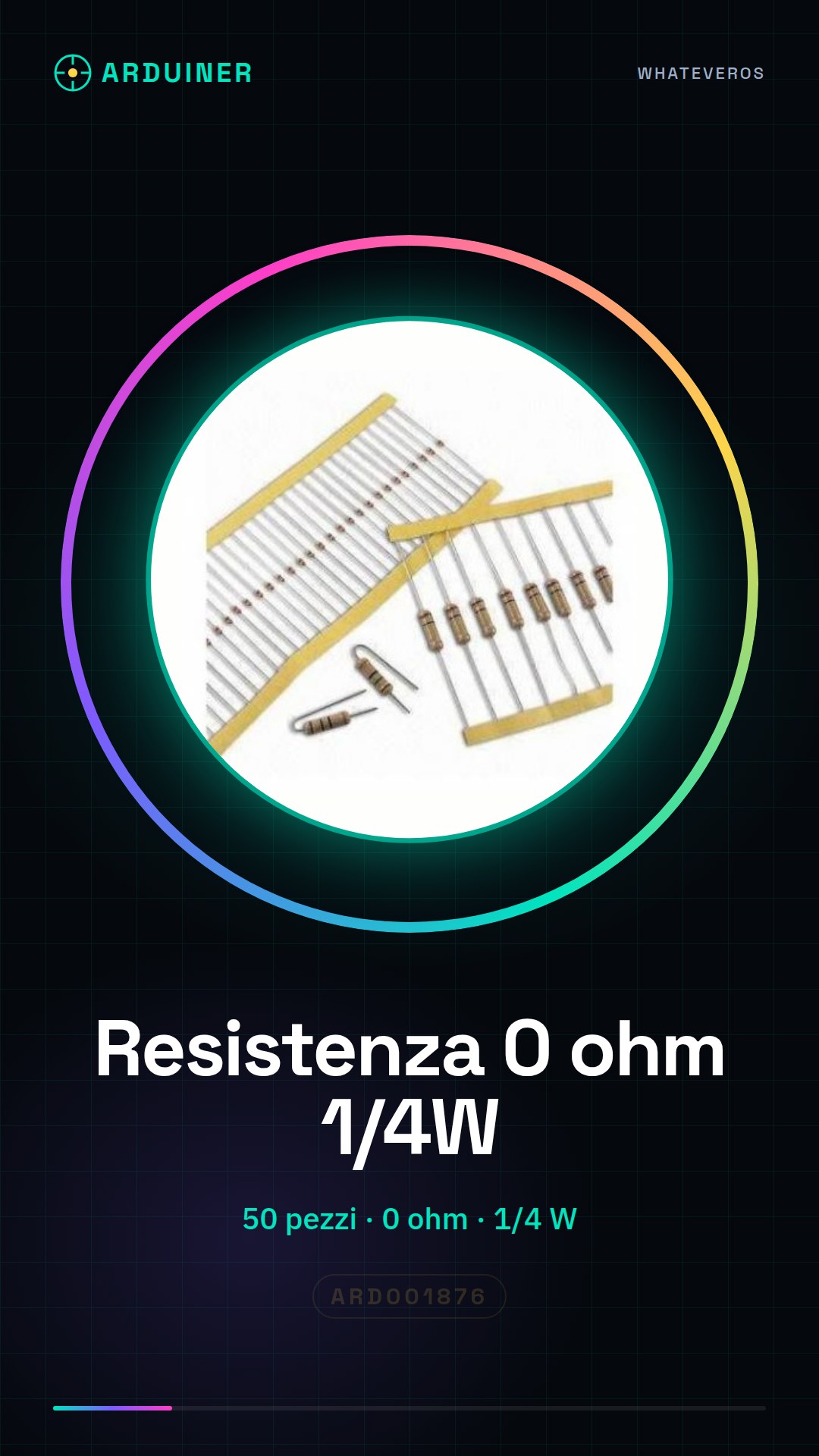
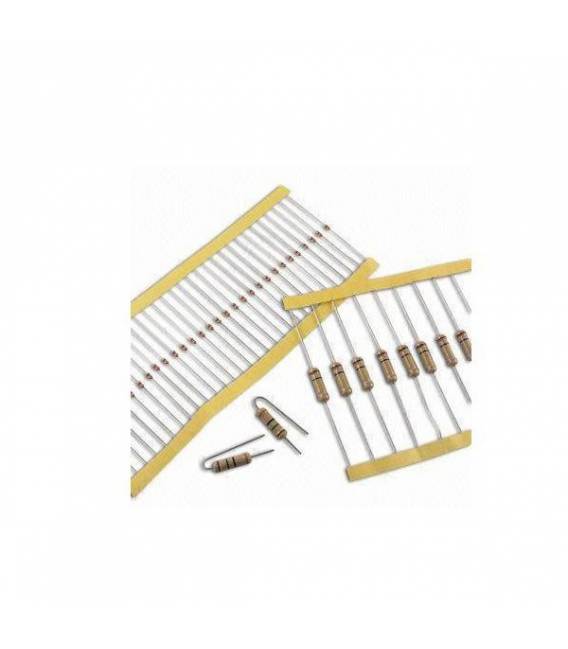
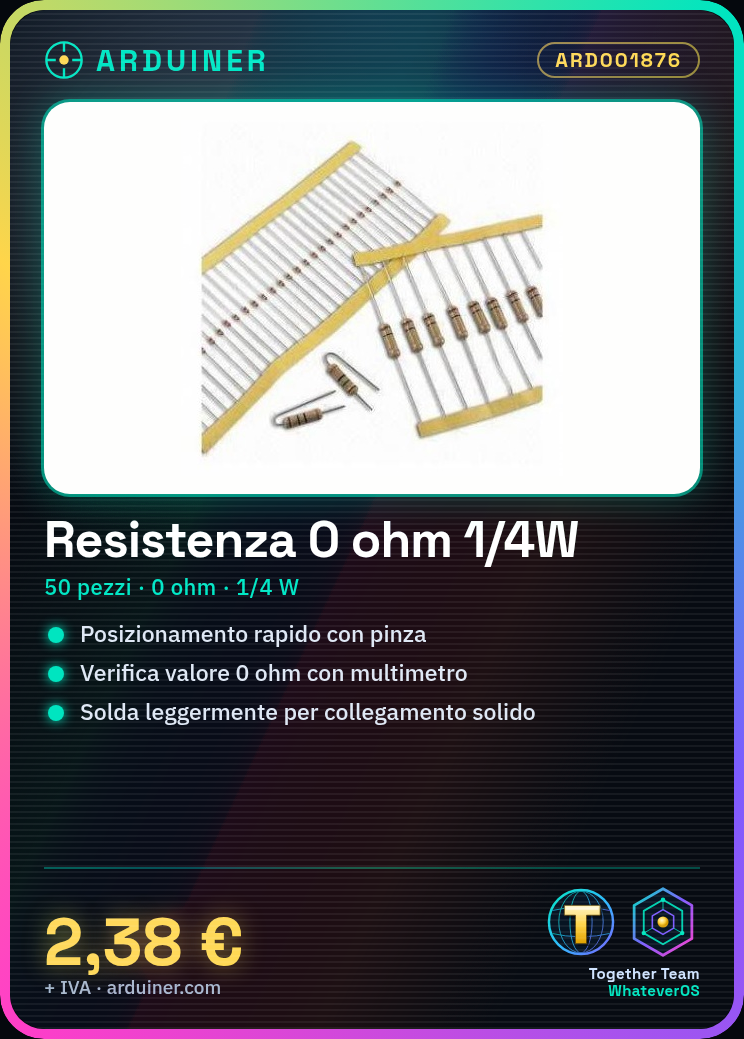
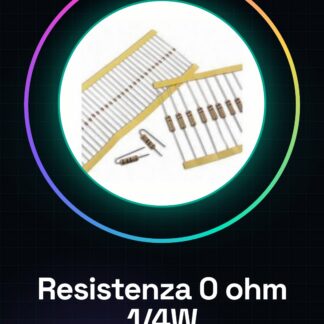
50PCS 0 ohm resistance 1/4w 1/4 w 5%
We have datasheets available for all components, if not present in the product download sheet, send us a message through the contact us form and we will publish it as soon as possible on our website.
Tutorial: How to use 0 ohm resistance
0 ohm resistors are useful for makers designing electronic circuits on PCB boards. They are ideal for those who want to create jumpers or temporary bypasses during prototyping.
What you need
- Electronic assembly kit
- Soldering pliers
- Dust blower
Steps
- Prepare the dust blower to clean the mounting areas on the PCB.
- Use the soldering pliers to correctly position the 0 ohm resistor in the circuit.
- Check that the resistance value is actually 0 ohm using a multimeter.
- Apply a small amount of solder to the resistor and the PCB, ensuring a solid but not excessive connection.
Mini project
Create a simple circuit on a PCB where 0 ohm resistors are used to temporarily bypass a part of the circuit during testing.
Common mistakes
- Do not check the resistance with a multimeter before soldering it.
- Soldering too much wire, which can cause short circuits.
- Using 0 ohm resistors in places where resistors of different values would be needed.
- Not cleaning the mounting areas properly before soldering.
Recommended accessories
- Multimeter kit
- Dust blower
- Soldering iron pliers
- Test lead
Frequently asked questions
Q: Why use 0 ohm resistors?
To allow makers to temporarily bypass parts of the circuit during prototyping or for physical connections on PCBs.
Q: Can I replace a regular resistor with a 0 ohm one?
Yes, but only if you don’t need the resistor at that specific point in the circuit.
Reviews
There are no reviews yet.