 EN
 IT Italiano
 ES Español
 FR Français
 DE Deutsch

Description
What it is
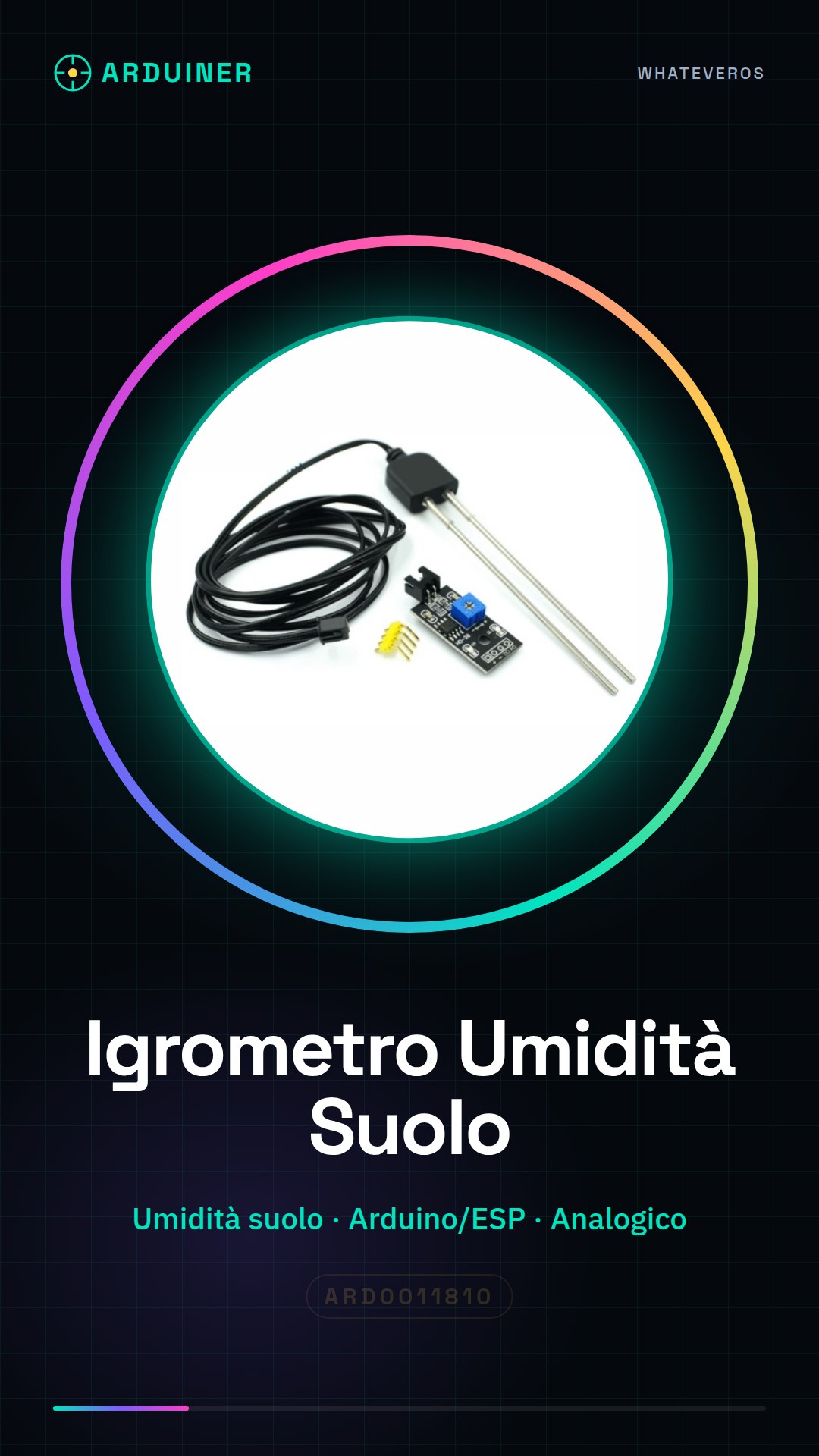
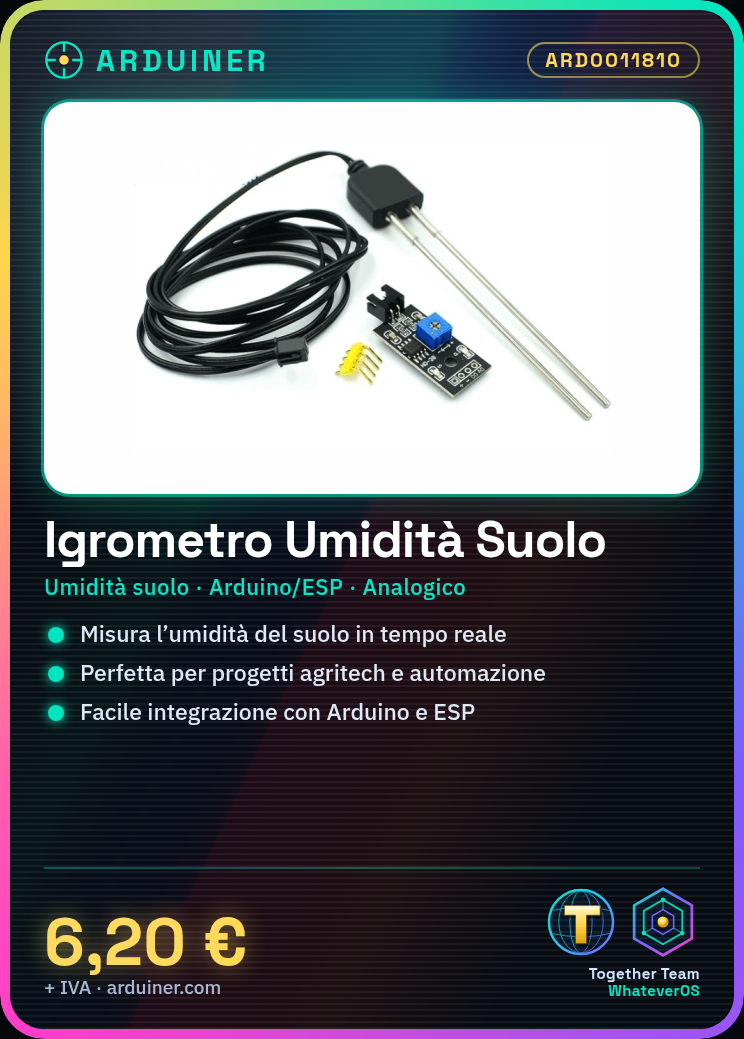
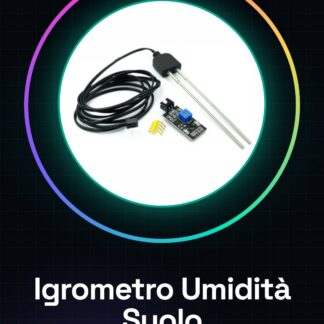
The Soil Moisture Sensor is a detector used to measure the moisture present in the ground. This device is ideal for agritech and automation projects, allowing farmers and makers to monitor soil conditions in real-time.
Features
- Sensor to measure soil moisture
What it is for
The sensor can be used to create an automatic irrigation system with Arduino and a pump. It is compatible with Arduino and ESP, making it easy to integrate into DIY projects.
Tutorial: How to use Soil Moisture Sensor
The soil moisture sensor measures the moisture level in the ground, useful for farmers and makers who want to monitor soil conditions in real-time.
What you need
- Soil Moisture Sensor
- Arduino
- Connection cable
- 10kΩ resistor
Steps
- 1. Connect the sensor to pin A0 of Arduino.
- 2. Connect a 10kΩ resistor between VCC and GND of the sensor.
- 3. Download the provided code.
- 4. Upload the code to Arduino.
- 5. Check the resistor value of the sensor on the datasheet.
- 6. Once connected, the sensor will send analog values.
- 7. Use a library to read the values.
- 8. Verify accuracy with a physical hygrometer.
Example code
```void loop() { int sensorValue = analogRead(A0); Serial.println(sensorValue);}```Mini project
Create an automatic irrigation system with Arduino and a pump. In 30 minutes, you can connect the sensor to a timer and a pump.
Common mistakes
- Connect the sensor directly to VCC without a resistor.
- Skip checking the datasheet.
- Do not use a library to read the values.
- Ignore the accuracy of the sensor
Recommended accessories
- Pump
- Timer
- Physical hygrometer
- Connection cable
Frequently asked questions
How can I verify the accuracy of the sensor?
Compare the values read from the sensor with those of a physical hygrometer.
Does the sensor work in all types of soil?
Check the datasheet for usage conditions.
Can I use the sensor with a microcontroller other than Arduino?
Check the datasheet for sensor compatibility.
Reviews
There are no reviews yet.