 EN
 IT Italiano
 ES Español
 FR Français
 DE Deutsch
Description
What it is
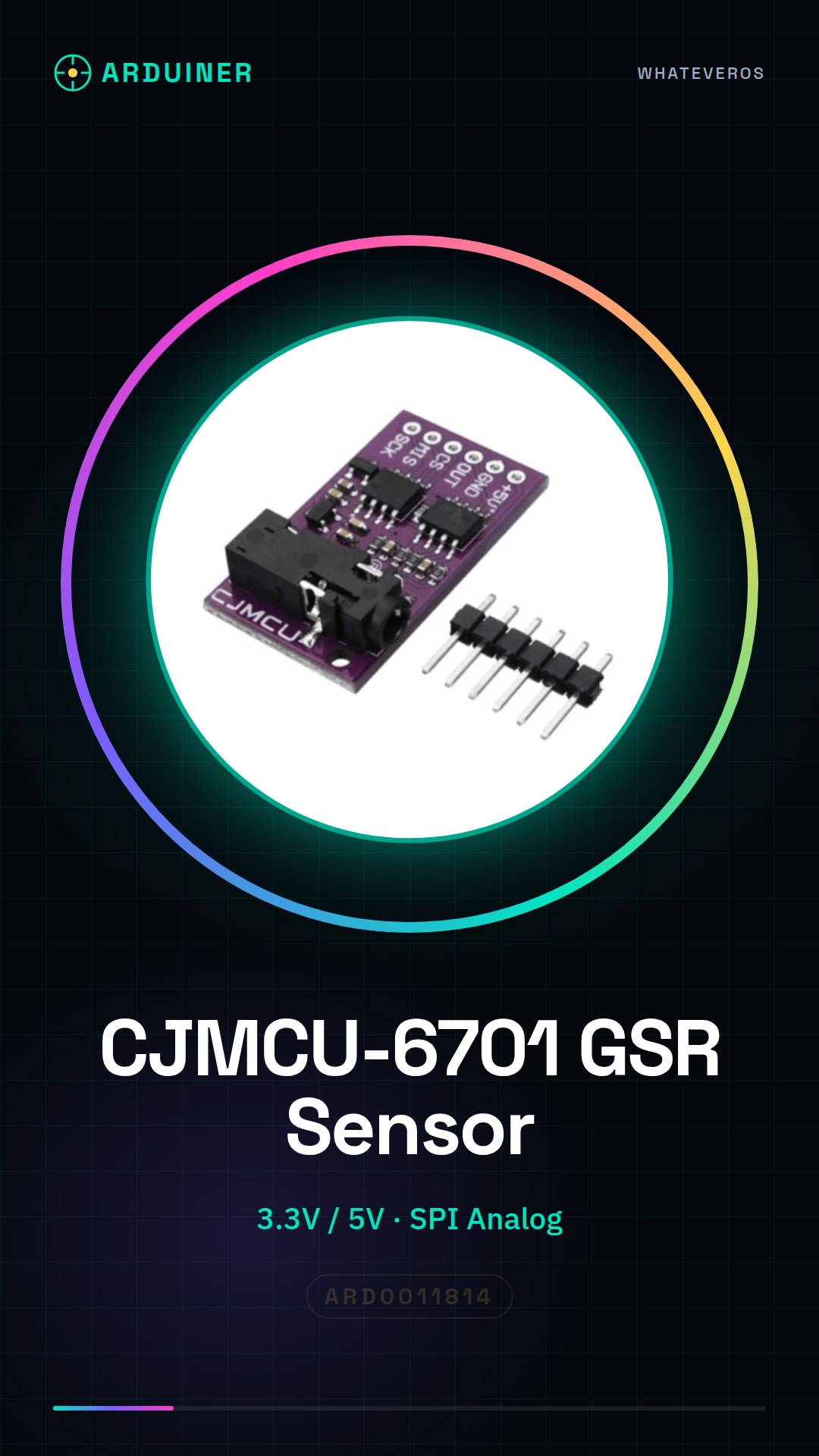
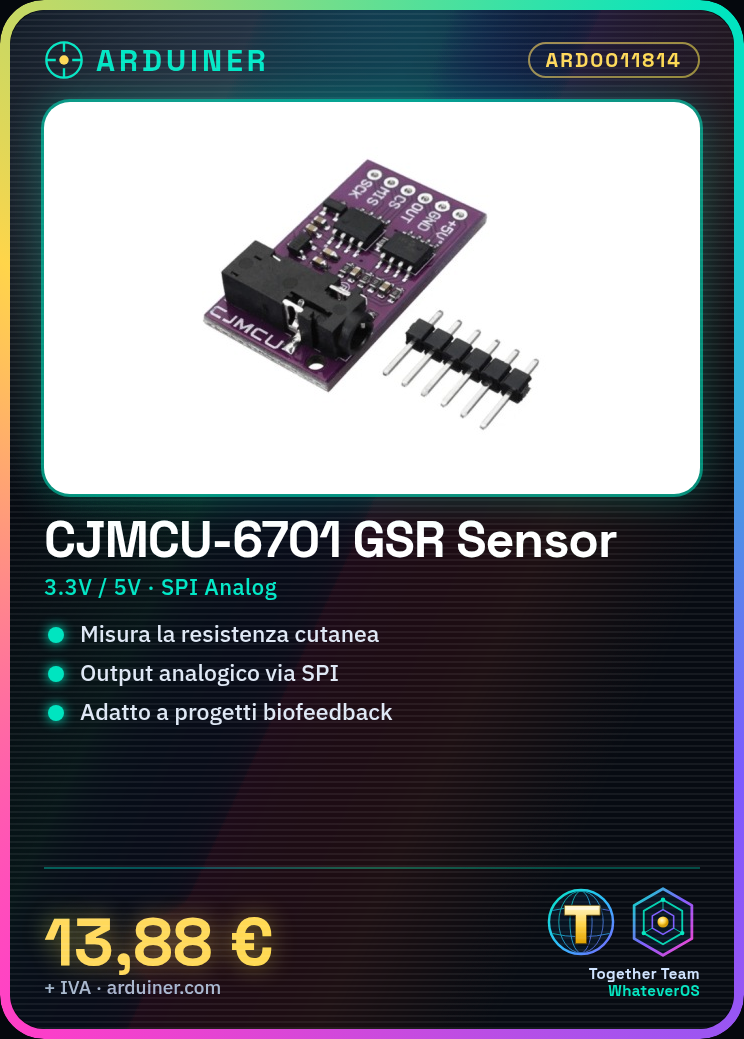
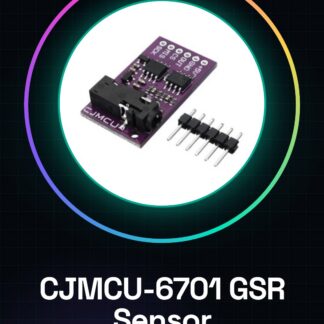
The CJMCU-6701 is a GSR (Galvanic Skin Response) sensor for measuring skin resistance. This module is designed to be used with Arduino and other compatible platforms, providing analog data via SPI interface.
Features
- Supply voltages: 3.3V / 5V
- Compatible with official Arduino and other compatible platforms
What it is for
CJMCU-6701 modules are used for biofeedback projects and emotional reaction monitoring. You can build simple devices that emit a signal when the GSR exceeds a certain value.
Tutorial: How to use CJMCU-6701 GSR Skin Sensor Module
The CJMCU-6701 GSR Skin Sensor Module is a skin resistance sensor that measures GSR (Galvanic Skin Response). Useful for biofeedback and emotional reaction monitoring projects.
What you need
- Arduino IDE
- CJMCU-6701 GSR Skin Sensor Module
- 10kΩ resistor
- 5V power cable
Steps
- 1. Download and install the Arduino IDE.
- 2. Connect the CJMCU-6701 to the Arduino via SPI.
- 3. Connect the 10kΩ resistor between VCC and GND of the sensor.
- 4. Download the Sketch code.
- 5. Upload the Sketch to Arduino.
- 6. Run the code to read GSR values.
- 7. Check the datasheet for further details.
- 8. Test the sensor with different levels of excitation.
Example code
```cpp
#include <SPI.h>

#define CS_PIN 10
#define SCK_PIN 13
#define MISO_PIN 12
#define MOSI_PIN 11

void setup() {
  SPI.begin();
  pinMode(CS_PIN, OUTPUT);
}

void loop() {
  digitalWrite(CS_PIN, LOW);
  int value = SPI.transfer(0x00);
  digitalWrite(CS_PIN, HIGH);
  Serial.println(value);
  delay(1000);
}
```
Mini project
Build a simple biofeedback device that emits a signal when the GSR exceeds a certain value.
Common mistakes
- Connect the sensor to the Arduino correctly.
- Verify that the resistor is correctly connected.
- Check the correct configuration of the SPI pins.
Recommended accessories
- Arduino Uno
- USB cable
- Serial monitor
- Insulating tape
Frequently asked questions
Does the sensor work only with Arduino?
Does the sensor work with any compatible SPI microcontroller?
How long does the battery last?
The sensor does not use batteries, it is powered directly by the Arduino.
Does the sensor work with Arduino Nano?
Yes, the sensor is compatible with Arduino Nano.
Can I use a different power supply?
The sensor supports 3.3V and 5V power supplies, check the datasheet for further details.
Reviews
There are no reviews yet.