 EN
 IT Italiano
 ES Español
 FR Français
 DE Deutsch
Description
What it is
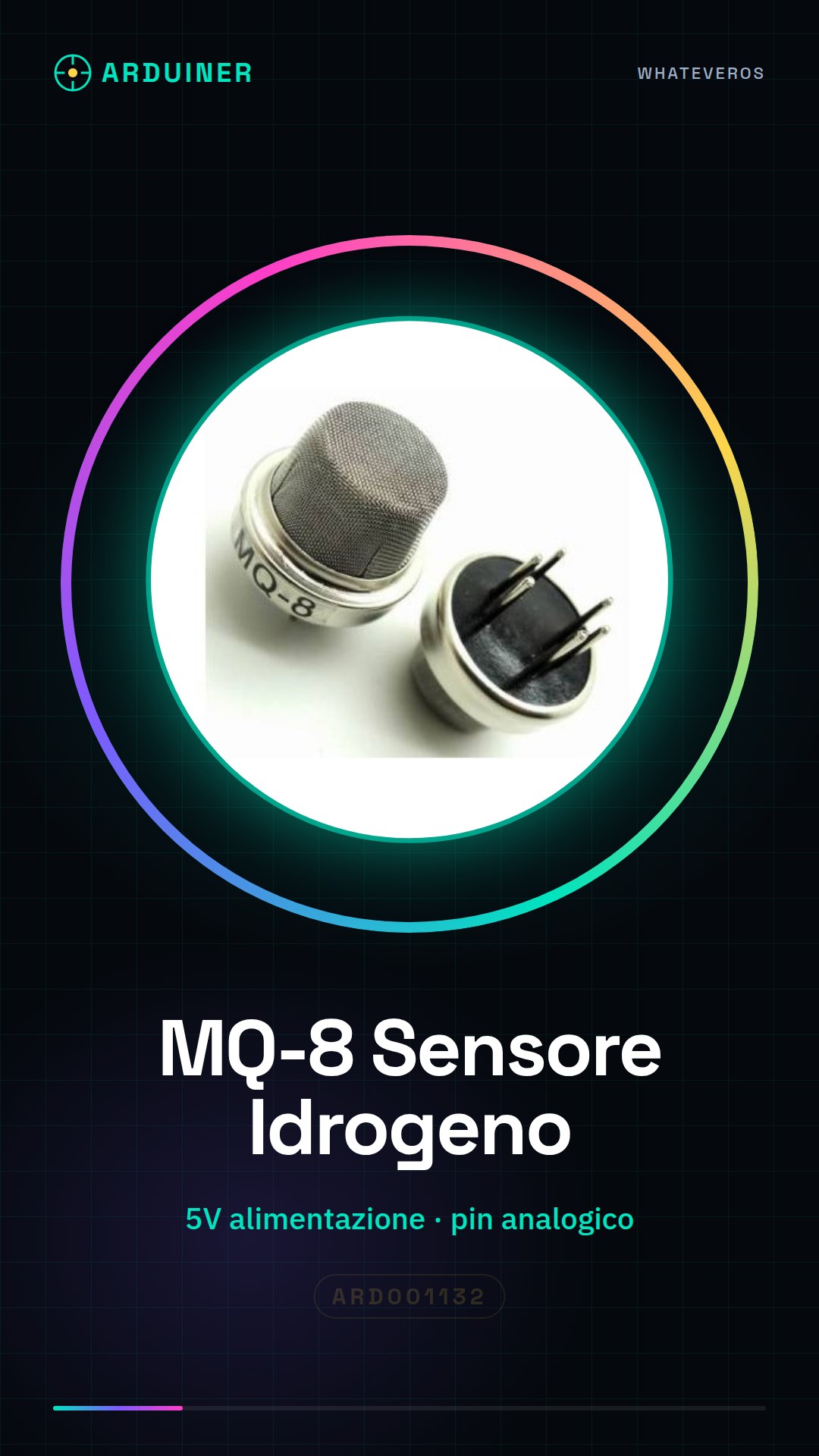
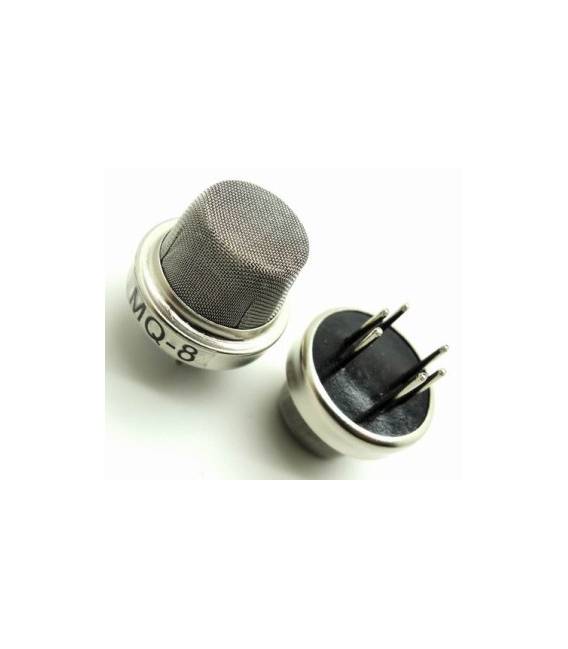
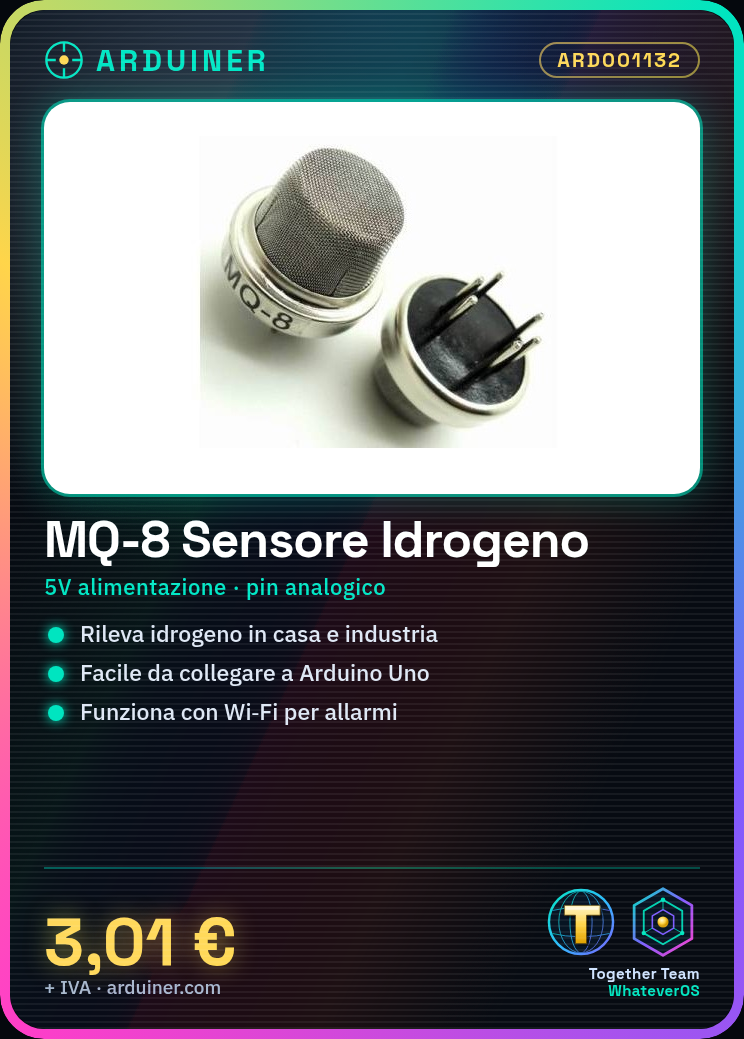
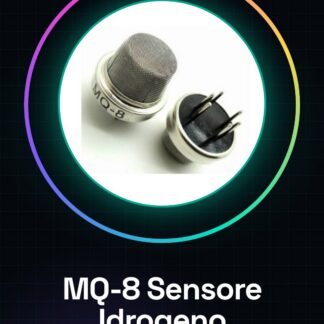
The MQ-8 sensor is an Arduino device specifically designed to detect hydrogen in domestic or industrial environments. It is suitable for both beginners and more experienced makers.
Features
- Ideally used to monitor hydrogen concentrations;
- Sensitive and stable;
What it is for
The MQ-8 sensor can be used to create alarm systems that send a Wi-Fi notification when hydrogen levels are high. It is compatible with Arduino and ESP.
Tutorial: How to use Hydrogen MQ-8 Sensor
The MQ-8 sensor is ideal for monitoring hydrogen in domestic or industrial environments. It is suitable for both beginners and more experienced makers.
What you need
- Arduino Uno
- Power connection (5V)
- Analog data connection
Steps
- Connect the MQ-8 sensor pins to the Arduino: VCC to +5V, GND to ground, AO to an analog pin on the Arduino.
- Download and install the A0 (AnalogRead) library for Arduino.
- Write a simple sketch to read values from the MQ-8 sensor.
- Check the sensor’s datasheet to properly set the warm-up time and resistance.
- Test the sensor in a hydrogen-free environment to establish a baseline.
- Remember that the sensor requires several minutes to reach operational status after power-up.
- Examine the values read from the sensor and compare them with the datasheet specifications to determine the presence of hydrogen.
- Add a graphical interface or an LCD display to show real-time data.
Example code
// Esempio di codice
#include <A0.h>
#define MQ8_PIN A0
void setup() {
  Serial.begin(9600);
}
void loop() {
  int val = analogRead(MQ8_PIN);
  Serial.println(val);
}
Mini project
Create a hydrogen alarm system that sends a notification via Wi-Fi when levels are high.
Common mistakes
- Disconnected the AO pin from the circuit.
- Did not verify the sensor specifications for resistance and warm-up time.
- Ignore the importance of proper coupling between Arduino and analog sensors.
- Omit an initial calibration period in the code.
Recommended accessories
- Arduino Uno R3
- LCD Display 16×2 with I2C
- ESP8266 Wi-Fi Module
- Variable resistors
Frequently asked questions
Does the sensor work in the presence of other gases?
Check the datasheet for detailed information.
How long does it take for the sensor to become operational?
Check the MQ-8 sensor datasheet.
Reviews
There are no reviews yet.