 EN
 IT Italiano
 ES Español
 FR Français
 DE Deutsch
Description
What it is
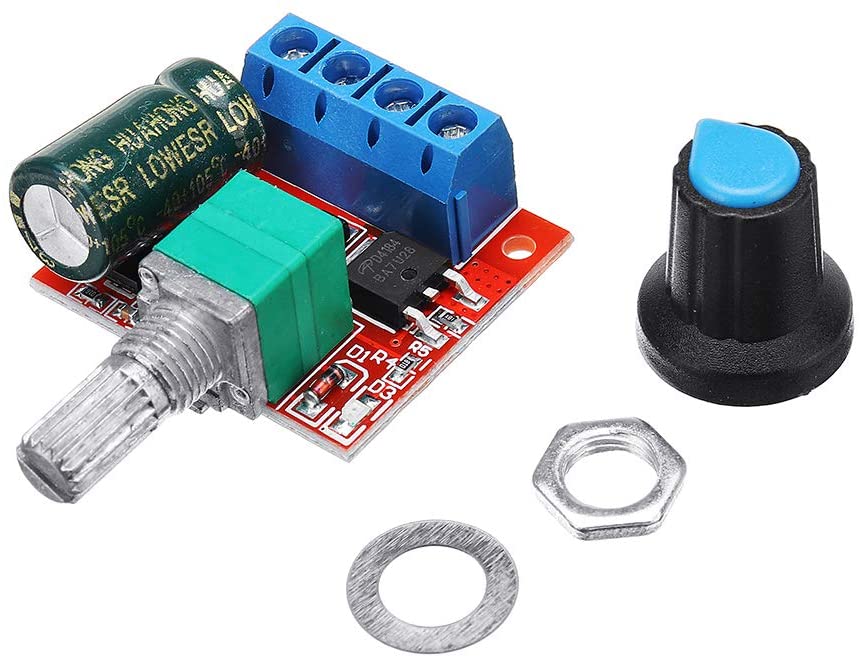
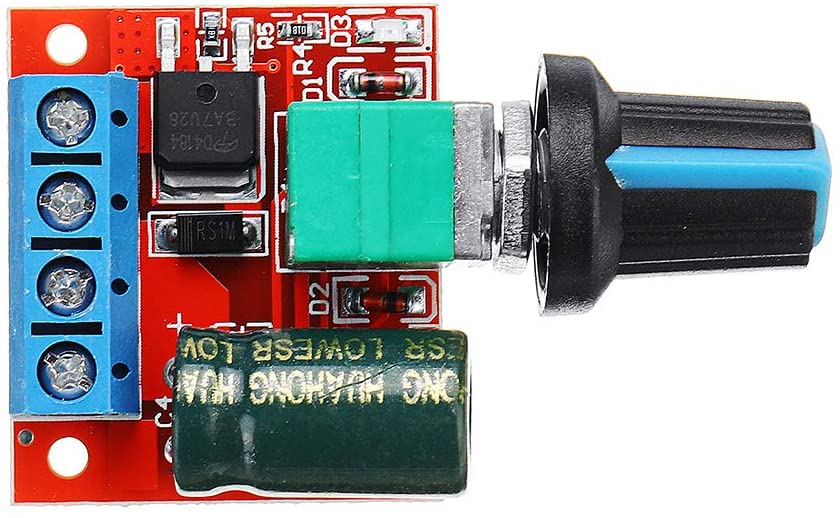
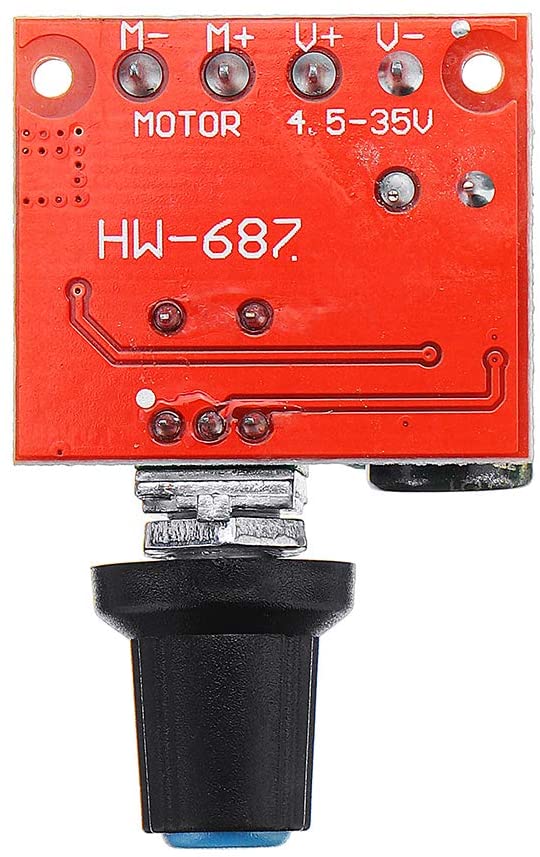
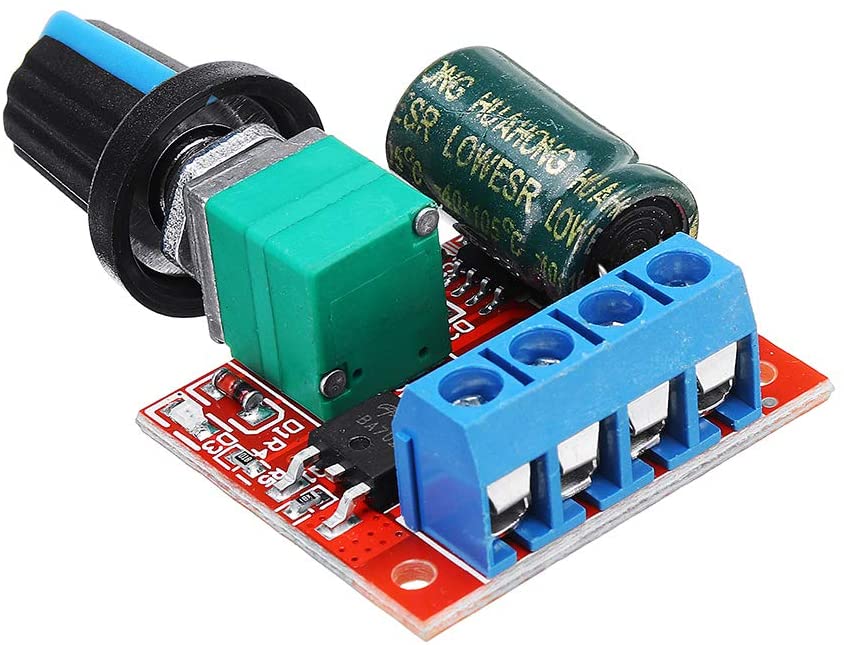
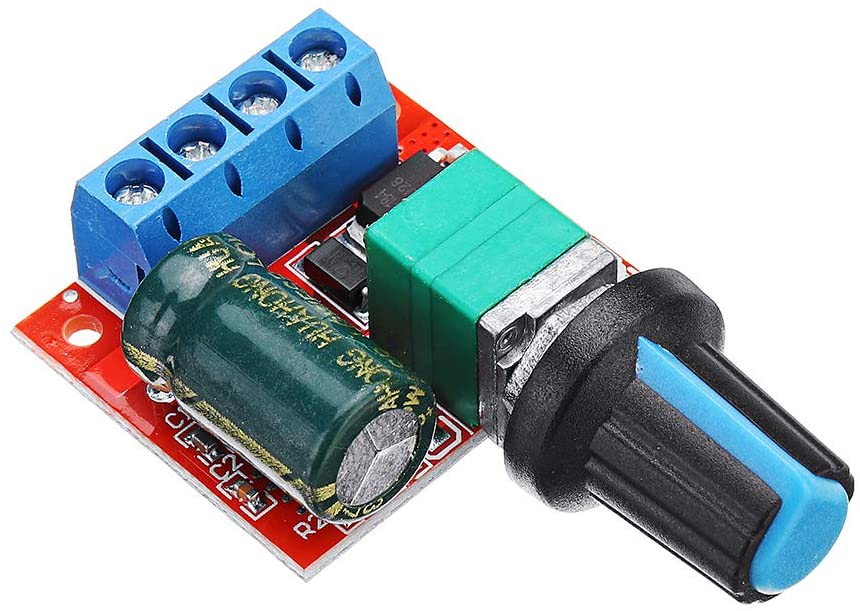
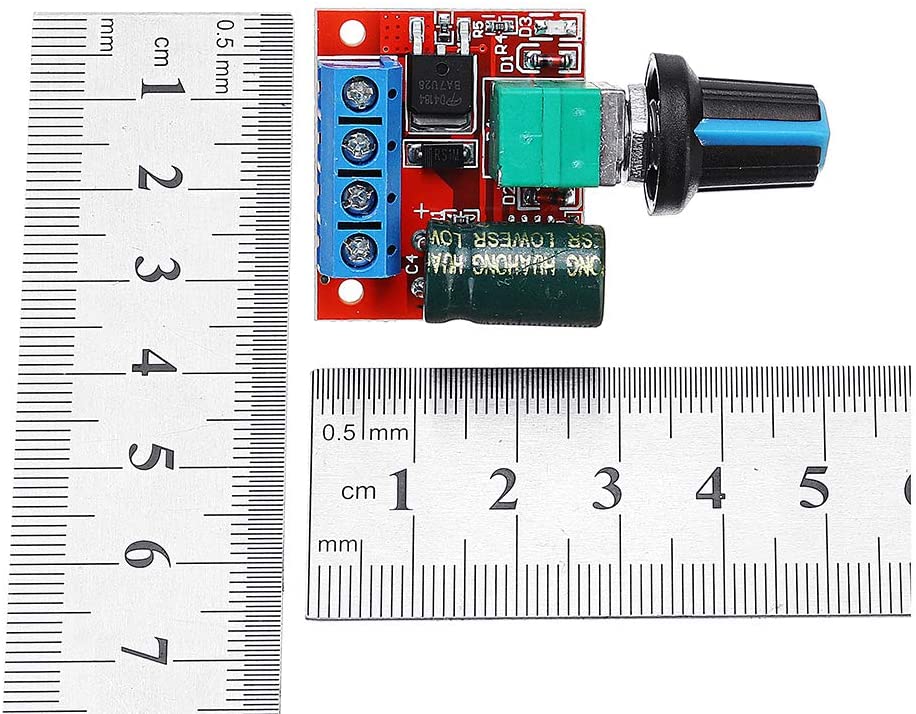
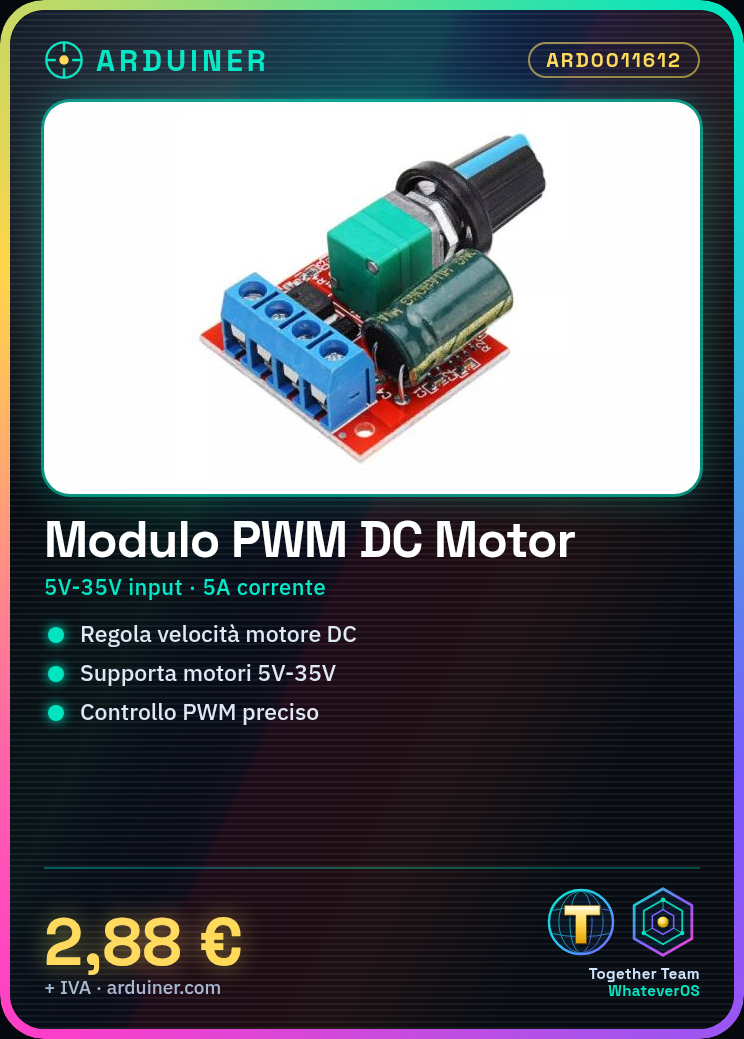
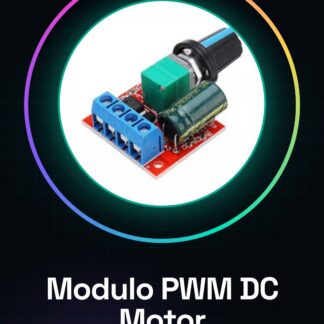
The DC motor speed control PWM module is a device that allows you to control the power and speed of DC motors, making it suitable for various electronic projects. This module can handle motors from 5V to 35V with a maximum current of 5A.
Features
- Input voltage variable: DC 5V – 35V
- Maximum current: 5A
- Maximum power: 90W
- Control type: PWM (Pulse Width Modulation)
What it is for
PWM control modules are ideal for Arduino projects, robotics, and applications where precise motor speed control is required. You can use it to create small-scale transportation systems or integrate it into devices that require accurate power regulation.
Tutorial: How to use DC Motor PWM Control Module
This module allows you to control the speed and operation of low-power DC motors up to 90W. Ideal for Arduino projects, robotics, or any application that requires precise motor speed control.
What you need
- Arduino Uno
- DC Motor Compatible
- Connection Cables
Steps
- Connect the VCC and GND pins of the module to the 5V and GND bus of the Arduino.
- Connect the PWM (Speed) pin of the module to a digital output pin of the Arduino.
- If necessary, connect the IN1 and IN2 pins for motor direction to digital pins of the Arduino.
- Check that the motors are compatible with the module’s power supply (5V-35V).
- Write an Arduino sketch to control the motor through the connected PWM pin.
- Test the motor direction and speed by modifying the values in the Arduino code.
- Adjust the external power supply if necessary (5V-35V).
- Monitor the temperature during use to ensure the module does not exceed its thermal dissipation capabilities.
Example code
void setup() {
  pinMode(9, OUTPUT);
}

void loop() {
  analogWrite(9, 128); // Setta la velocità del motore a metà.
}
Mini project
Create a small-scale transportation system with a cart guided by this PWM module and a DC motor. Use sensors to control the movement.
Common mistakes
- Incorrect connection between Arduino and module that can cause damage to the circuit.
- Setting PWM values out of range that can damage the motor or the module.
- Omission of power supply voltage regulation, potentially exceeding the module’s tolerance.
- Ignore the thermal specifications of the module during continuous use.
Recommended accessories
- Position sensors for Arduino
- DC motor drivers compatible with PWM
- Electronic prototyping kit
- Universal connection cables
Frequently asked questions
Can this module control multiple motors simultaneously?
Yes, but it may be necessary to add a driver for each motor.
What is the difference between this and other PWM modules?
The main difference lies in the control power and power supply specifications.
How can I control the module without an Arduino?
Generally, a microcontroller is needed to generate the necessary PWM signals.

Reviews
There are no reviews yet.