 EN
 IT Italiano
 ES Español
 FR Français
 DE Deutsch
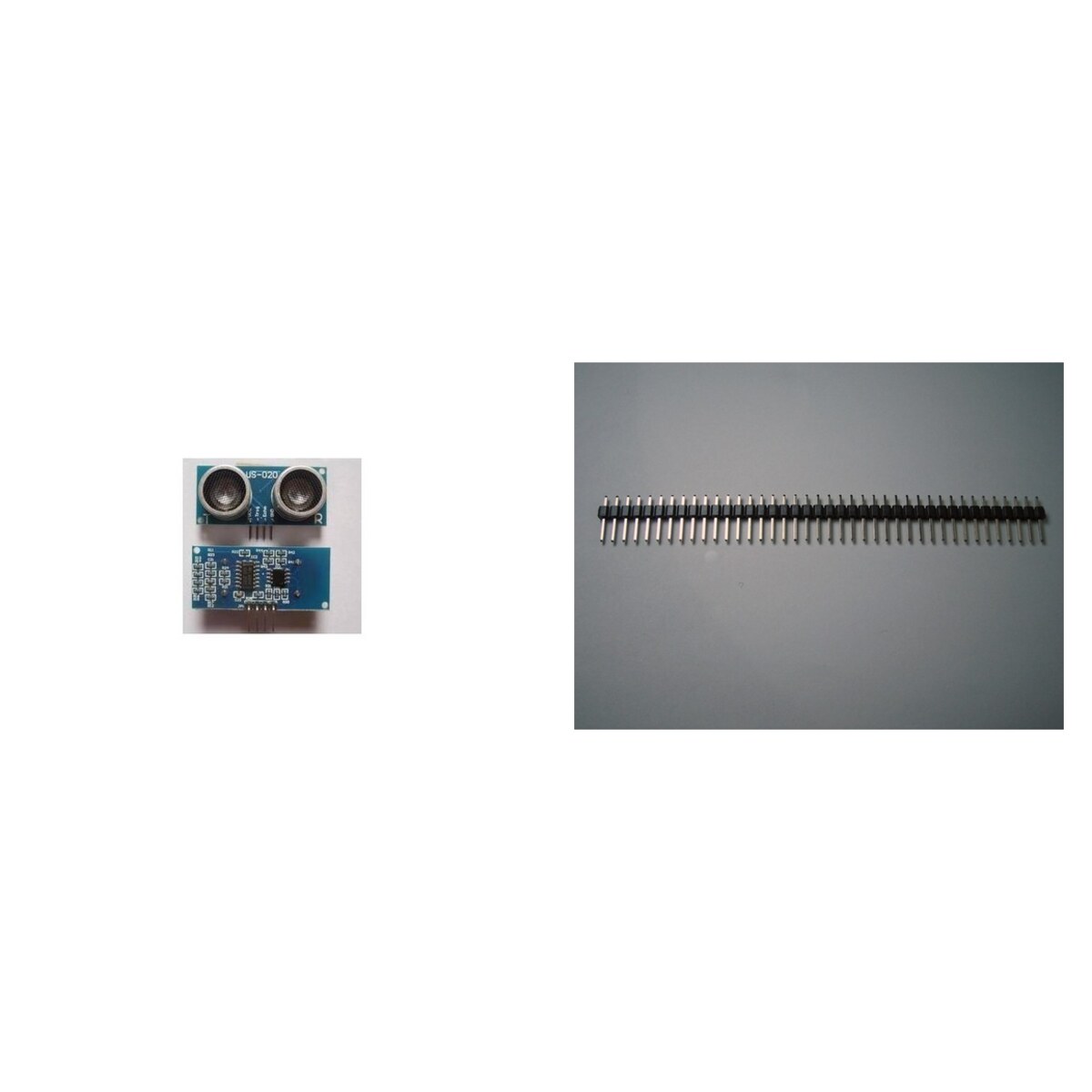
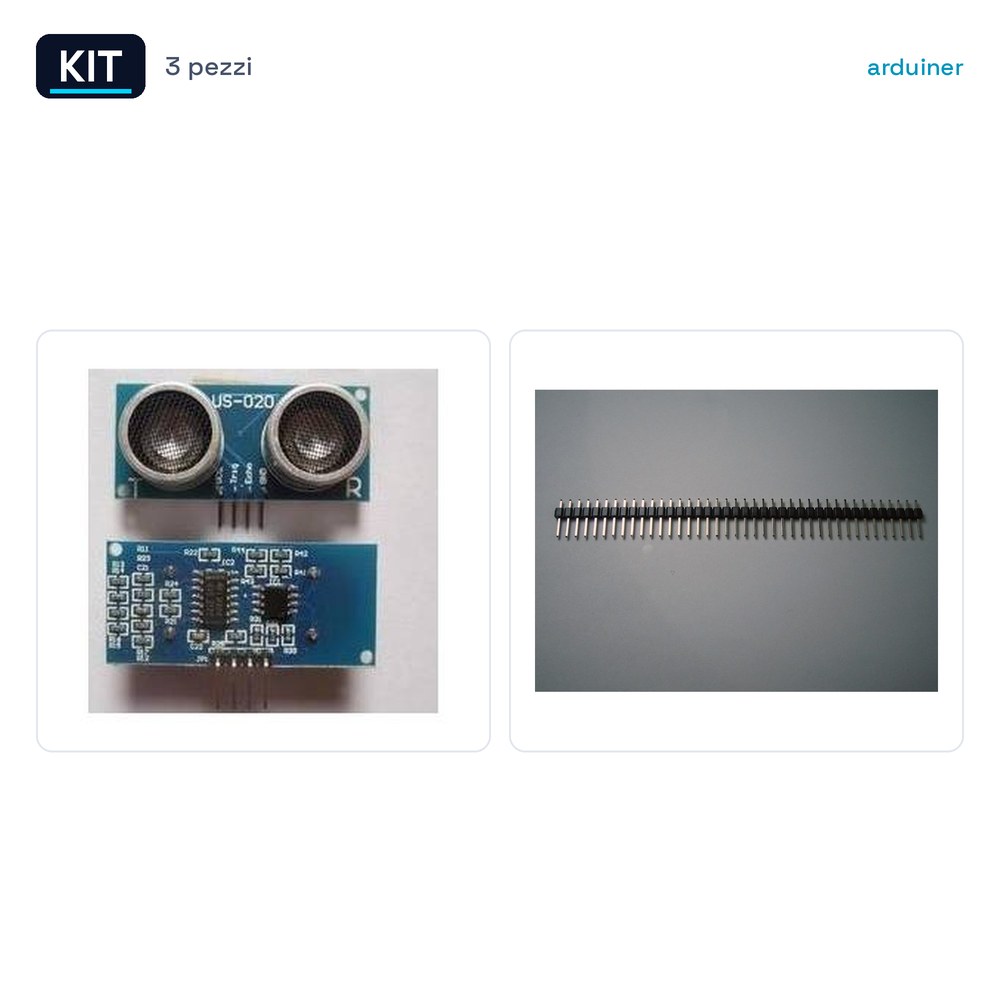
Description
Technical Description
The US-020 Ultrasonic Sensor Module is a device used to measure distance using sound waves. It operates at 5V and can measure distances up to 7 meters. The module features male pin header connectors and a DC socket for power supply.
The module can be integrated into various electronic and robotic projects, allowing the addition of distance detection functionality. It is important to note that the module requires proper configuration and connection to function correctly.
It is advisable to use quality connectors to ensure a stable and safe connection between the module and the control system.
Key Specifications
| Parameter | Value |
| Model | US-020 |
| Operating Voltage | 5V |
| Maximum Detection Distance | 7M |
| Number of Male Pin Headers Included | 4 |
| Number of DC Sockets Included | 5 |
| Dimensions | N/D (see manufacturer’s technical sheet) |
| Interface | Male pin header, DC socket |
| Container | N/D (see manufacturer’s technical sheet) |
Installation and Usage
- Connect the male pin header to the US-020 module.
- Connect the DC sockets to the power supply.
- Connect the US-020 module to the control system (e.g., Arduino) via the pin header.
- Check the proper power supply of the module.
- Perform a functionality test of the module.
Compatibility and Requirements
- The US-020 module is compatible with control systems such as Arduino.
- A DC connector must be used for power supply.
- To connect the module to a control system, compatible pin headers are required.
Limitations and Important Notes
- The module cannot measure distances beyond 7 meters.
- Proper connection of connectors is necessary to ensure functionality.
- Ensure the power supply is 5V.
- The module is not designed to withstand extreme conditions.
Troubleshooting
The module does not respond.
Probable cause: Unstable pin header connection.
Solution: Check and reconnect the connectors.
Incorrect distance data.
Probable cause: Insufficient power supply.
Solution: Check the power supply and increase the voltage if necessary.
The module does not turn on.
Probable cause: Power supply issue.
Solution: Check the DC socket connection.
Inaccurate distance data.
Probable cause: Environmental interference.
Solution: Position the module in a more protected environment.
Use cases
Garage parking sensor
Objective: Prevent collisions during parking.
What is needed: US-020 module, Arduino, pin header, DC socket.
Steps: 1) Connect the US-020 module to an Arduino. 2) Configure the code for distance detection. 3) Install the system in the garage.
Expected result: The system alerts the user when the car is too close to an obstacle.
Distance measurement between two objects
Objective: Measure the distance between two points in a laboratory.
What is needed: US-020 module, Arduino, pin header, DC socket.
Steps: 1) Connect the US-020 module to an Arduino. 2) Configure the code for distance measurement. 3) Position the two objects. 4) Perform the measurement.
Expected result: The distance between the two objects is measured accurately.
Home security system
Objective: Detect unusual movements outside the house.
What is needed: US-020 module, Arduino, pin header, DC socket.
Steps: 1) Connect the US-020 module to an Arduino. 2) Configure the code for motion detection. 3) Install the system outside the house.
Expected result: The system alerts the user to abnormal movements.
Robotics project
Objective: Add distance detection functionality to a robot.
What’s needed: US-020 module, Arduino, pin header, DC socket.
Steps: 1) Connect the US-020 module to an Arduino. 2) Configure the code for robot control. 3) Install the module on the robot.
Expected result: The robot can avoid obstacles during its movement.
Access control system
Objective: Control access to a protected area.
What’s needed: US-020 module, Arduino, pin header, DC socket.
Steps: 1) Connect the US-020 module to an Arduino. 2) Configure the code for access control. 3) Install the system at the entrance of the protected area.
Expected result: The system allows access only to authorized persons.
Home Automation Project
Objective: Control lighting based on the presence of people.
What’s needed: US-020 module, Arduino, pin header, DC socket.
Steps: 1) Connect the US-020 module to an Arduino. 2) Configure the code for lighting control. 3) Install the system in the rooms of the house.
Expected result: The lighting turns on automatically when the presence of people is detected.
Environmental Monitoring Project
Objective: Monitor the presence of people in an area.
What’s needed: US-020 module, Arduino, pin header, DC socket.
Steps: 1) Connect the US-020 module to an Arduino. 2) Configure the code for environmental monitoring. 3) Install the system in the area to be monitored.
Expected result: The system sends notifications to the user in case of detected movement.
Security Project for Stores
Objective: Detect abnormal movements inside the store.
What is needed: US-020 module, Arduino, pin header, DC socket.
Steps: 1) Connect the US-020 module to an Arduino. 2) Configure the code for movement detection. 3) Install the system inside the store.
Expected result: The system alerts the user of abnormal movements inside the store.
In the package
- 4 Pieces Male Pin Header 2 + 5 Pieces DC Socket Connector
Complete the project
- 4 Pieces Male Pin Header 2.54 1*40 Arduino: To connect the US-020 module to a control system.
- JST Male 2-Pin Connector + Silicone Cable 100mm: For powering the US-020 module.
- HC-SR05 5 Pin Ultrasonic Module for Arduino Distance Measurement Transducer: To enhance the distance detection functionality of the project.
- 6 Pieces Bent Header Pin Male 2.54 1*40
- 4 Pieces Blue 1*40 2.54 Gold Plated, Male Pin Header
Technical FAQs
Does the US-020 module work with Arduino?
Yes, the US-020 module is compatible with Arduino.
What are the distance limitations of the US-020 module?
The US-020 module can measure distances up to 7 meters.
What connectors are included in the kit?
The kit includes 4 male pin headers and 2 DC sockets.
How can I resolve incorrect distance data issues?
Check the power supply and position the module in a less interference-prone environment.
Reviews
There are no reviews yet.