 EN
 IT Italiano
 ES Español
 FR Français
 DE Deutsch
Description
What it is
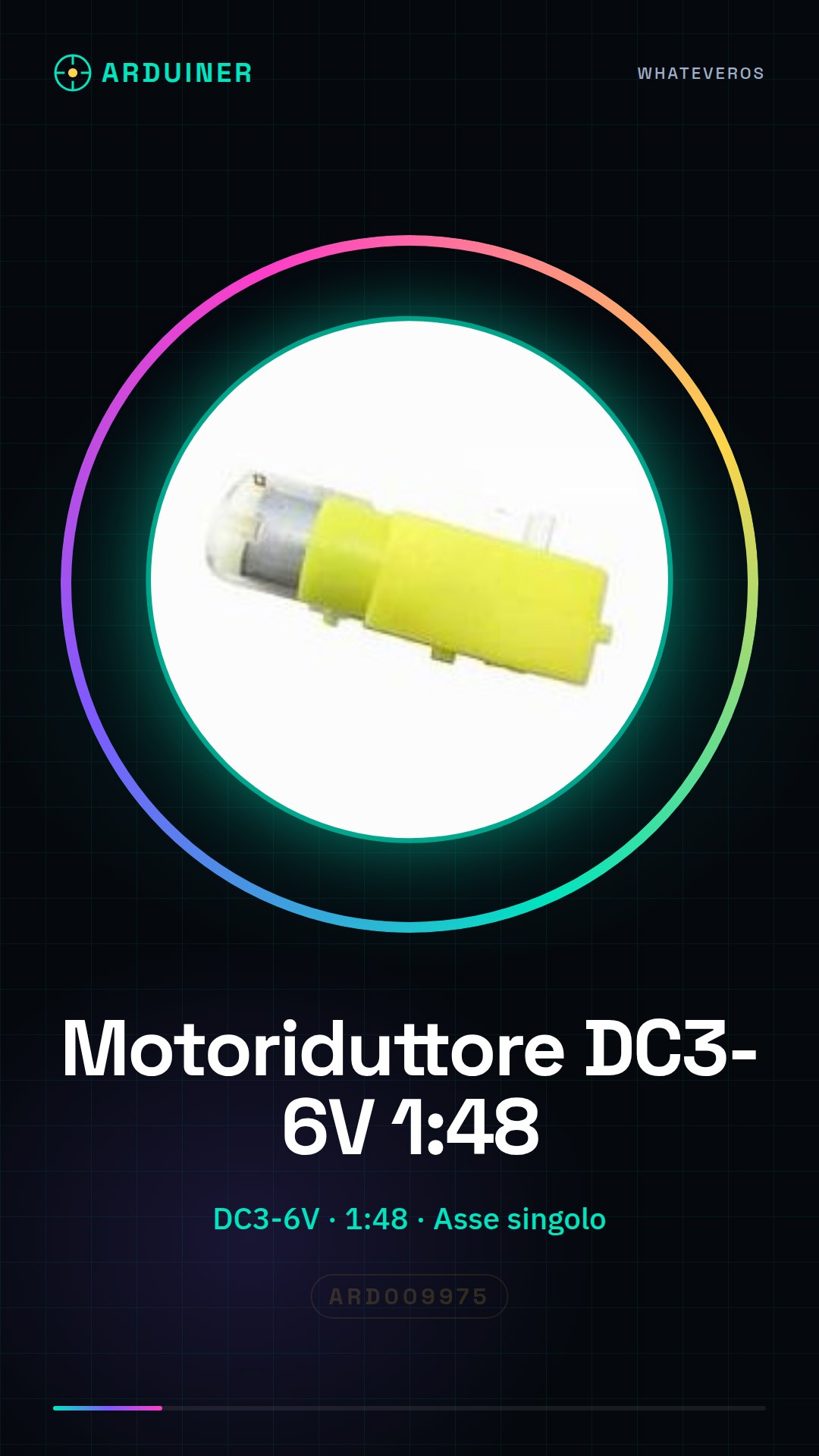
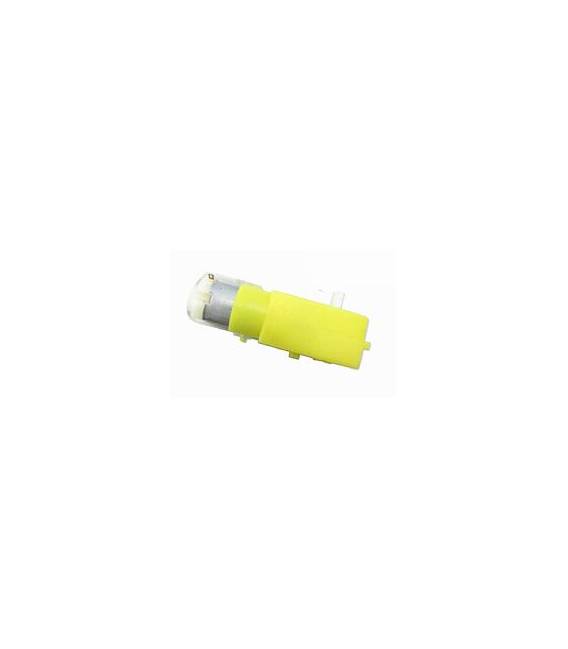
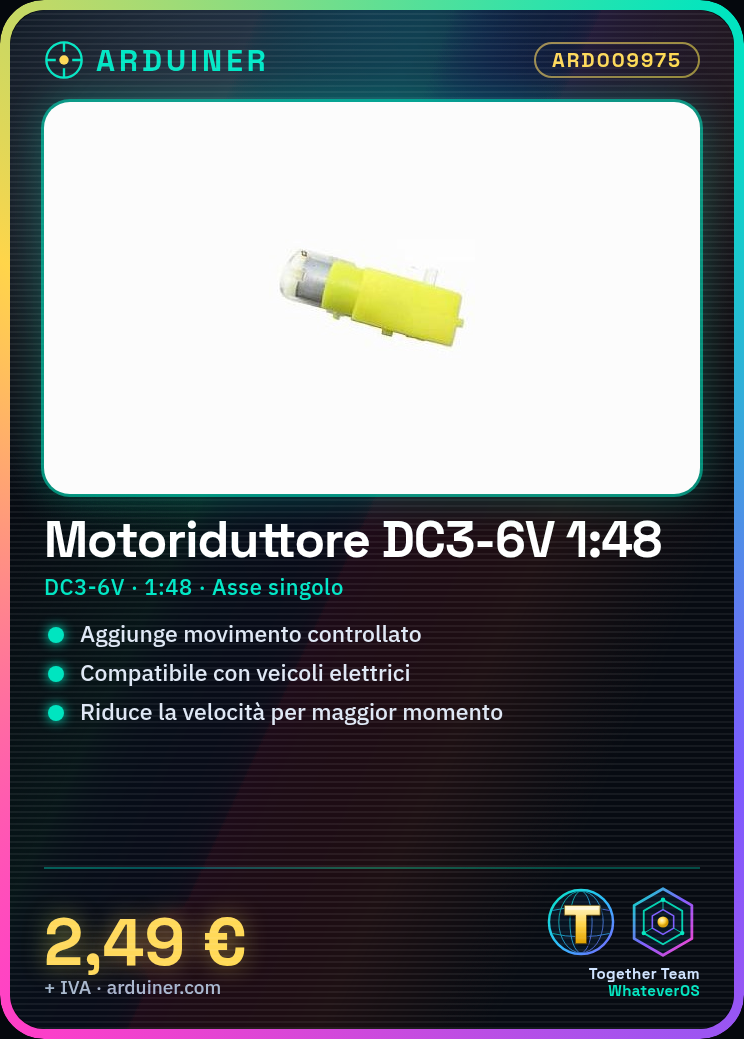
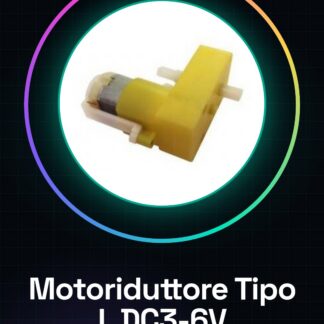
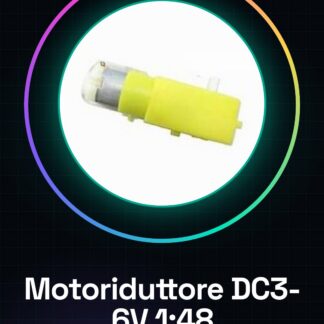
The DC3-6V single shaft gear motor with a 1:48 ratio is an electronic component ideal for robotics, model making, and small electric vehicles such as the TT Smart Car. This type of motor offers a gear reduction ratio that allows for greater rotational torque compared to speed.
Features
- Operating Voltage: DC3-6V
- Gear Ratio: 1:48
What it is for
This gear motor is suitable for creating smart toy cars, drones, and other small electric vehicles. It can be mounted on a lightweight plastic base and integrated with sensors to implement features such as autonomous driving. It is particularly useful for beginner and intermediate makers who want to add controlled movement to their devices.
Tutorial: How to Use DC 3-6V Gear Motor Ratio 1:48
This gear motor is ideal for robotics projects and low-power applications such as toy cars and drones. It will serve beginner and intermediate makers to add controlled movement to their devices.
What you need
- Arduino Uno
- Battery 3-6V
- Connection cables
- Mounting base
Steps
- Connect the two terminals of the gear motor to a pair of PWM pins on the Arduino.
- Download and upload the provided Arduino sketch to control the motor.
- Check that the battery voltage is within the 3V to 6V range as specified in the motor documentation.
- Mount the gear motor on a stable base using appropriate fasteners or screws.
- Insert the connection cables between the Arduino, the battery, and the gear motor.
- Check for short circuits before powering the system.
- Modify the sketch to adjust the motor speed according to the project requirements.
- Test the entire system to ensure everything works correctly.
Example code
void setup() {
  pinMode(9, OUTPUT);
pinMode(10, OUTPUT);
}

void loop() {
analogWrite(9, 255);
analogWrite(10, 180);
delay(3000);
analogWrite(9, 0);
analogWrite(10, 0);
}
Mini project
Build a smart toy car: mount the motor driver motor on a lightweight plastic base and add sensors for autonomous driving.
Common mistakes
- Incorrect cable connections
- Exceeds or does not reach the motor voltage limits
- Incorrect sketch settings
- Unstable mounting causing vibrations and shakes
Recommended accessories
- 3.7V LiPo battery
- L298N motor control module
- HC-SR04 distance sensors
- Arduino Uno base kit
Frequently asked questions
How powerful is this motor?
Check the product datasheet for the exact maximum current value.
Can I use another power supply voltage?
No, it should be between 3V and 6V as specified by the motor.
Which pins should I use on the Arduino?
You can use any Arduino PWM pin to control the motor.

Reviews
There are no reviews yet.