 EN
 IT Italiano
 ES Español
 FR Français
 DE Deutsch
Description
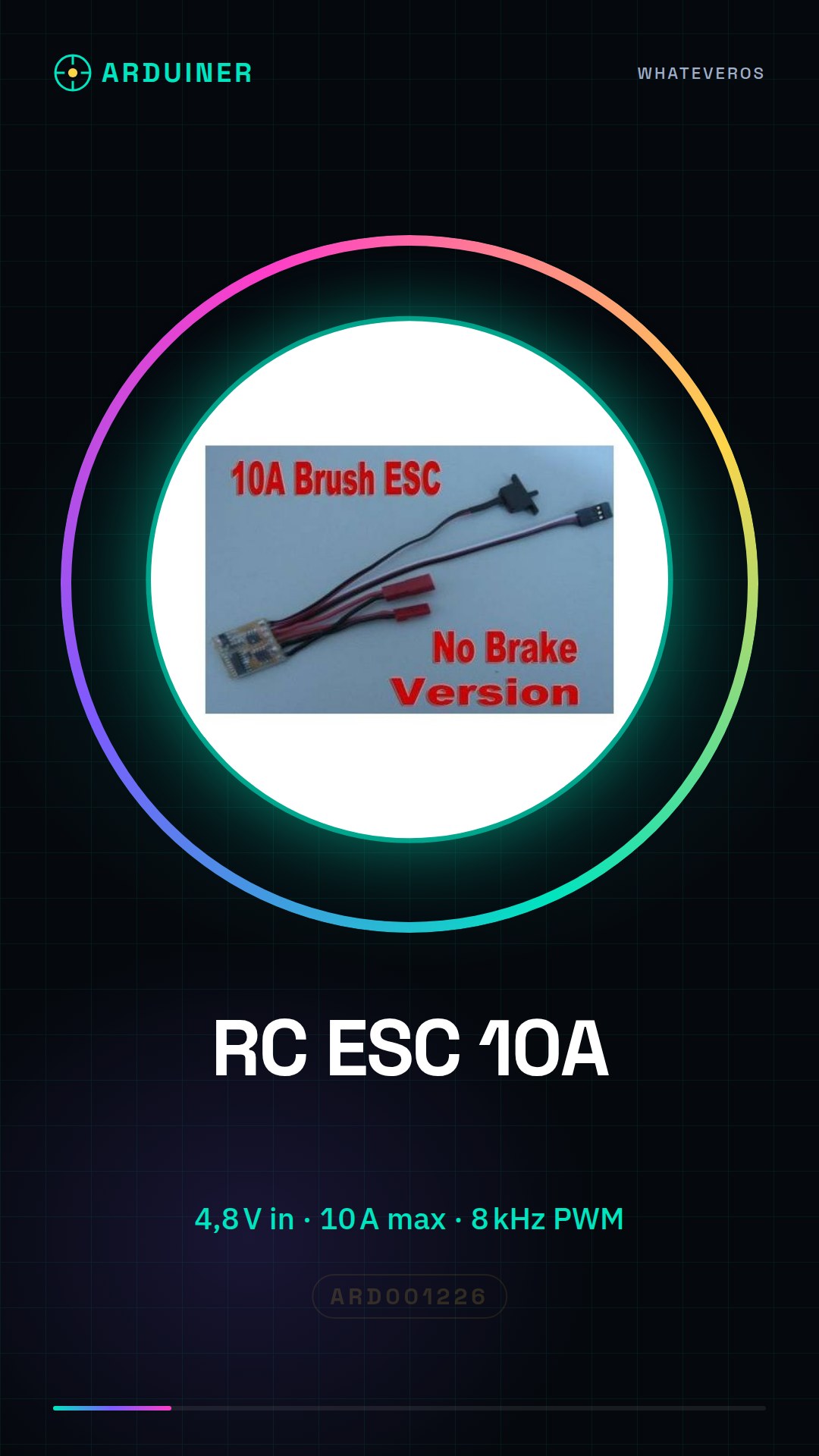
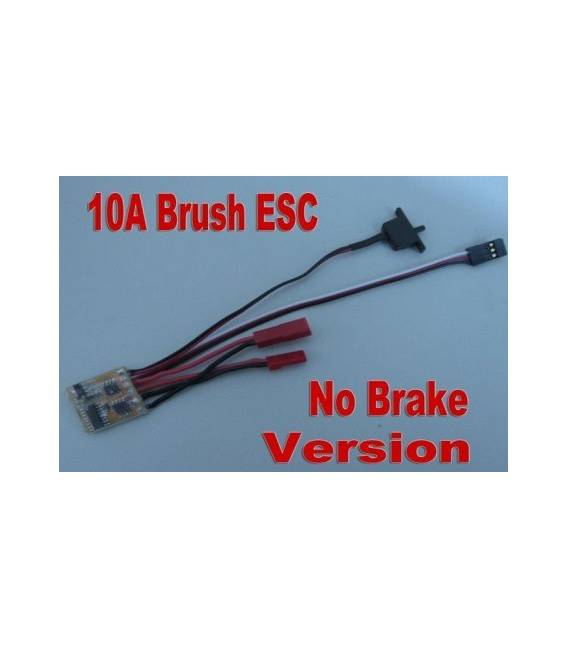
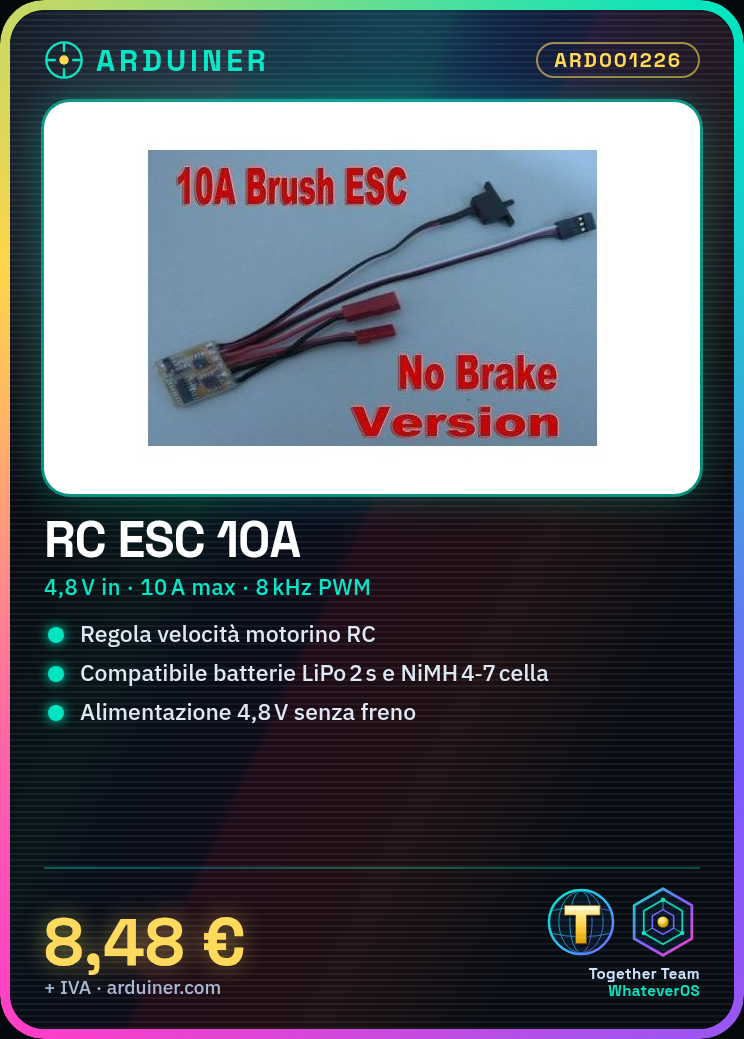
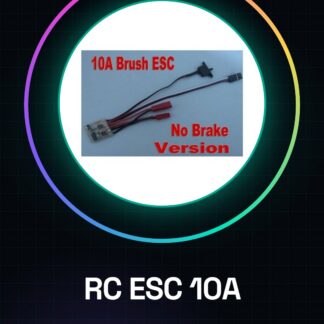
RC ESC 10A Brushed Electric Motor Speed Controller for Car and Boat 1/16 1/18 1/24 (without brake) Input Voltage: model from 4,8 V to 4,8 V: PPM Lithium Battery: 2 s, Ni Mh / Ni – CD Battery: 4-7 cells PWM: 8 k
Tutorial: How to use RC ESC 10A
The 10A ESC (Electronic Speed Controller) is an essential component for RC pilots who want to control the speed of electric motors in their RC cars or boats. This tutorial will guide you through the installation and basic operation.
What you need
- RC Motors
- Compatible LiPo Battery
- Rx (radio receiver)
- BEC Cable
- Ground Connection
Steps
- Connect the RC motor to the motor connector of the ESC.
- Connect the LiPo battery to the power supply input of the ESC. Ensure that the power supply is adequately protected to prevent short circuits.
- Connect the receiver (Rx) to the ESC’s Rx connector, following the specific RC model instructions.
- If necessary, connect a BEC cable from ESC to Rx or to any other device requiring continuous power.
- Connect the BEC connector to the ESC’s power supply to provide constant current to the receiver and servos during RC model operation.
- Connect a ground wire between ESC and RC motor, if necessary.
- Configure the RC transmitter in ‘bind’ mode.
- Test the ESC with RC control to ensure it works correctly.
Mini project
Build a simple RC car or boat model and test it with this 10A ESC. Check the motor speed in response to transmitter commands.
Common mistakes
- Connect the ESC to the battery’s reverse polarity
- Do not configure the receiver in ‘bind’ mode
- Use a motor or battery with current higher than what the ESC supports (10A)
- Do not connect ground between ESC and motor
Recommended accessories
- Compatible LiPo batteries
- RC motors suitable
- Compatible Rx
- BEC cables
Frequently asked questions
What is the maximum current of the ESC?
Check the datasheet.
Does the ESC have an integrated brake?
No, this ESC does not include a brake function.
Reviews
There are no reviews yet.