 EN
 IT Italiano
 ES Español
 FR Français
 DE Deutsch
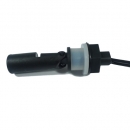
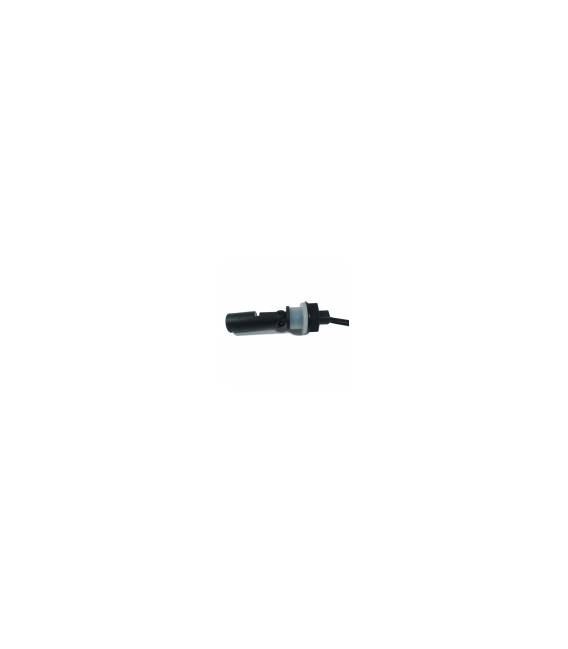
Description
What it is
The E-type level sensor is a robust device designed for monitoring fluid levels in containers.
Features
- E-type corrosion
- Material: PP / plastic
- Buoy type: duckbill
- Buoy positioning: lateral
- Function: level switch / level sensor
- SKU: ARD009524
- Price: 3.02 €
What it is for
The E-type level sensor is useful for irrigation and water supply systems. It can be used to measure liquid levels in containers, activating alarm systems or automatic level control systems. Example use: build an alarm system for a domestic water supply, connecting it to a relay to activate an acoustic signal when the level drops below a certain point.
Tutorial: How to use the E-type Level Sensor
This detector is ideal for measuring liquid levels in containers, serving for alarm systems or automatic level control systems.
What you need
- E type Level Sensor
- Arduino or compatible microcontroller
- Power cable (5V)
- Pull-up resistor (10kΩ)
Steps
- 1. Check the datasheet for the sensor specifications.
- 2. Mount the sensor in a container with a side spout.
- 3. Connect the VCC pin to the 5V of the Arduino.
- 4. Connect the GND pin to the GND of the Arduino.
- 5. Connect the SIG pin to a digital pin of the microcontroller.
- 6. Add a pull-up resistor (10kΩ) between SIG and VCC.
- 7. Load the example code onto the microcontroller.
- 8. Verify the proper functioning of the sensor.
Example code
int sensorPin = 2; int sensorValue = 0; void setup() { pinMode(sensorPin, INPUT); } void loop() { sensorValue = digitalRead(sensorPin); Serial.println(sensorValue); delay(1000); }Mini project
Build an alarm system for a domestic water supply using the level sensor and a relay to activate an acoustic signal when the level drops below a certain point.
Common mistakes
- Connecting the SIG pin directly to GND can damage the sensor.
- Not verifying the specifications on the datasheet can lead to operational issues.
- Not using a pull-up resistor can cause reading errors.
- Connecting the sensor to an analog pin may not work correctly.
Recommended accessories
- Relay
- Acoustic signal (buzzer)
- Power cable (5V)
- Arduino UNO
Frequently asked questions
Does the sensor work with voltages other than 5V?
Check the datasheet. Other voltages may require a transformer.
Does the sensor work with different liquids?
Check the datasheet. Certain liquids may damage the sensor.
Can I use this sensor to measure gas level?
No, use a specific gas sensor.
Reviews
There are no reviews yet.