 EN
 IT Italiano
 ES Español
 FR Français
 DE Deutsch
Description
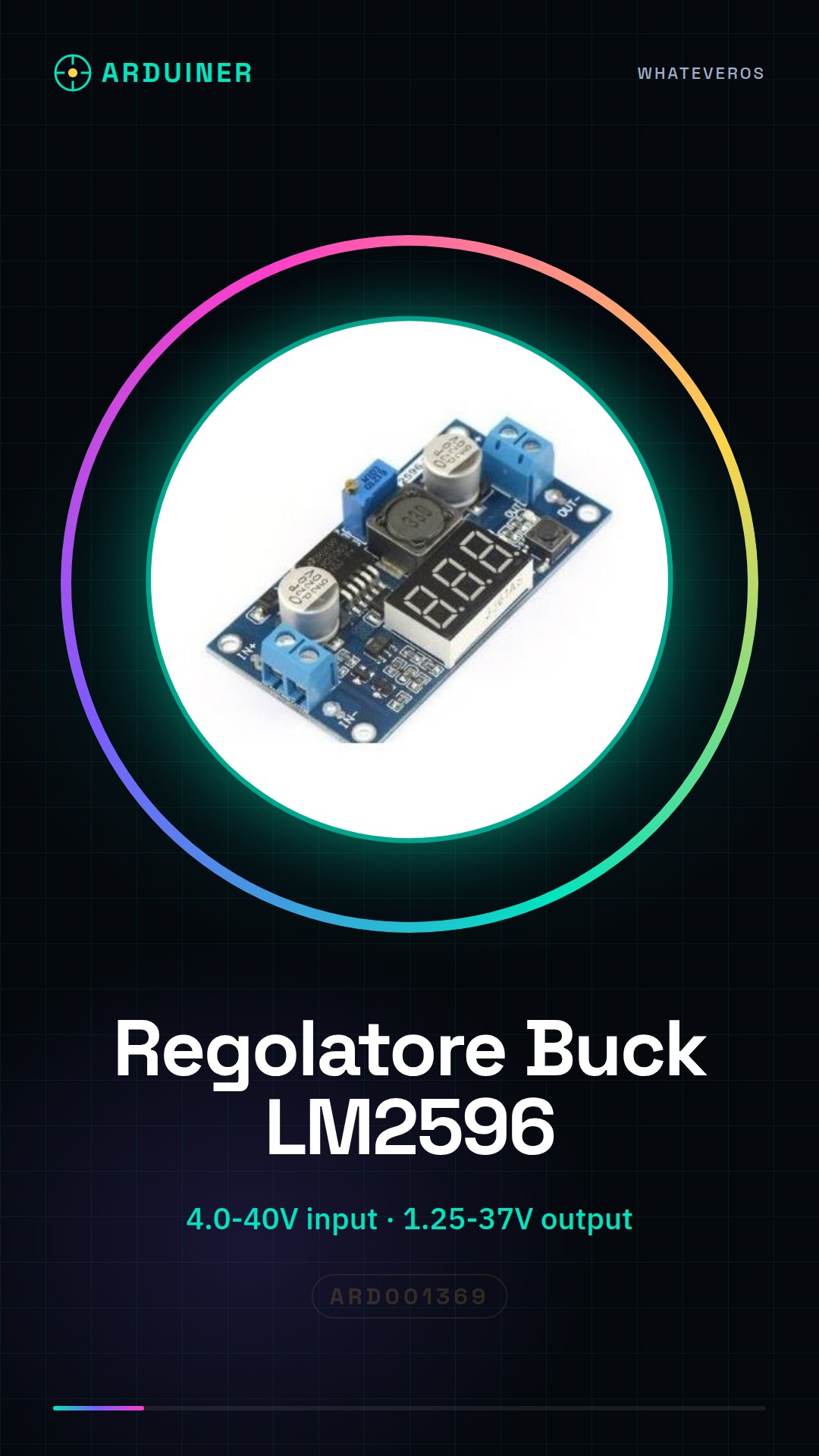
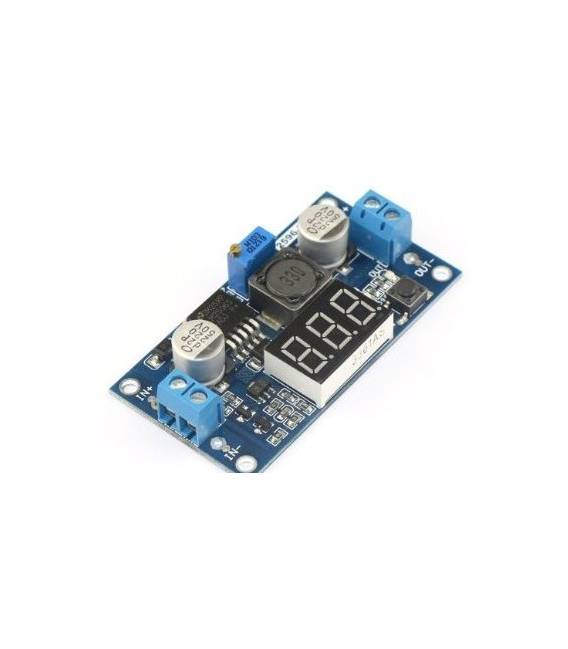
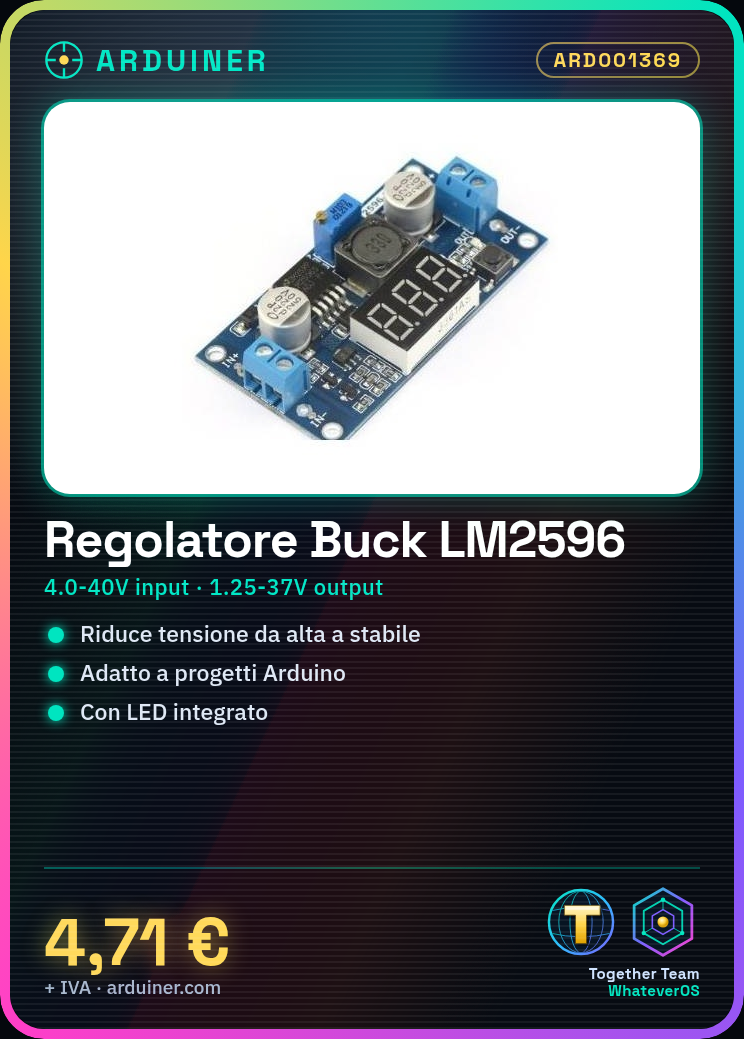
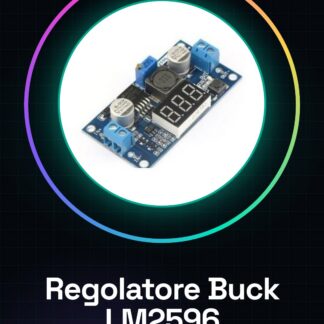
The Buck Voltage Regulator Converter Voltmeter with LED from 4.0-40V to 1.25-37V is a crucial component for power management in electronics projects, suitable for both beginners and experts. Features: Input voltage: 4.0-40V Output voltage: 1.25-37V LM2596 Regulator This buck voltage regulator is ideal for stepping down a higher voltage to a stable and controllable output, suitable for powering Arduino devices or other circuits requiring precise output voltages. It is particularly useful in LED lighting projects controlled by Arduino. Tutorial: How to Use Buck Voltage Regulator Converter LM2596 The buck voltage regulator converter LM2596 allows you to step down the voltage from a higher supply to a stable and controllable output, ideal for Arduino projects or circuits requiring specific voltages. This component is particularly useful for beginner and intermediate makers. What it’s used for Arduino Uno Test leads Multimeter Steps: Check the input voltage of the external power supply (4.0-40V). Connect the converter input to the positive and negative terminals of the power supply. Use the potentiometer to regulate the desired output between 1.25-37V, checking with a multimeter. Verify the output voltage on the circuit or device connected to the converter. If necessary, further adjust the potentiometer to achieve the desired output. Mini-project Create a controllable LED lighting system using this voltage regulator. Adjust the LED brightness via the LM2596 converter. Common errors Not verifying the correct power supply before connecting. Using an incorrect resistance or capacitive value for specific conditions. Adjusting the potentiometer too quickly, damaging the converter. Ignoring thermal dissipation during use at high voltages. Recommended accessories Arduino Uno LEDs Resistors Capacitors Frequently asked questions How can I check the output voltage? Use the potentiometer to manually set the desired voltage. What are the limits of the LM2596 converter? Check the datasheet for maximum current and thermal dissipation specifications.
Reviews
There are no reviews yet.