 EN
 IT Italiano
 ES Español
 FR Français
 DE Deutsch
Description
Tutorial: How to Use 100 Ohm Resistor
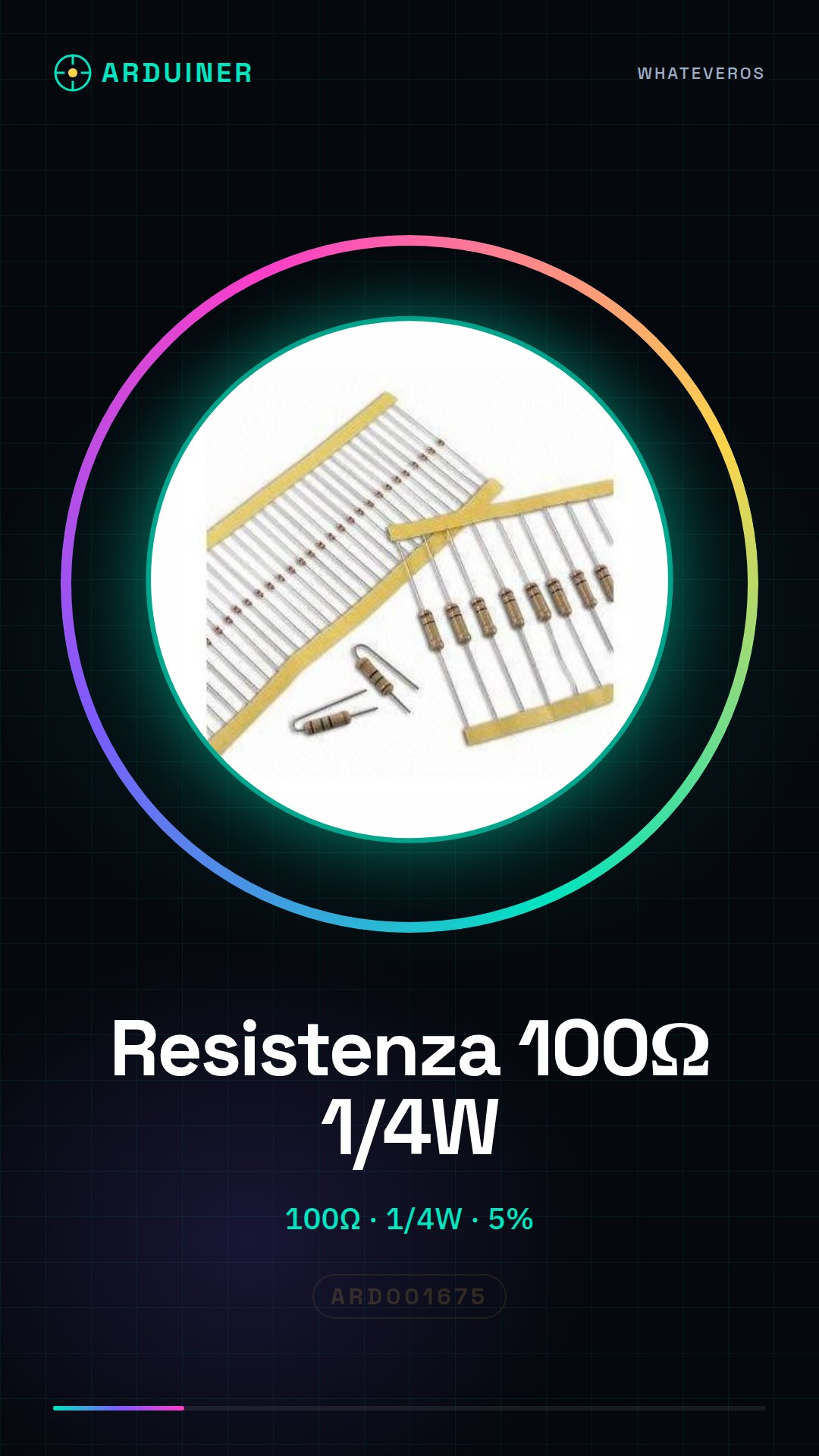
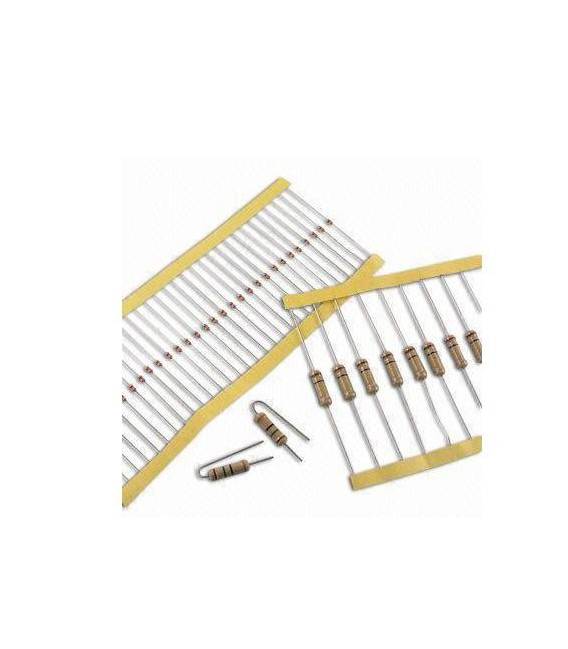
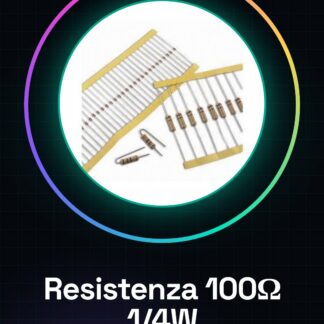
Resistors are fundamental components in every electronic project. This 100 ohm resistor is ideal for beginners and makers who are learning to manage current flow in their circuits.
What you need
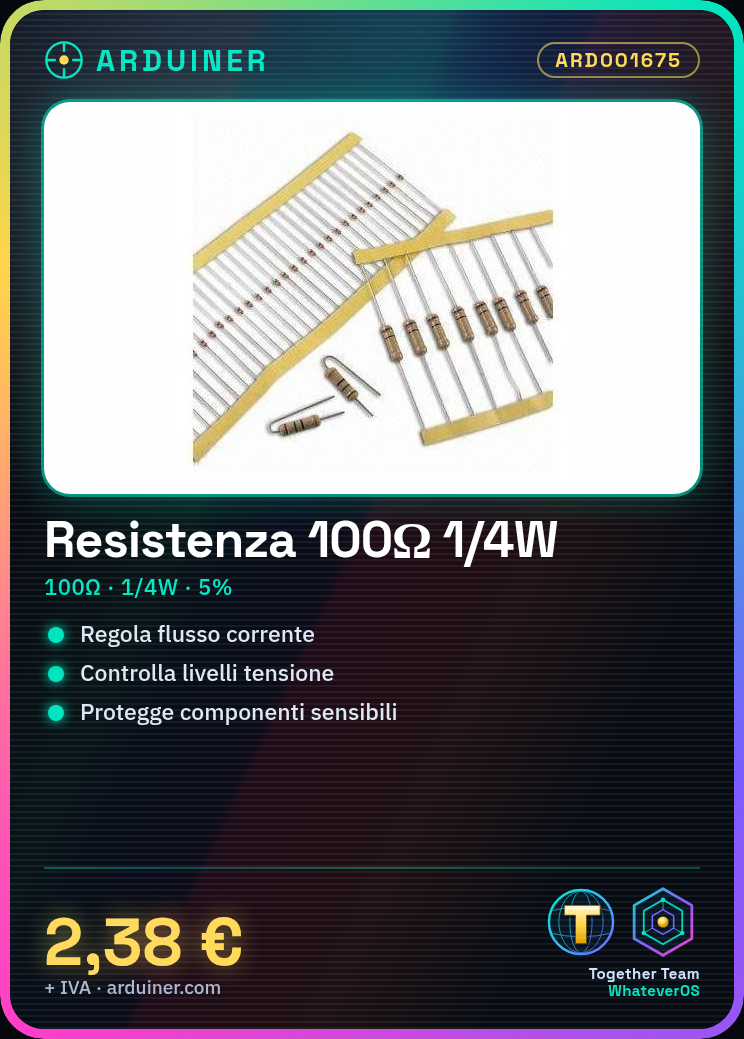
- Regulate Current
- Divide Voltage Levels
- Protect Sensitive Components
Steps
- Check the datasheet for the resistor specifications (e.g., maximum power, tolerance)
- Identify the color bands on the resistor to determine its resistance
- Connect the resistor between a source component and a destination component in the circuit
- Ensure there are no short circuits or overloads
- Test the effect of the resistor on current flow with a multimeter
- Adapt the power of the resistor to the consumption of the connected component
Mini project
Create a simple circuit that regulates the brightness of an LED using a potentiometer and a fixed resistor of 100 ohms.
Common mistakes
- Use a resistor with insufficient power rating
- Ignore the tolerance of the resistor
- Connect the resistor incorrectly in the circuit
Recommended accessories
- Arduino Uno R3
- LEDs in various colors
- 10k ohm potentiometer
- Digital multimeter
Frequently asked questions
How is the power of a resistor calculated?
The power P can be calculated using the formula P = V^2/R, where V is the voltage across the resistor and R is its resistance in ohms.
What are the colors of the bands on the 100 ohm resistor?
Check the specific datasheet to obtain the exact color combination.
Reviews
There are no reviews yet.