 EN
 IT Italiano
 ES Español
 FR Français
 DE Deutsch

Description
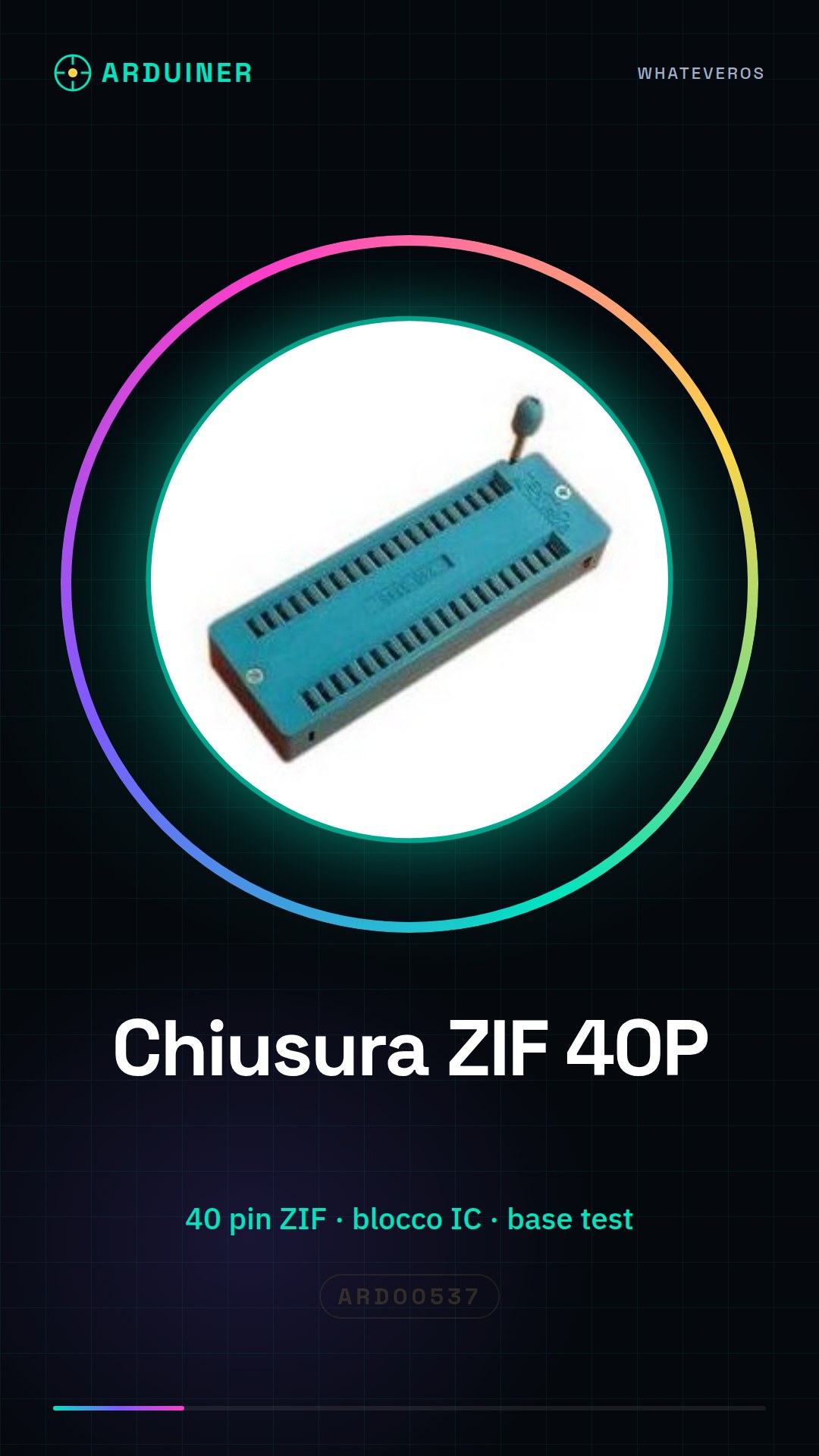
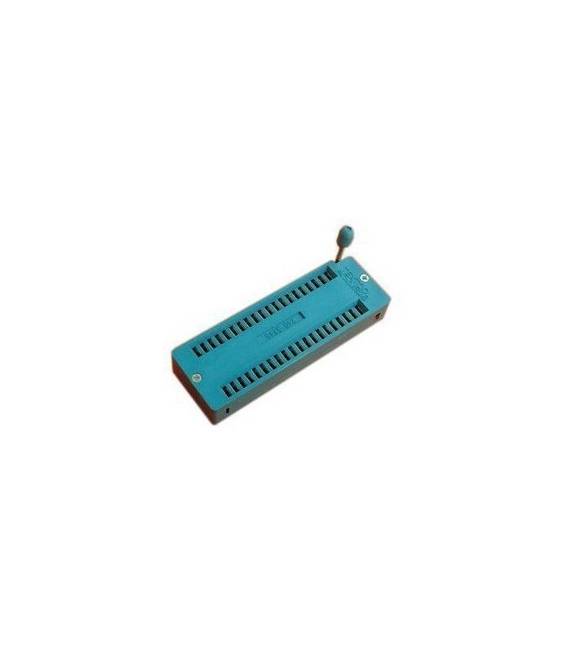
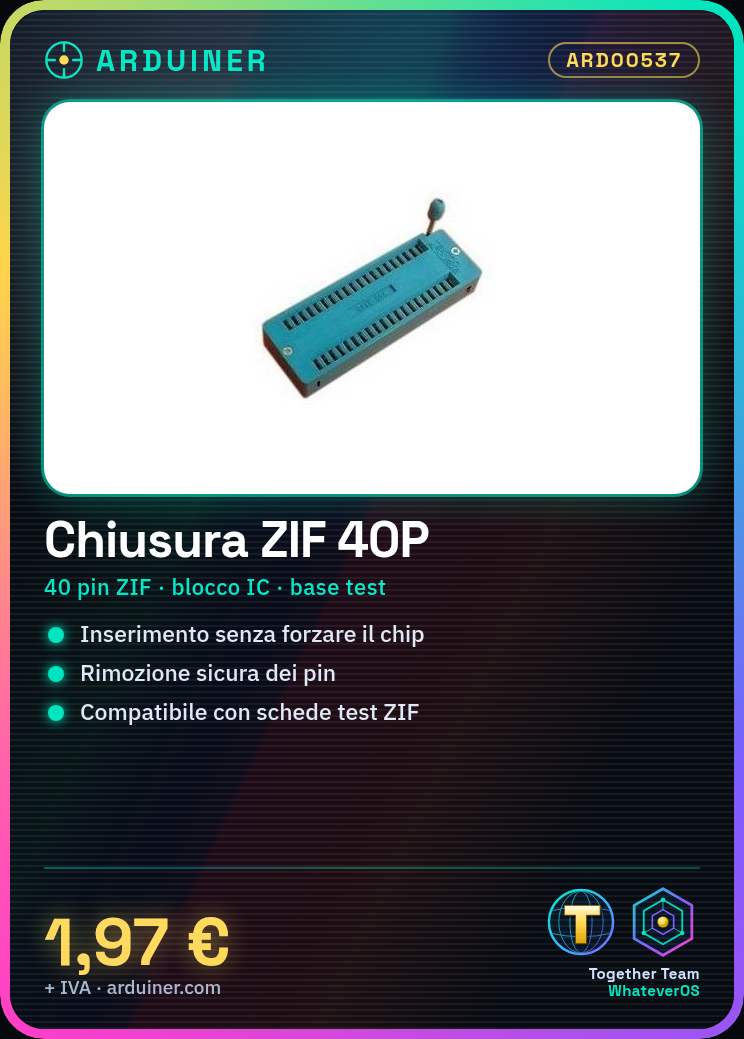
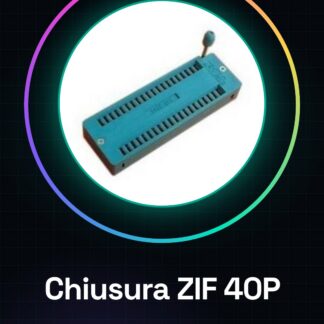
40P locking, IC Block, 40P loose seat, 40PIC test socket chip base, IC socket
We have datasheets available for all components, if not present in the product download sheet, send us a message through the contact us form and we will publish it as soon as possible on our website.
Tutorial: How to use ZIF 40P IC Closure
The IC (Inter-Integrated Circuit) Zero Insertion Force, or ZIF, is a very useful device for makers and electronics enthusiasts working with integrated circuits. This tool allows you to insert and remove a chip from a board safely without risking mechanical damage.
What you need
- ZIF 40P IC Closure
- Chips to be tested or programmed (for example, a microcontroller)
- Motherboard with appropriate connectors
Steps
- 1. Check that the chip to be inserted has a pin configuration compatible with the ZIF 40P closure.
- 2. Gently place the chip over the opening of the latch, ensuring it is centered and not tilted.
- 3. Slowly close the locking lever to secure the chip in the correct position without forcing.
- 4. Visually check that each pin of the chip is in contact with the ZIF socket, with no space between them.
- 5. Connect the end of the ZIF socket to a board or another testing platform.
- 6. Configure your development environment to communicate with the board and the chip inserted in the ZIF socket.
Mini project
Create a simple project that uses a microcontroller inserted in the IC ZIF 40P socket. Program the device to turn on an LED each time a button is pressed.
Common mistakes
- Inserting the chip off-center or tilted
- Forcing the locking lever
- Not properly checking the contacts before use
Recommended accessories
- Board compatible with ZIF 40P connector
- Microcontroller to test or program
- Electronic test kit
Frequently asked questions
How can I protect my chip during testing?
Use an insulated holder to avoid accidental short circuits.
What is the difference between a 40P ZIF socket and a standard one?
The ZIF socket allows chips to be inserted and removed without forcing, reducing the risk of mechanical damage.
Reviews
There are no reviews yet.