 EN
 IT Italiano
 ES Español
 FR Français
 DE Deutsch
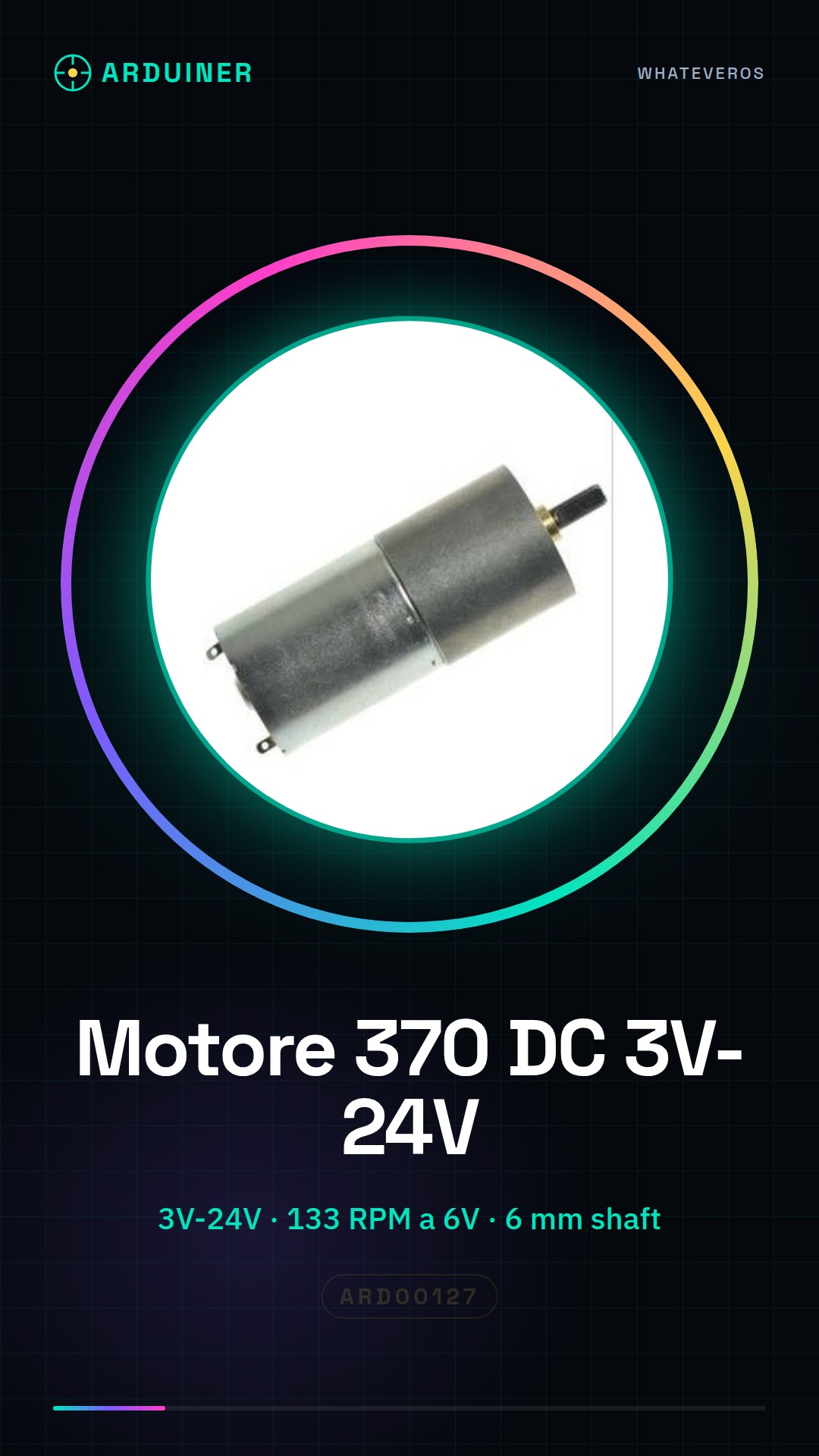
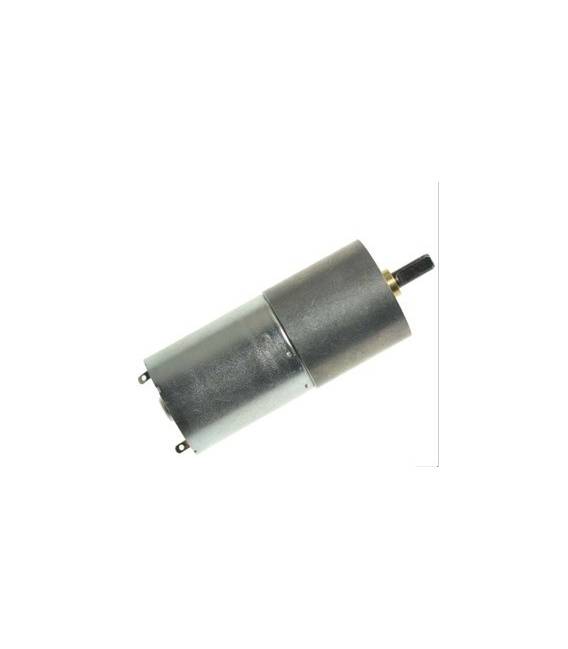
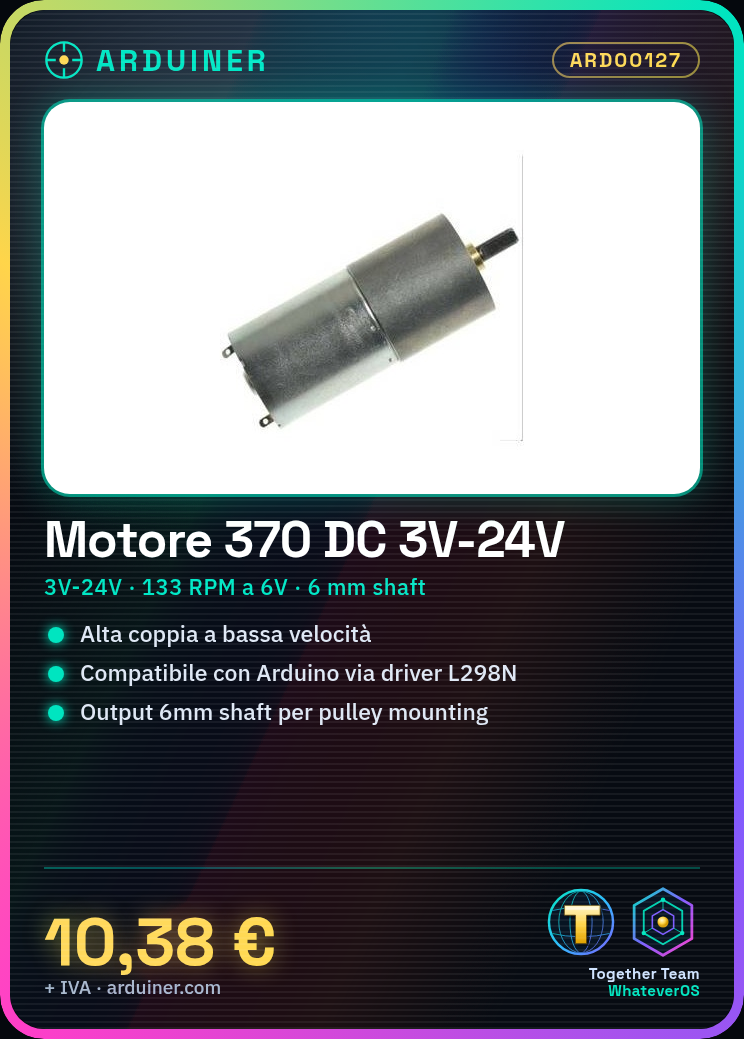
Description
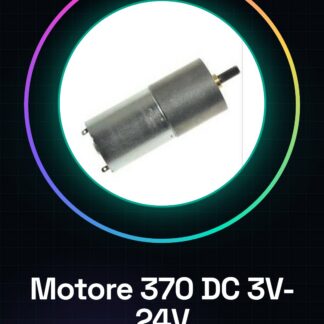
Model: DC 370
Voltage: 3V – 24V (optimal 6V – 12V for Arduino use)
Nominal Speed: 133 RPM (at 6V)
Type: Brushed DC motor with integrated metal gearhead
Torque: High, suitable for applications requiring low-speed high force
Current Draw: Idle: ~100-200 mA
Load: 500-800 mA (can exceed 1A in stall)
Output Shaft: Cylindrical, 6mm diameter (often with a flat for mounting pulleys/wheels)
Common Applications: Robotics, traction systems, small lifters, automated mechanisms.
Why is the gearbox important? It reduces motor speed and increases torque, making it suitable for controlled movement of loads or robots.
Connecting to Arduino: A DC motor cannot be directly connected to Arduino pins because it requires more current than the pins can provide. A DC motor driver is needed, such as L298N, L293D H-bridge based on MOSFETs (e.g., BTS7960 for high currents). Example with L298N: Motor → OUT1 and OUT2 terminals of L298N
L298N Vcc → External motor power supply (6V – 12V)
L298N GND → Common ground for motor and Arduino GND
IN1, IN2 → Arduino digital pins for direction
ENA → Arduino PWM pin for speed control
Example Arduino Code:
// L298N connection pins
int IN1 = 8;
int IN2 = 9;
int ENA = 10;
// PWM pin for speed control
void setup() {
pinMode(IN1, OUTPUT);
pinMode(IN2, OUTPUT);
pinMode(ENA, OUTPUT);
}
void loop() {
// Forward rotation at medium speed
digitalWrite(IN1, HIGH);
digitalWrite(IN2, LOW);
analogWrite(ENA, 150); // 0-255 (PWM)
delay(2000); // Stop
analogWrite(ENA, 0);
delay(1000);
// Reverse rotation at maximum speed
digitalWrite(IN1, LOW);
digitalWrite(IN2, HIGH);
analogWrite(ENA, 255);
delay(2000); // Stop
analogWrite(ENA, 0);
delay(1000);
}
Practical Tips: Provide separate power supply – Supply the motor with its dedicated power source (6V – 12V) and share only the GND with Arduino. Protection – Add a flyback diode if the driver does not have one, to protect Arduino from current returns. Speed and Torque – Remember that lower voltages will make the motor slower but consume less current. Use with encoders – If you add an optical or magnetic encoder, you can also control the number of revolutions and make precise movements. Avoid stalling – A motor stopped under voltage can draw a lot of current and may damage components.
Reviews
There are no reviews yet.