 EN
 IT Italiano
 ES Español
 FR Français
 DE Deutsch
Description
What it is
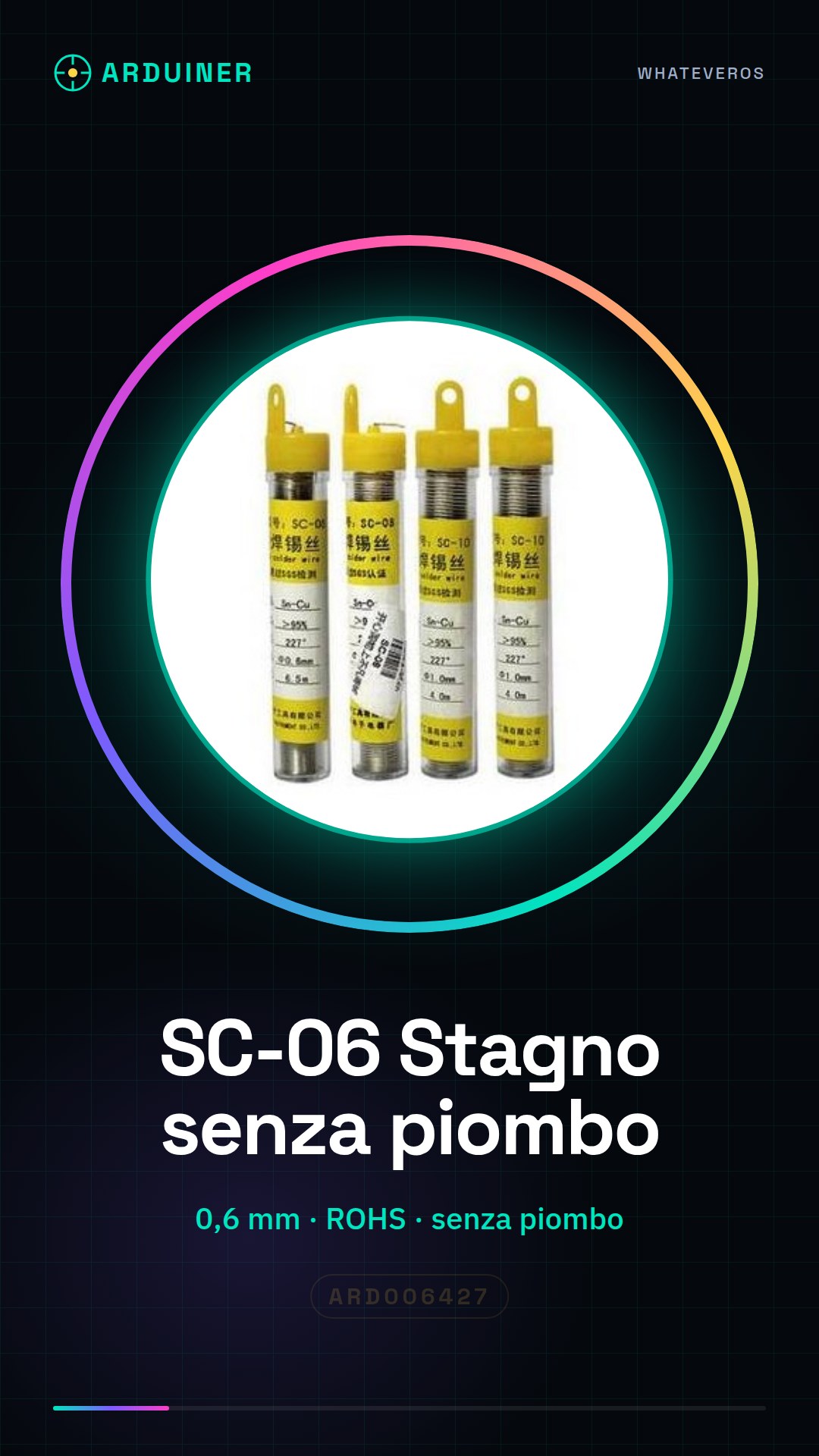
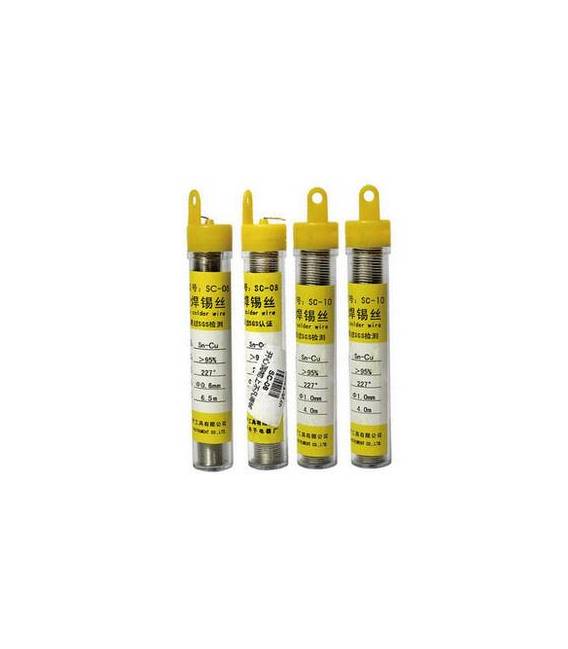
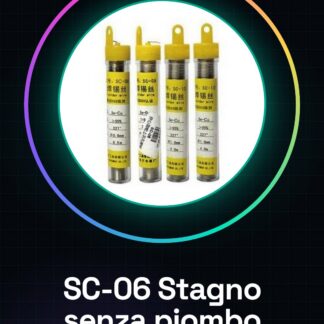
The SC-06 ROHS lead-free solder wire with a diameter of 0.6 mm is compliant with the ROHS standard and is used in electronic projects and robust constructions.
Features
- Lead-free solder wire
- Diameter: 0.6 mm
- Compliant with ROHS standard
What it is for
The SC-06 wire is used to solder electronic components such as LEDs, resistors, and buttons on protoboards or printed circuits. It is ideal for Arduino or ESP projects.
Tutorial: How to use SC-06 ROHS Lead-free Solder Wire
The SC-06 solder wire is a fundamental component for makers and electronics enthusiasts who perform assembly work on printed circuits. This lead-free wire, as required by the ROHS standard, ensures a clean and safe melt without environmental damage.
What you need
- Soldering oven
- Soldering iron
- Pliers
- Paste dispenser
Steps
- Step 1: Before starting, make sure your soldering iron is properly set to a temperature between 300 and 400 degrees Celsius.
- Step 2: Take the SC-06 wire and cut a piece long enough to complete the required soldering.
- Step 3: Position the components correctly on the printed circuit board, ensuring they are well aligned.
- Step 4: Apply solder wire to the tip of the soldering iron to facilitate the melting of the metals.
- Step 5: Pass the soldering iron over the junction between the component and the printed circuit board, heating the area until the metal of the circuit melts with that of the component.
- Step 6: Once the melting is complete, carefully withdraw the soldering iron while keeping the solder wire in place for a few extra seconds to ensure a solid and clean joint.
- Step 7: Check that the joint is smooth and free of holes or cracks using a hot air blower if necessary.
- Step 8: Repeat steps 3 to 7 for each connection of the circuit.
Mini project
Create a simple input/output interface on a protoboard using components such as LEDs, resistors, and buttons. Use the SC-06 solder wire to solder the components to the printed circuit board.
Common mistakes
- Using a temperature that is too high or too low during the soldering process.
- Not applying enough solder to the tip of the soldering iron before starting to solder.
- Soldering without first properly positioning the components on the printed circuit board.
- Allowing the solder wire to cool too quickly, causing weak or irregular joints.
Recommended accessories
- Soldering oven
- Circuit cleaning kit
- Holding pliers
- Hot air nozzle
Frequently asked questions
Which diameter is best suited for most projects?
The 0.6 mm diameter of the SC-06 solder wire is ideal for most soldering applications on printed circuit boards.
How can I clean the joints after soldering?
Use a specific cleaning kit to remove any leftover solder or impurities from the surface of the circuit.
What is the difference between this solder wire and other types of solder wire?
This SC-06 solder wire complies with the ROHS standard, does not contain lead, and ensures a cleaner and safer melt.
Reviews
There are no reviews yet.