 EN
 IT Italiano
 ES Español
 FR Français
 DE Deutsch



Description
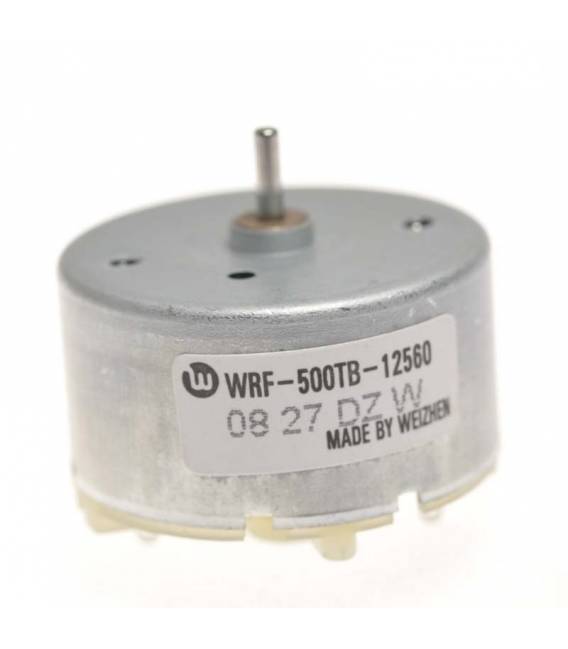
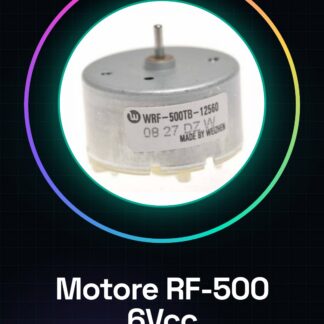
What is the RF-500 Electric Motor? The RF-500 low-profile electric motor is designed for applications requiring fast movement on a small scale. This motor is compatible with various control devices, including Arduino. Features Operating Voltage: 6Vcc RPM at full load: 2700 Use Ideal for Arduino and 3D printing projects, the RF-500 can be used in applications such as sensor-guided small vehicles. Its compatibility with Arduino makes it a versatile option for integration into electronic projects. Tutorial How to use RF-500 Low Profile Electric Motor The RF-500 low-profile electric motor, with 2700 rpm at 6Vcc, is ideal for projects requiring fast movement on a small scale. This tutorial will guide you through the installation and operation of the motor. What You Need Arduino Uno Power supply connection from 6Vcc Jumper wires Steps Connect the positive terminal (Vcc) to the positive pole of the motor Connect the negative pole of the motor to GND Use a jumper wire to connect the motor control interface to one of the Arduino output pins Write and upload the Arduino sketch to the microcontroller Check that the motor works correctly by pressing debug keys in the Arduino IDE software Example code void setup() { pinMode(9, OUTPUT); } void loop() { digitalWrite(9, HIGH); // Start the motor delay(1000); digitalWrite(9, LOW); // Stop the motor } Mini-project Build a small slide-guided vehicle controlled by an Arduino. Use the RF-500 motor for propulsion and control direction with a pair of sensors. Common Mistakes Connecting the positive terminal of the motor to ground Not providing adequate power (6Vcc) Using an input pin instead of output to control the motor Recommended Accessories Arduino Uno 3D printing for building the base of the vehicle Distance sensors for orientation Frequently Asked Questions Can the motor be used with voltages other than 6Vcc? Check the datasheet for operating specifications at different voltages. What is the maximum power of the RF-500 motor? Check the datasheet for details on power and thermal dissipation.
Reviews
There are no reviews yet.