 EN
 IT Italiano
 ES Español
 FR Français
 DE Deutsch
Description
Technical Specifications
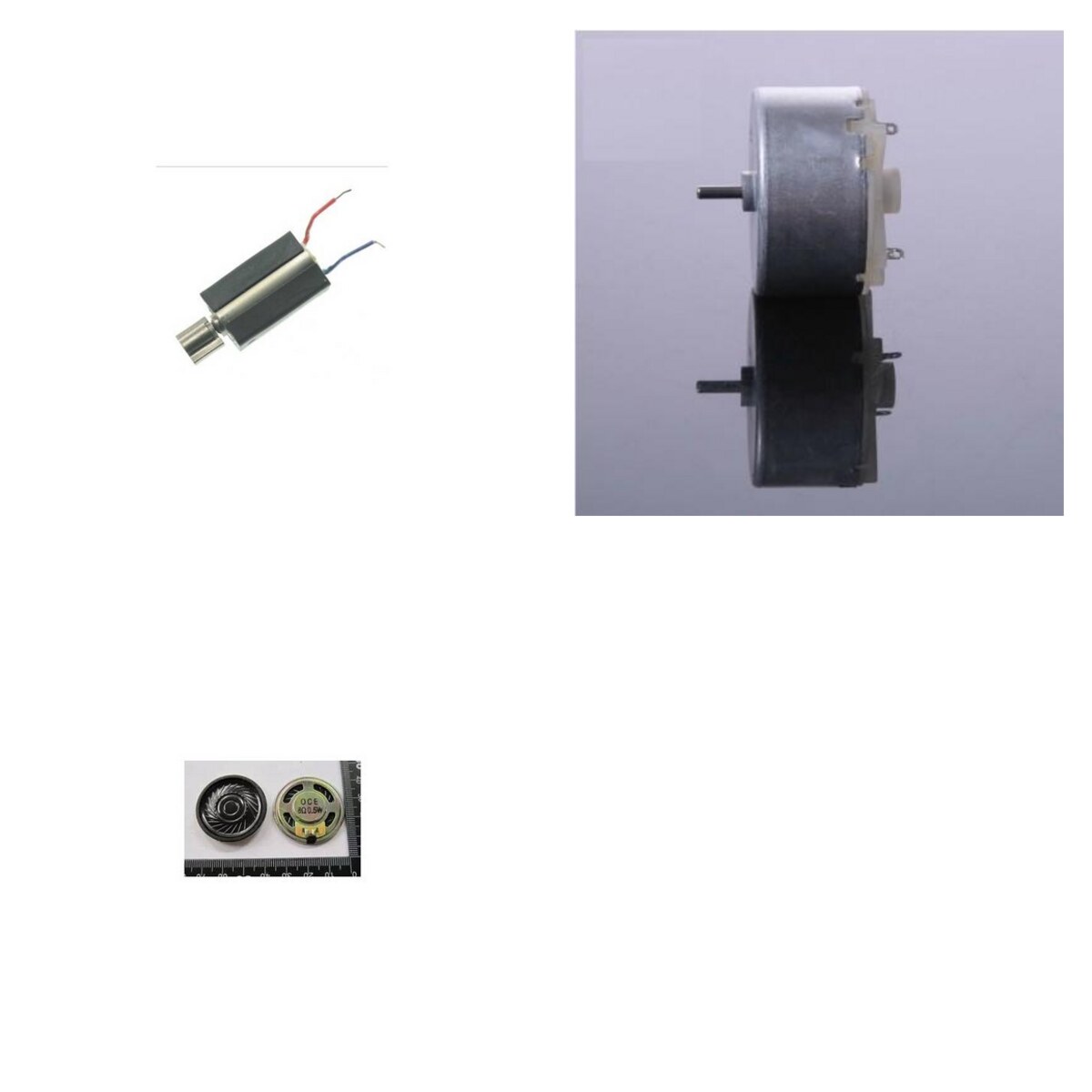
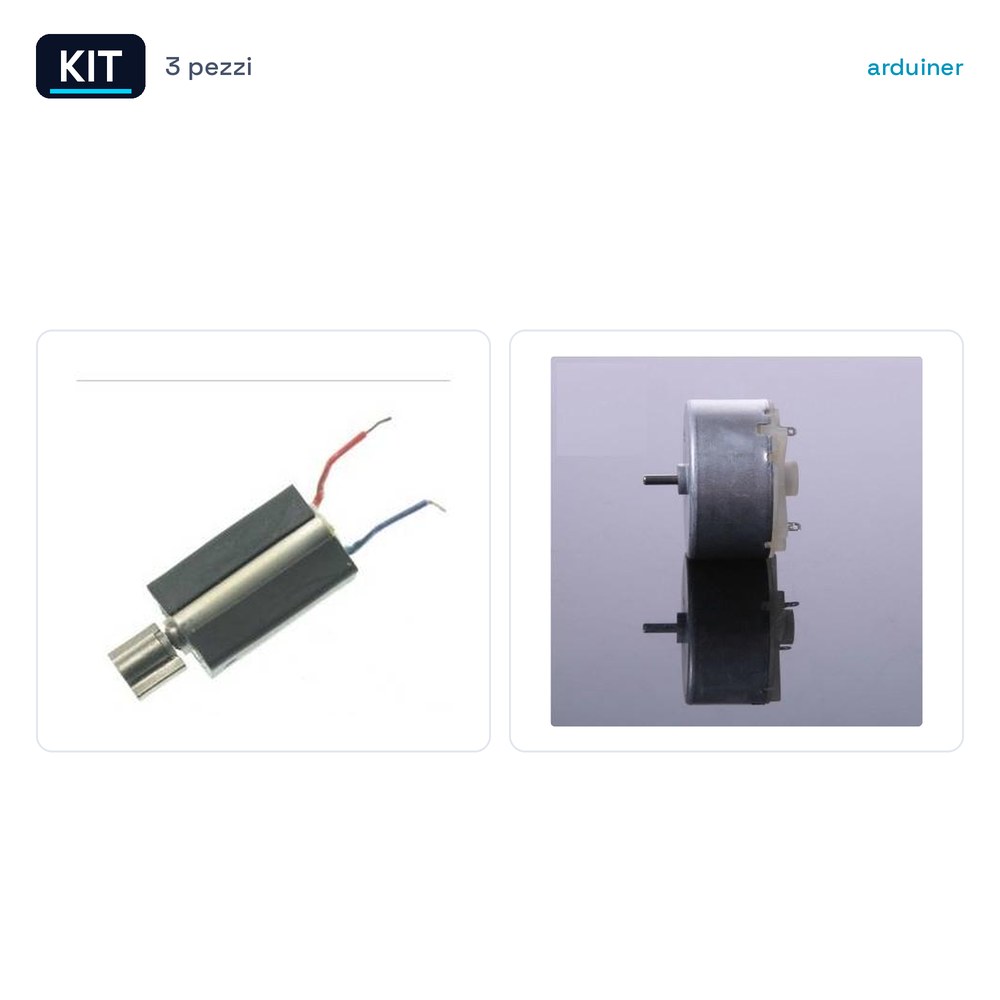
The Small Vibration Motor Alert Kit 408, Low Profile Motor and 8ohm 0.5 W 36 mm Speaker is a set of electronic components designed for alert and signaling applications. The vibration motor and speaker can be used to generate visual and acoustic signals, while the low profile motor provides a power solution for applications requiring movement and mechanical actions.
This kit consists of three main components: a vibration motor for alerting with vibrations, a low profile motor for power applications, and a speaker for generating sound signals. Each component can be used individually or integrated into more complex projects to create effective alert systems.
For proper installation and operation, it is necessary to correctly connect the electrical components to the electronic control system, such as an Arduino board or a similar microcontroller, ensuring that the voltages and currents are compatible with the component specifications.
Key Specifications
| Parameter | Value |
| Product Name | Small Vibration Motor Alert Kit 408 + Low Profile Motor + Speaker 8ohm 0.5 W 36 mm |
| Code | ARD0014864 |
| Components Included | Small Vibration Motor Alert 408, Low Profile Motor, Speaker 8ohm 0.5 W 36 mm |
| Motors Voltage | 6Vcc |
| Motors Speed | 2700rpm |
| Speaker Impedance | 8ohm |
| Speaker Power | 0,5 W |
| Speaker Dimensions | 36 mm |
| Container | N/D (see manufacturer’s technical sheet) |
Installation and Usage
- Check the electrical compatibility between the kit components and the electronic control system.
- Connect the vibration motor to the electronic control system using the appropriate connectors.
- Connect the low-profile electric motor to the electronic control system, ensuring that the supplied voltage is compatible with the motor specifications.
- Connect the speaker to the electronic control system, using an amplifier if necessary to manage the power.
- Perform an initial test to verify that all components are functioning correctly.
Compatibility and Requirements
- This kit is compatible with a wide range of electronic control systems, including Arduino, Raspberry Pi, and other microcontrollers.
- It is possible to integrate the kit components into projects that require visual and audible warning signals.
- To use the kit, an electronic control system that can provide the required voltage and current for the components is necessary.
Limitations and Important Notes
- The low-profile electric motor is not designed for high-power applications.
- The speaker is not designed to be used without an appropriate amplifier.
- Ensure that the voltage supplied to the kit components is compatible with the component specifications.
- It is important to verify the electrical compatibility between the kit components and the electronic control system before use.
Troubleshooting
The electric motor does not turn on.
Probable cause: The supplied voltage is not adequate to operate the motor.
Solution: Check the supplied voltage and ensure it is compatible with the motor specifications.
The speaker is not emitting sound.
Probable cause: The speaker is not properly connected to the electronic control system.
Solution: Check the connections and ensure the speaker is properly connected.
The vibration motor does not vibrate.
Probable cause: The supplied voltage is not adequate to operate the motor.
Solution: Check the supplied voltage and ensure it is compatible with the motor specifications.
The electronic control system does not recognize the kit components.
Probable cause: The kit components are not properly connected to the electronic control system.
Solution: Check the connections and ensure the kit components are properly connected.
Use cases
Parking sensor for the garage
Objective: Notify the user when a vehicle enters the garage.
What is needed: Low-profile electric motor to activate a visual signal, speaker to generate an acoustic signal.
Steps: 1) Install the parking sensor in the garage. 2) Connect the electric motor and speaker to the electronic control system. 3) Test the system to ensure that the warning signals work correctly.
Expected result: The warning system works correctly, generating visual and acoustic signals when a vehicle enters the garage.
Warning system for the laboratory
Objective: Notify students when the laboratory is occupied.
What is needed: Vibrating motor to generate a tactile signal, speaker to generate an acoustic signal.
Steps: 1) Install the warning system in the laboratory. 2) Connect the vibration motor and speaker to the electronic control system. 3) Test the system to ensure that the warning signals work correctly.
Expected result: The warning system works correctly, generating tactile and acoustic signals when the laboratory is in use.
Garden warning system
Objective: To alert the user when an intruder approaches.
What is needed: Low-profile electric motor to activate a visual signal, speaker to generate an acoustic signal.
Steps: 1) Install the warning system in the garden. 2) Connect the electric motor and speaker to the electronic control system. 3) Test the system to ensure that the warning signals work correctly.
Expected Outcome: The warning system functions correctly, generating visual and audible signals when an intruder approaches the garden.
Home Warning System
Objective: To alert the user when a door is opened.
What’s Needed: Vibration motor to generate a tactile signal, speaker to generate an audible signal.
Steps: 1) Install the warning system near the door. 2) Connect the vibration motor and speaker to the electronic control system. 3) Test the system to ensure that the warning signals work correctly.
Expected Outcome: The warning system functions correctly, generating tactile and audible signals when the door is opened.
Meeting Room Warning System
Objective: To alert users when the meeting room is occupied.
What is needed: Low-profile electric motor to activate a visual signal, speaker to generate an acoustic signal.
Steps: 1) Install the warning system in the meeting room. 2) Connect the electric motor and speaker to the electronic control system. 3) Test the system to ensure that the warning signals work correctly.
Expected result: The warning system works correctly, generating visual and acoustic signals when the meeting room is occupied.
Warning system for the physics lab
Objective: To alert students when the lab is occupied.
What is needed: Vibrating motor to generate a tactile signal, speaker to generate an acoustic signal.
Steps: 1) Install the warning system in the physics lab. 2) Connect the vibration motor and speaker to the electronic control system. 3) Test the system to ensure that the warning signals work correctly.
Expected result: The warning system functions correctly, generating tactile and acoustic signals when the physics lab is occupied.
Warning system for the nursing home
Objective: To alert staff when a resident needs assistance.
What is needed: Low-profile electric motor to activate a visual signal, speaker to generate an acoustic signal.
Steps: 1) Install the warning system in the residents’ rooms. 2) Connect the electric motor and speaker to the electronic control system. 3) Test the system to ensure that the warning signals work correctly.
Expected Result: The alert system works correctly, generating visual and audible signals when a patient needs assistance.
Chemistry Lab Alert System
Objective: To alert students when the lab is occupied.
What’s needed: Vibrating motor to generate a tactile signal, speaker to generate an audible signal.
Steps: 1) Install the alert system in the chemistry lab. 2) Connect the vibrating motor and speaker to the electronic control system. 3) Test the system to ensure that the alert signals work correctly.
Expected Result: The alert system works correctly, generating tactile and audible signals when the chemistry lab is occupied.
In the package
- Small Vibrating Motor Alert Kit 408, Low-profile electric motor, Speaker 8ohm 0.5 W 36 mm
Complete the project
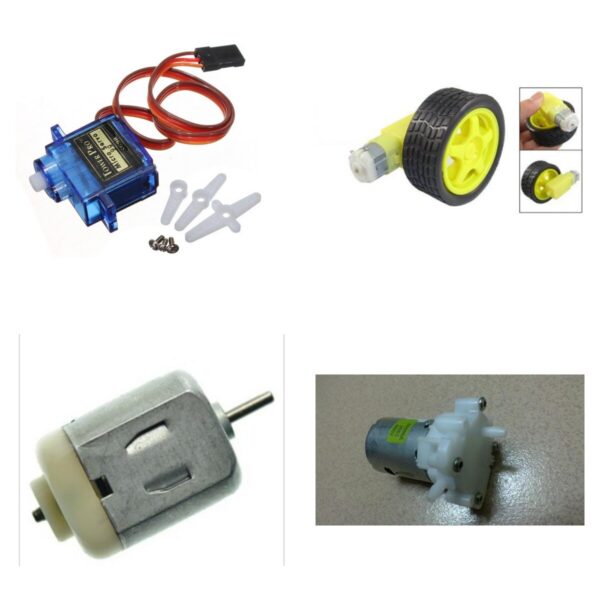
- Vibration Motor Alarm Kit 408: The Vibration Motor Alarm Kit 408 is compatible with the Miniature N20 High Speed Electric Motor for power applications.
- Miniature N20 High Speed Electric Motors: The kit can be integrated with the 9g SG90 Micro Servo Motor for RC model helicopters, airplanes, amateur robotics, and Arduino to create more complex alarm systems.
- 9g SG90 Micro Servo Motor for RC model helicopters, airplanes, amateur robotics, and Arduino: The kit can be used with the L293D Motor Driver Stepper Shield 4 Channel Stepper Motor Module for Arduino to control stepper motors in alarm projects.
- TT Motor 6V with Wheel and Gearbox: The kit can be used with the 5V Stepper Motor + ULN2003 Arduino Compatible Driver Board to control stepper motors in alert projects.
- RS-360SH DC Low Profile Water Liquid Pump Motor for Aquarium: The kit can be used with the MG995 55G Torque 13KG Metal Gear Servo Motor for Arduino to create more complex alert systems.
Technical FAQ
The low profile electric motor does not turn on?
Check the supplied voltage and ensure it is compatible with the motor specifications.
The speaker does not emit sound?
Check the connections and ensure the speaker is properly connected to the electronic control system.
The vibration motor does not vibrate?
Check the supplied voltage and ensure it is compatible with the motor specifications.
The electronic control system does not recognize the kit components?
Check the connections and ensure that the components of the kit are properly connected to the electronic control system.

Reviews
There are no reviews yet.