 EN
 IT Italiano
 ES Español
 FR Français
 DE Deutsch
Description
Technical Description
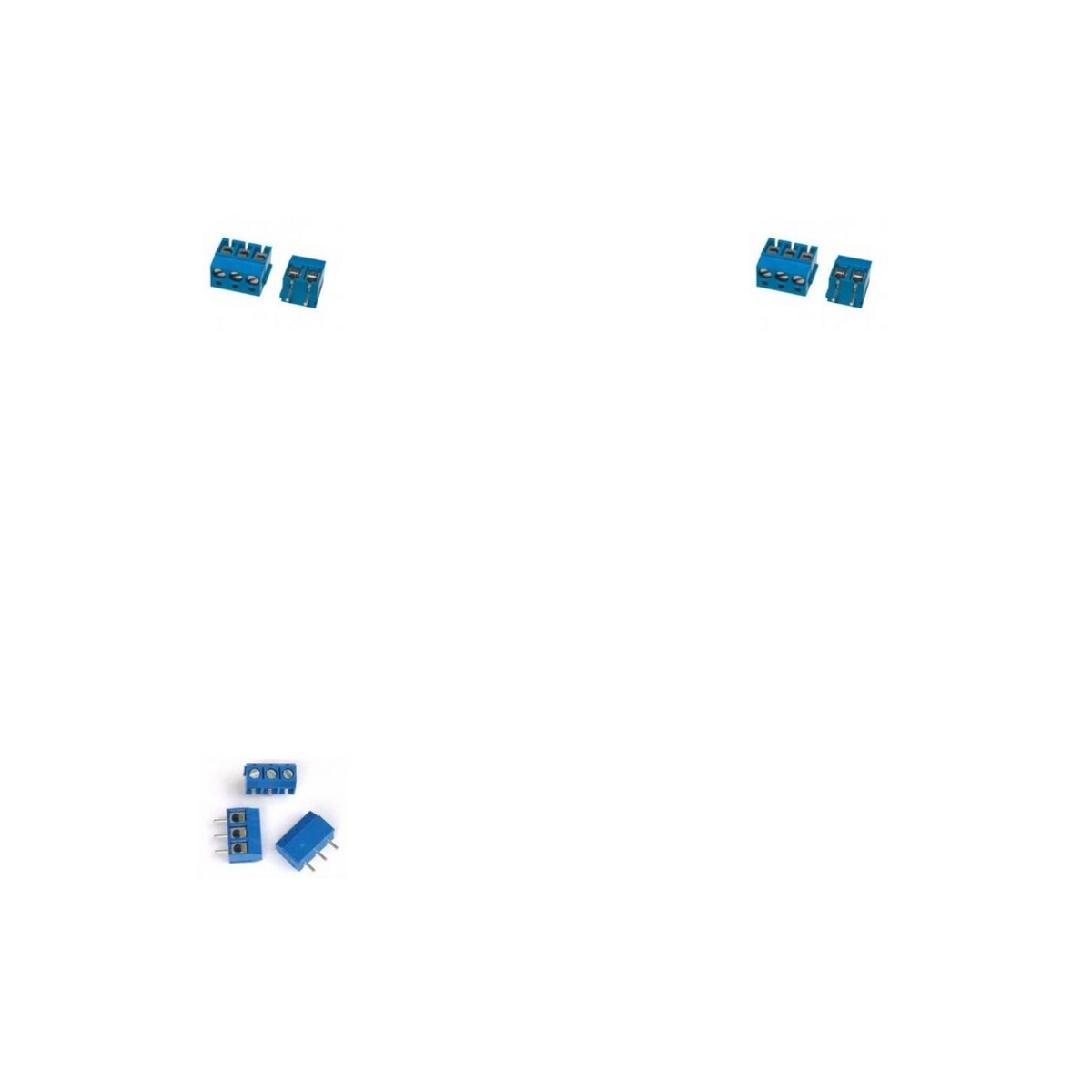
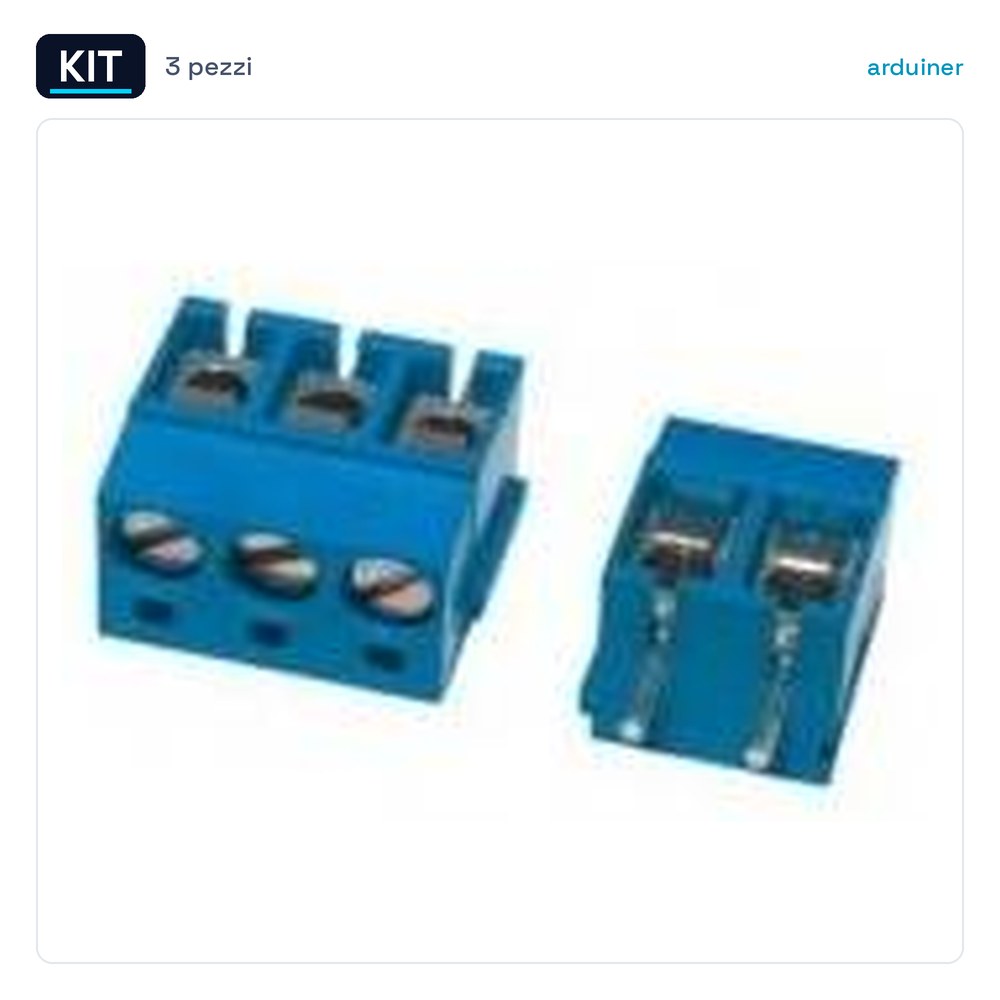
The kit includes a set of screw terminals useful for creating robust and flexible electrical connectors. Screw terminals are suitable for connecting electrical wires in various electronic projects, offering a secure grip and facilitating maintenance and modification of connections.
Screw terminals are available in different configurations (2 positions and 3 positions) and diameters (5mm and 3.5mm), allowing them to adapt to a wide range of applications.
This kit is particularly useful for projects requiring robust and flexible connectors, such as electronic prototypes, fixed installations, and laboratory applications.
Key Specifications
| Parameter | Value |
| Model | DG300 Screw Terminal Block 2 Positions 5mm |
| Quantity | 8 pieces |
| Model | DG300 Screw Terminal Block 3 Positions 5mm |
| Quantity | 4 pieces |
| Model | DG301 Screw Terminal Block 3 Positions 5mm |
| Quantity | 6 pieces |
| Diameter | 5mm and 3.5mm |
| Configuration | 2 positions and 3 positions |
| Container | N/D (see manufacturer’s technical sheet) |
Installation and Usage
- Check the compatibility of the clips with the cables being used.
- Insert the cables into the screw terminal positions.
- Tighten the screws to secure the cables in place.
- Test the connections for proper conductivity.
- Repeat the process for all clips in the kit.
Compatibility and Requirements
- The screw terminals in the kit are compatible with a wide range of electrical cables.
- It is recommended to use the kit with projects that require robust and flexible connectors.
- For proper installation, ensure you have the necessary tools for mounting the clips.
Limitations and Important Notes
- Screw terminals are not designed for permanent connections or extreme environments.
- Ensure the use of appropriate electrical cables to avoid damage.
- Do not use damaged or corroded terminals.
- Follow safety instructions during installation and use.
Troubleshooting
The terminals do not hold the cables securely.
Probable cause: Screws are not tightened properly.
Solution: Tighten the screws securely to ensure a firm grip.
Electrical conductivity is insufficient.
Probable cause: Cables are not properly inserted or damaged.
Solution: Check and replace damaged cables or ensure proper insertion.
The terminals loosen quickly.
Probable cause: Screws are not tightened with the appropriate torque.
Solution: Use the correct torque to tighten the screws securely.
The terminals are damaged.
Probable cause: Use in extreme conditions or inadequate maintenance.
Solution: Replace damaged wire clamps with new ones.
Use cases
Home Security Alarm System
Objective: Secure and flexible cable connections for the alarm system.
What’s needed: Wire clamps with screws for robust and flexible connectors.
Steps: 1) Install wire clamps with screws along the cable route. 2) Connect the cables to the clamps. 3) Tighten the screws securely. 4) Test the system for proper conductivity.
Expected result: A secure and flexible home security alarm system.
Electronic Prototyping Project
Objective: Flexible connection between components.
What’s needed: Wire clamps with screws for robust and flexible connectors.
Steps: 1) Install wire clamps with screws along the cable route. 2) Connect the cables to the clamps. 3) Tighten the screws securely. 4) Test the connections for proper conductivity.
Expected result: A robust and flexible electronic prototype.
Installation of a lighting system
Objective: Safe and flexible connection of cables for the lighting system.
What you need: Screw terminals for robust and flexible connectors.
Steps: 1) Install the screw terminals along the cable path. 2) Connect the cables to the terminals. 3) Tighten the screws securely. 4) Test the system for proper conductivity.
Expected result: A safe and flexible lighting system.
Home Automation Project
Objective: Safe and flexible connection of cables for the home automation system.
What you need: Screw terminals for robust and flexible connectors.
Steps: 1) Install the screw terminals along the cable path. 2) Connect the cables to the terminals. 3) Tighten the screws securely. 4) Test the system for proper conductivity.
Expected result: A safe and flexible home automation system.
Electronic Lab Project
Objective: Safe and flexible cable connection for the laboratory system.
What’s needed: Screw terminals for robust and flexible connectors.
Steps: 1) Install screw terminals along the cable path. 2) Connect the cables to the terminals. 3) Tighten the screws securely. 4) Test the system for proper conductivity.
Expected outcome: A safe and flexible laboratory system.
Audio installation project
Objective: Safe and flexible cable connection for the audio system.
What’s needed: Screw terminals for robust and flexible connectors.
Steps: 1) Install screw terminals along the cable path. 2) Connect the cables to the terminals. 3) Tighten the screws securely. 4) Test the system for proper conductivity.
Expected outcome: A safe and flexible audio system.
Security installation project
Objective: Secure and flexible cable connection for the security system.
What you need: Screw terminals for robust and flexible connectors.
Steps: 1) Install the screw terminals along the cable route. 2) Connect the cables to the terminals. 3) Tighten the screws securely. 4) Test the system for proper conductivity.
Expected result: A secure and flexible security system.
Communication installation project
Objective: Secure and flexible cable connection for the communication system.
What you need: Screw terminals for robust and flexible connectors.
Steps: 1) Install the screw terminals along the cable route. 2) Connect the cables to the terminals. 3) Tighten the screws securely. 4) Test the system for proper conductivity.
Expected result: A secure and flexible communication system.
In the package
- 8 Pieces DG300 Screw Terminal Block 2 Positions 5mm
- 4 Pieces DG300 Screw Terminal Block 3 Positions 5mm
- 6 Pieces DG301 Screw Terminal Block 3 Positions 5mm
Complete the Project
- 6 Pieces DG301 Screw Terminal Block 3 Positions 5mmDG301 Screw Terminal Block 3 Positions 5mm: For robust and flexible connections in electronic projects.
Technical FAQs
How can I connect cables to screw terminal blocks?
Insert the cables into the positions of the screw terminal block and tighten the screws to ensure a secure grip.
What are the usage limitations of screw terminal blocks?
Screw terminal blocks are not designed for permanent connections or extreme environments. Use them only under standard operating conditions.
What tools are required for the installation of screw terminal blocks?
For installation, a set of screws and a mounting tool for the terminal blocks is required.
What are the requirements for using screw terminal blocks?
Ensure you use appropriate electrical cables and follow safety instructions during installation and use.

Reviews
There are no reviews yet.