 EN
 IT Italiano
 ES Español
 FR Français
 DE Deutsch
Description
Technical Specifications
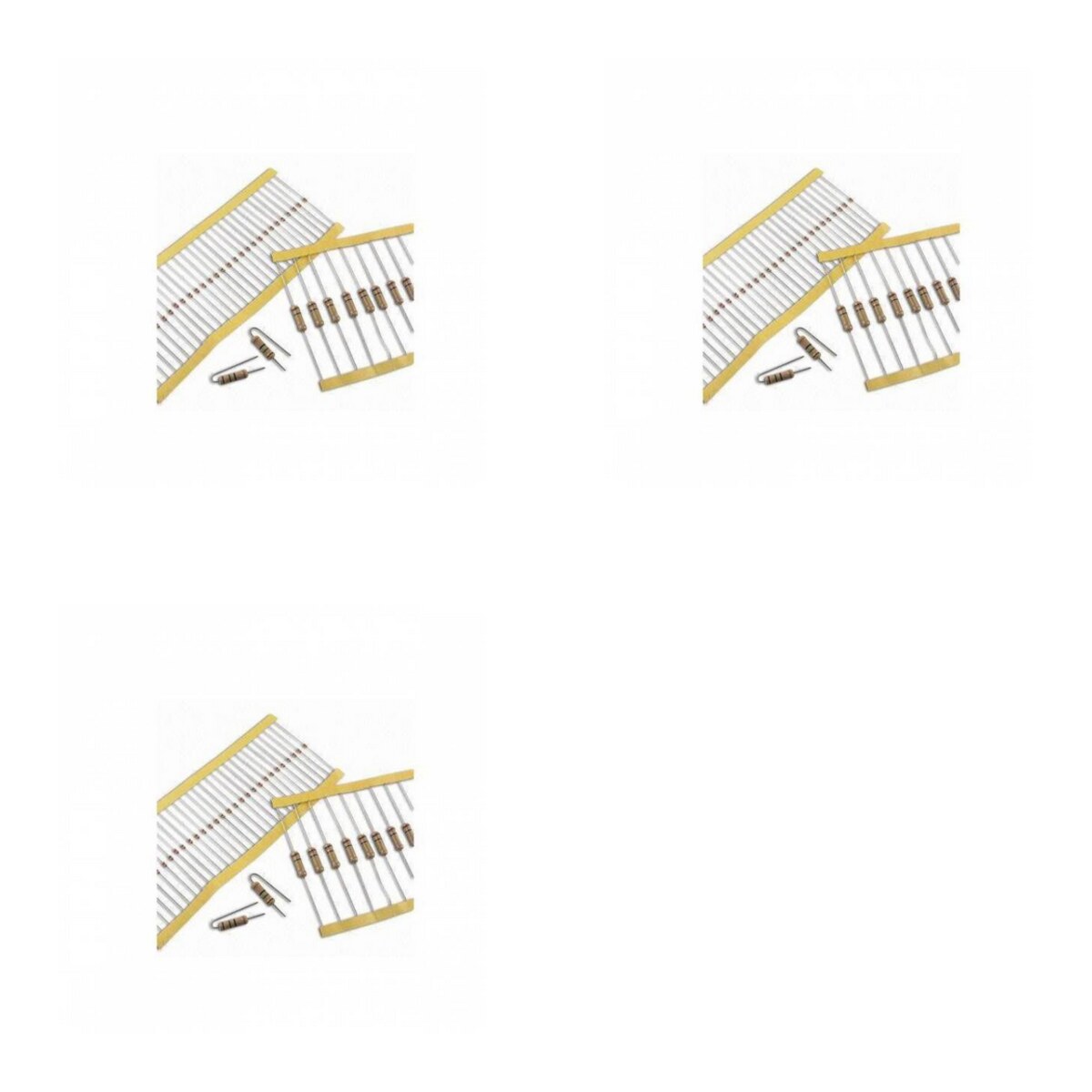
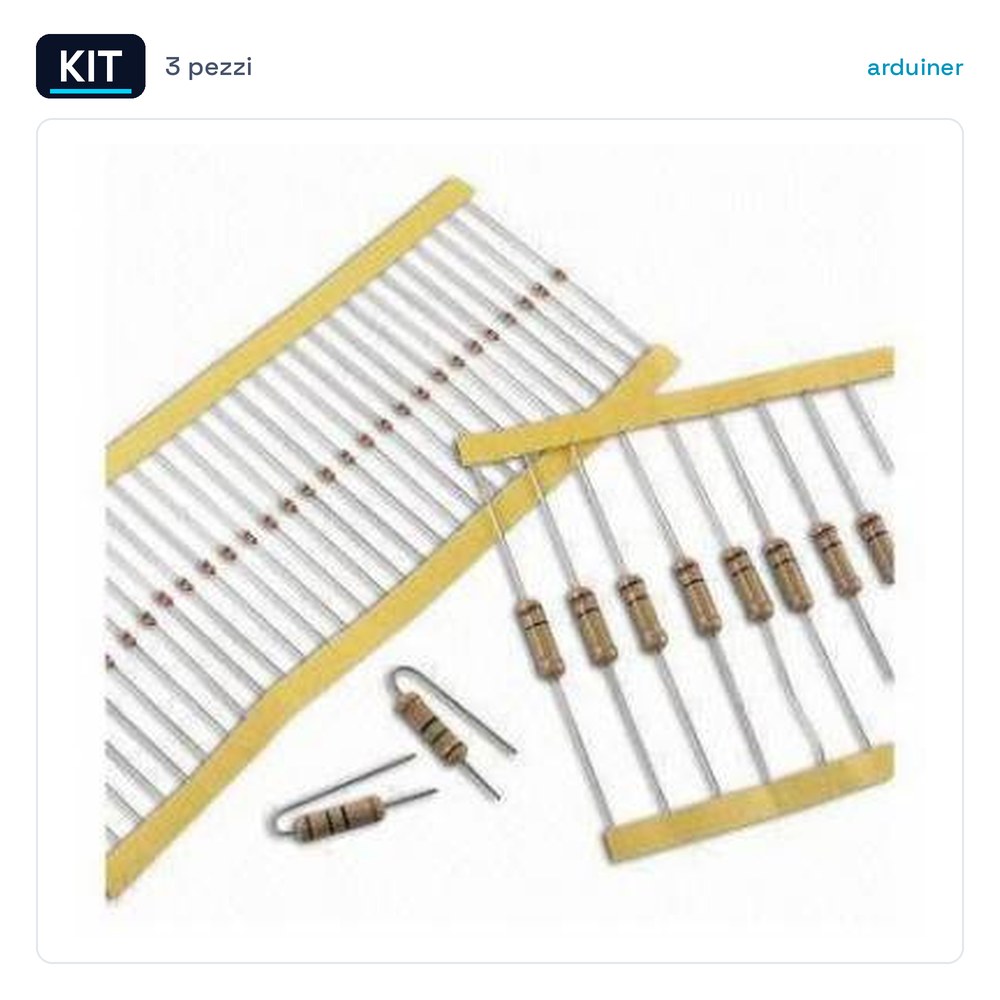
The 50 Piece Resistor Kit 6.8K ohm, 4.7K ohm and 9.1K ohm is a set of electronic components useful for electronic prototyping projects. Each resistor is characterized by a 5% tolerance and a power dissipation of 1/4 watt. These resistors are suitable for the realization of electronic circuits that require a resistance of 6.8K ohm, 4.7K ohm and 9.1K ohm.
The resistors are supplied in plastic containers organized to facilitate their identification and use. Each resistor is labeled with the resistive value and tolerance.
This kit is particularly useful for projects that require resistors of different values for the realization of basic circuits, such as voltage dividers, current limiting and other basic applications in electronics.
Key Specifications
| Parameter | Value |
| Model | Resistor Kit |
| Resistive Value | 6.8K ohm, 4.7K ohm, 9.1K ohm |
| Tolerance | 5% |
| Power Dissipation | 1/4 watt |
| Quantity | 5 pieces of 6.8K ohm, 50 pieces of 4.7K ohm, 50 pieces of 9.1K ohm |
| Container | Plastic organized |
Installation and Usage
- Verify the resistive value of the resistors using a multimeter.
- Select the appropriate resistor for the circuit to be built.
- Connect the resistor to the electronic circuit according to the project specifications.
- Verify the correct installation and operation of the circuit.
- Test the circuit with a voltage generator or a power supply.
Compatibility and Requirements
- This kit is compatible with a wide range of electronic circuits and Arduino projects.
- A multimeter is required for measuring the resistive value to use this kit.
- It is recommended to have a voltage generator or a power supply for circuit testing.
Important Limitations and Notes
- This kit does not include resistors of other values.
- The resistors are suitable for applications requiring a power dissipation of 1/4 watt.
- Make sure to use a multimeter for the correct identification of the resistive value.
- The resistors are not suitable for applications requiring a power dissipation greater than 1/4 watt.
Troubleshooting
The resistor does not measure the correct value.
Probable cause: The resistor may be damaged or incorrectly labeled.
Solution: Verify the resistive value using a multimeter and replace the resistor if necessary.
The circuit does not work correctly.
Probable cause: The resistor may be incorrectly connected or not suitable for the specific application.
Solution: Verify the correct installation of the resistor and the required resistance value for the project.
The resistor overheats.
Probable cause: The power dissipation required by the circuit exceeds the resistor’s power dissipation capacity.
Solution: Replace the resistor with one that has a higher power dissipation rating.
The measured resistance value does not match the labeled value.
Probable cause: The resistor may be damaged or incorrectly labeled.
Solution: Replace the resistor with a new one.
Use cases
Temperature Sensor for the Lab
Objective: To create a temperature sensor using a thermistor.
What is needed: 4.7K ohm and 9.1K ohm resistors for voltage division.
Steps: 1) Connect the thermistor to the circuit. 2) Use resistors for voltage division. 3) Connect the circuit to a microcontroller. 4) Program the microcontroller to measure temperature.
Expected result: The temperature sensor works correctly and measures the laboratory temperature.
Protection circuit for power supply
Objective: To create a protection circuit for a power supply.
What is needed: 6.8K ohm resistors to limit current.
Steps: 1) Connect the resistor between the power supply and the circuit. 2) Check the correct current limitation. 3) Test the circuit with a voltage generator.
Expected result: The protection circuit correctly limits the current and protects the circuit.
Voltage divider for a lighting project
Objective: To create a voltage divider for a lighting circuit.
What is needed: 4.7K ohm and 9.1K ohm resistors for voltage division.
Steps: 1) Connect the resistors in series. 2) Connect the lighting circuit. 3) Verify the correct voltage division.
Expected result: The lighting circuit works correctly with the correct voltage division.
Electronic prototyping project
Objective: To create an electronic prototyping circuit.
What is needed: 6.8K ohm, 4.7K ohm and 9.1K ohm resistors for various components.
Steps: 1) Choose the resistors needed for the project. 2) Connect the resistors to the circuit. 3) Verify the correct functioning of the circuit.
Expected result: The electronic prototyping circuit works correctly with the chosen resistors.
Home alarm system
Objective: To create a home alarm system.
What is needed: Resistors of 6.8K ohm and 4.7K ohm for voltage division.
Steps: 1) Connect the resistors for voltage division. 2) Connect the alarm system. 3) Verify the correct functioning of the system.
Expected result: The alarm system works correctly with the correct voltage division.
Home automation project
Objective: To create a home automation circuit.
What is needed: Resistors of 4.7K ohm and 9.1K ohm for voltage division.
Steps: 1) Connect the resistors for voltage division. 2) Connect the home automation circuit. 3) Verify the correct functioning of the circuit.
Expected result: The home automation circuit works correctly with the correct voltage division.
School laboratory project
Objective: To create a school laboratory circuit.
What is needed: Resistors of 6.8K ohm, 4.7K ohm, and 9.1K ohm for various components.
Steps: 1) Choose the resistors needed for the project. 2) Connect the resistors to the circuit. 3) Verify the correct functioning of the circuit.
Expected result: The school laboratory circuit works correctly with the chosen resistors.
Electronic Maintenance Project
Objective: To create an electronic maintenance circuit.
What is needed: Resistors of 6.8K ohm, 4.7K ohm, and 9.1K ohm for various components.
Steps: 1) Choose the resistors needed for the project. 2) Connect the resistors to the circuit. 3) Verify the correct functioning of the circuit.
Expected result: The electronic maintenance circuit works correctly with the chosen resistors.
In the package
- 5 pieces of 6.8K ohm resistors, 50 pieces of 4.7K ohm resistors, 50 pieces of 9.1K ohm resistors.
Complete the project
- 50 Pieces Resistor 6.8K ohm 6800 ohm 1/4w 1/4 w 5%: For the construction of basic circuits with resistors of various values.
- 50 Pieces Resistor 1000 ohm 1k ohm 1/4w 1/4 w 5%: For the construction of protection circuits with higher power resistors.
- 50 Pieces Resistor, 10000 ohm, 10k, ohm 1/4w 1/4 w 5%, Arduino compatible resistors: For the construction of voltage divider circuits with resistors of various values.
- 50 Pieces Resistor 100 ohm 1/4w 5%: For the construction of electronic prototyping circuits with resistors of various values.
- 50 Pieces Resistor 220 ohm 1/4w 1/4 w 5%
Technical FAQs
What is the tolerance of the resistors?
The tolerance of the resistors is 5%.
What is the power dissipation of the resistors?
The power dissipation of the resistors is 1/4 watt.
Why does the circuit not work correctly?
Check the correct installation of the resistor and the required resistance value for the project.
Why does the resistor overheat?
The power dissipation required by the circuit exceeds the resistor’s capacity.
Reviews
There are no reviews yet.