 EN
 IT Italiano
 ES Español
 FR Français
 DE Deutsch
Description
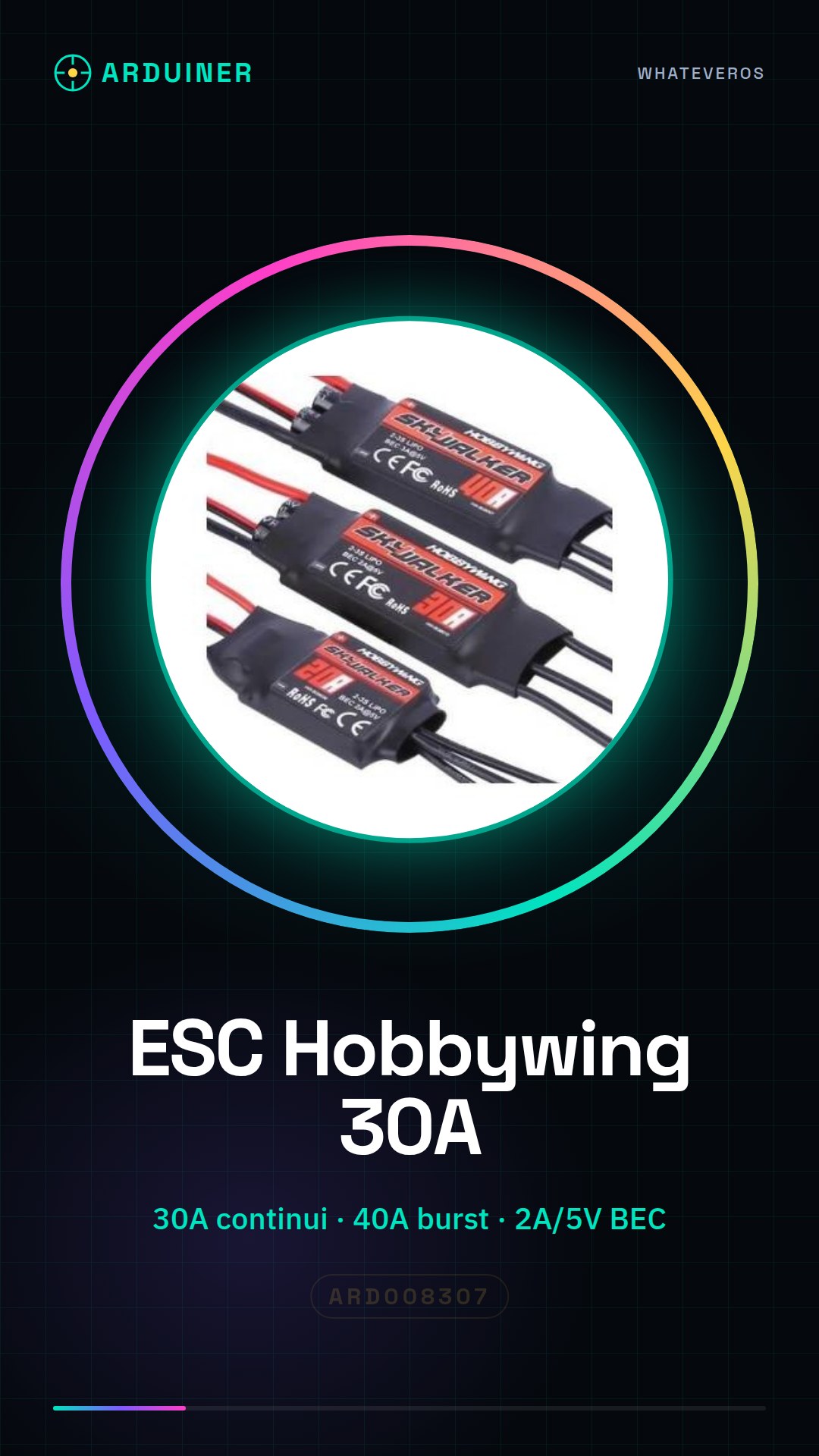
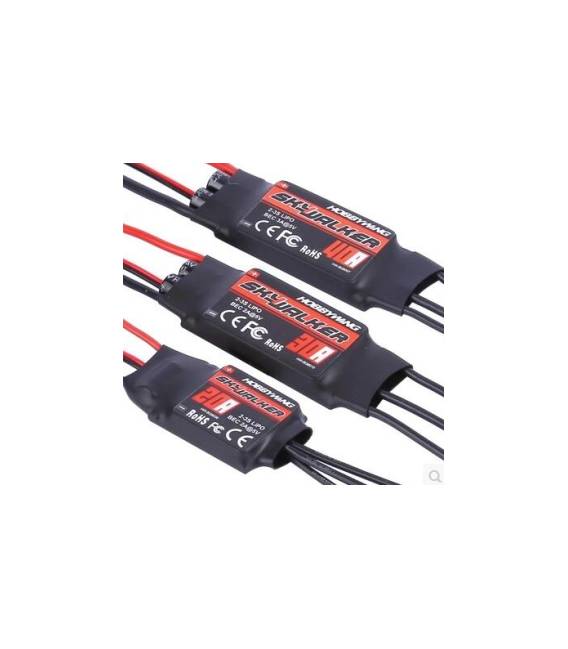
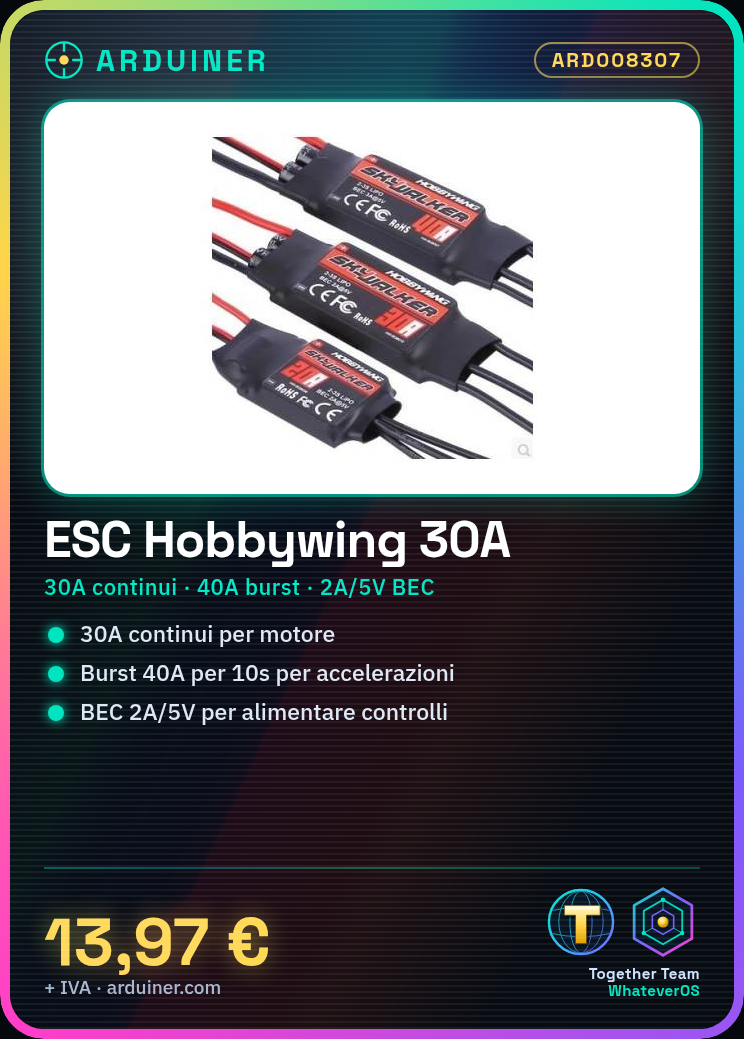
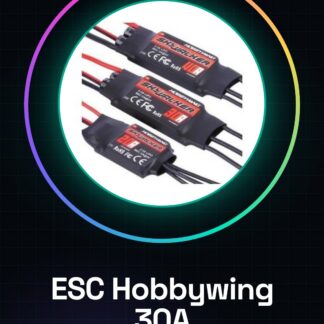
Hobbywing 30A Brushless ESC – Color: black – Material: glass fiber – Model: Pentium-30A – Output: 30A continuous, Burst 40A up to 10s – Input voltage: LiPo 2-4 cells or NiCd / NiMH 5-12 cells (not included) – BEC Output: 2A / 5V (linear mode) – Maximum speed: 210,000 rpm for 2-pole motor, 70,000 rpm for 6-pole motor, 35,000 rpm for 12-pole motor – Suitable for R/C helicopter – User manual included Dimensions: 1.97 in x 0.98 in x 0.39 in (5.0 cm x 2.5 cm x 1.0 cm) Weight: 27 g (0.95 oz) Tutorial: How to use the Hobbywing 30A ESC The Hobbywing 30A ESC is ideal for beginner and intermediate pilots seeking a cost-effective yet sufficiently performing motor for their aero-modelling projects. What you need ESC Hobbywing 30A Motor Cell Battery Power cable R/C transmitter Steps 1. Check the motor specifications for correct voltage and amperage. 2. Connect the power cable to the ESC. 3. Connect the motor to the ESC. 4. Connect the battery to the power cable. 5. Set the R/C transmitter for the ESC. 6. Calibrate the ESC with a calibration software. 7. Check the maximum allowed voltage on the datasheet. 8. Start testing the ESC in flight or on a test cart. Mini-project Build a test aircraft using the Hobbywing 30A ESC, a motor, and a 3S 1800mAh battery. Complete in about 30 minutes. Common errors Do not calibrate the ESC with voltages higher than specified. Do not use batteries of a different voltage than specified. Do not connect the battery directly without going through the ESC. Do not exceed the motor’s maximum amperage. Recommended accessories 3S 1800mAh battery 2208 motor R/C transmitter Test cart Frequently asked questions Can the ESC work with 2S batteries? Check the datasheet to see if the ESC supports 2S voltage. How long does calibration take? Calibration takes about 5-10 minutes. Can I use a more powerful motor? Check the datasheet for the maximum amperage supported.
Reviews
There are no reviews yet.