 EN
 IT Italiano
 ES Español
 FR Français
 DE Deutsch
Description
Technical Description
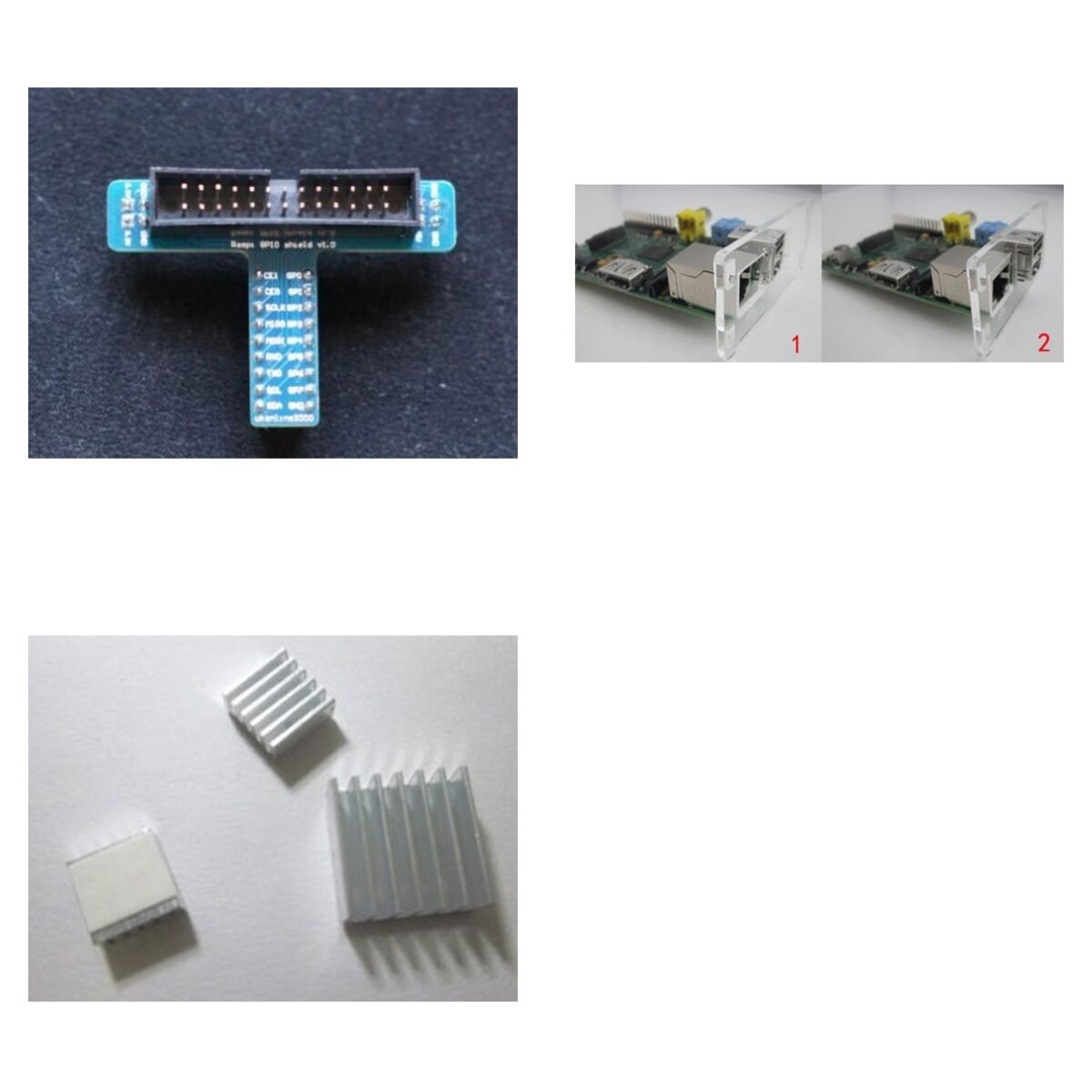
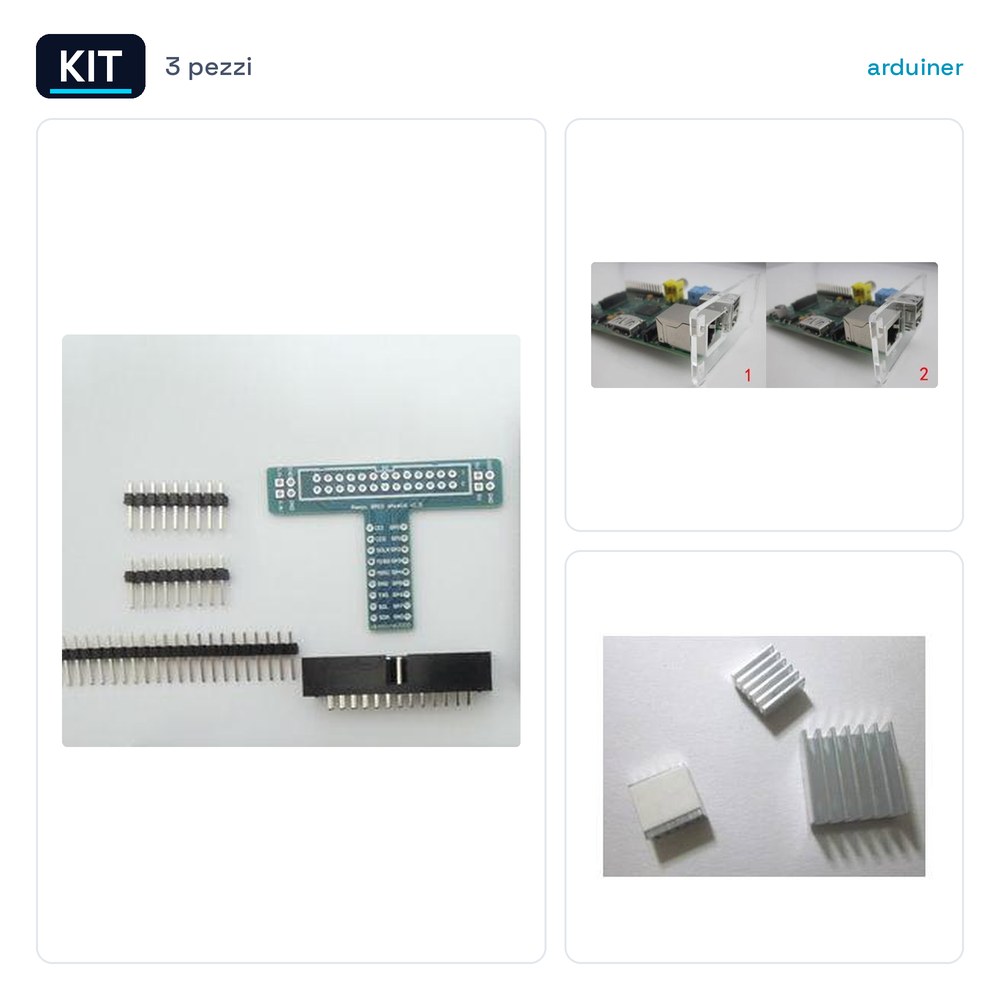
The T-GPIO Adapter Board+FC-26P Lead for Raspberry PI, Transparent Case in Plexiglas and 3 Pieces of Heat Sinks for Raspberry is a set of components designed to facilitate the connection and protection of Raspberry PI boards. The T-GPIO adapter allows GPIO devices to be connected to Raspberry PI boards, while the FC-26P lead provides secure and reliable connectivity. The plexiglas case offers protection and visibility, allowing the board’s status to be monitored. The aluminum heat sinks help maintain the board’s temperature within a safe operating range.
This kit is suitable for projects that require GPIO connections, physical protection, and heat management for the Raspberry PI board. Each component is selected for its compatibility and utility in the context of development and prototyping on Raspberry PI.
Key Specifications
| Parameter | Value |
| Model | T-GPIO Adapter board+FC-26P Lead for Raspberry PI |
| Quantity | 1 |
| Connector Type | GPIO 40 pin |
| Lead | FC-26P |
| Cases | Transparent Plexiglas |
| Heat Sinks | 3 pieces in aluminum with adhesive |
| Cases Dimensions | N/D (see manufacturer’s technical sheet) |
| Container | N/D (see manufacturer’s technical sheet) |
Installation and Usage
- Ensure that the Raspberry PI board is turned off before proceeding with installation.
- Connect the T-GPIO adapter to the GPIO of the Raspberry PI board using the FC-26P cable.
- Apply aluminum heat sinks to the hot spots on the Raspberry PI board.
- Insert the Raspberry PI board into the transparent plexiglass case.
- Check that all connectors are securely connected and that the board is fully inserted into the case.
Compatibility and Requirements
- This kit is compatible with various versions of Raspberry PI boards that use the 40-pin GPIO connector.
- A separate power cable is required to supply power to the Raspberry PI board.
- To use the T-GPIO adapter, a compatible GPIO device with the 40-pin GPIO connector is required.
Limitations and Important Notes
- The T-GPIO adapter does not replace the original GPIO connector on the Raspberry PI board.
- Aluminum heat sinks are designed to reduce heat, but they are not sufficient to handle overloading conditions.
- The plexiglass case does not offer protection against bumps or impacts.
- The kit does not include a power supply system.
Troubleshooting
The FC-26P cable does not connect properly to the T-GPIO adapter.
Probable cause: The connector may be damaged or dirty.
Solution: Check for dust or physical damage and clean or replace the connector.
The Raspberry PI card does not respond after installing the kit.
Probable cause: The card may not be properly powered.
Solution: Check that the power cable is properly connected and that the power supply is functioning.
The heat sinks do not adhere to the Raspberry PI card.
Probable cause: The surface of the card may not be clean or smooth.
Solution: Clean the surface of the board before applying the heat sinks.
The plexiglas case cracks during installation.
Probable cause: The case may have been forced or handled improperly.
Solution: Gently reassemble the case and check that the board is inserted correctly.
Use cases
Home Temperature Sensor
Objective: Monitor the internal temperature of the house.
What’s needed: T-GPIO Adapter Board+FC-26P Lead for Raspberry PI, Transparent Plexiglas Case and 3 Heat Sinks for Raspberry.
Steps: 1) Connect a temperature sensor to the GPIO of the Raspberry PI board. 2) Install the Raspberry PI board in the transparent case. 3) Configure the software to detect and record the temperature.
Expected result: The internal temperature of the house is continuously monitored and recorded.
Home Automation Project
Objective: Control home devices with the Raspberry PI board.
What’s needed: T-GPIO Adapter board+FC-26P Cable for Raspberry PI, Transparent Plexiglas Case and 3 Pieces of Heat Sinks for Raspberry.
Steps: 1) Connect GPIO devices to the T-GPIO connector. 2) Install the Raspberry PI board in the transparent case. 3) Configure the software to control home devices.
Expected result: Home devices can be controlled via the Raspberry PI board.
School Lab Project
Objective: Conduct electronics experiments with the Raspberry PI board.
What’s needed: T-GPIO Adapter board+FC-26P Cable for Raspberry PI, Transparent Plexiglas Case and 3 Pieces of Heat Sinks for Raspberry.
Steps: 1) Connect sensors and actuators to the GPIO of the Raspberry PI board. 2) Install the Raspberry PI board in the transparent case. 3) Configure the software to run electronic experiments.
Expected outcome: Students can perform electronic experiments using the Raspberry PI board.
Industrial Prototyping Project
Objective: Test industrial devices with the Raspberry PI board.
What is needed: T-GPIO Adapter board+FC-26P Lead for Raspberry PI, Transparent Plexiglas Case and 3 Heat Sinks for Raspberry.
Steps: 1) Connect industrial devices to the GPIO of the Raspberry PI board. 2) Install the Raspberry PI board in the transparent case. 3) Configure the software to test industrial devices.
Expected outcome: Industrial devices can be tested using the Raspberry PI board.
Home System Maintenance Project
Objective: Monitor and control home systems using the Raspberry PI board.
What’s needed: T-GPIO Adapter board+FC-26P Cable for Raspberry PI, Transparent Plexiglas Case and 3 Pieces of Heat Sinks for Raspberry.
Steps: 1) Connect sensors and actuators to the GPIO of the Raspberry PI board. 2) Install the Raspberry PI board in the transparent case. 3) Configure the software to monitor and control home systems.
Expected result: Home systems can be monitored and controlled using the Raspberry PI board.
Garage Automation Project
Objective: Control garage lighting using the Raspberry PI board.
What’s needed: T-GPIO Adapter board+FC-26P Cable for Raspberry PI, Transparent Plexiglas Case and 3 Pieces of Heat Sinks for Raspberry.
Steps: 1) Connect light sensors and lighting actuators to the GPIO of the Raspberry PI board. 2) Install the Raspberry PI board in the transparent case. 3) Configure the software to control the garage lighting.
Expected result: The garage lighting can be controlled using the Raspberry PI board.
Environmental Conditions Monitoring Project
Objective: Monitor environmental conditions using the Raspberry PI board.
What’s needed: T-GPIO Adapter board+FC-26P Cable for Raspberry PI, Transparent Plexiglas Case and 3 Heat Sinks for Raspberry.
Steps: 1) Connect temperature and humidity sensors to the GPIO of the Raspberry PI board. 2) Install the Raspberry PI board in the transparent case. 3) Configure the software to monitor environmental conditions.
Expected outcome: Environmental conditions can be monitored using the Raspberry PI board.
Robotics prototyping project
Objective: Test robotic devices with the Raspberry PI board.
What’s needed: T-GPIO Adapter board+FC-26P Cable for Raspberry PI, Transparent Plexiglas Case and 3 Pieces of Aluminum Heat Sinks with Adhesive.
Steps: 1) Connect sensors and actuators to the GPIO of the Raspberry PI board. 2) Install the Raspberry PI board in the transparent case. 3) Configure the software to test robotic devices.
Expected outcome: Robotic devices can be tested using the Raspberry PI board.
In the package
- 1 T-GPIO Adapter board+FC-26P Cable for Raspberry PI, 1 Transparent Plexiglas Case, 3 Pieces of Aluminum Heat Sinks with Adhesive
Complete the project
- T-GPIO Adapter board+FC-26P Cable for Raspberry PI: For connecting the Raspberry PI board to GPIO devices.
- Transparent Plexiglass Case for Raspberry PI: To protect and make the Raspberry PI board visible.
- Adapter from TF card to SD card for Raspberry pi: To use microSD cards with the Raspberry PI board.
Technical FAQs
Is the FC-26P cable compatible with other GPIO devices?
The FC-26P cable is designed to be used with the T-GPIO adapter and is not guaranteed to be compatible with other GPIO devices.
What are the limitations of the plexiglass case?
The plexiglass case offers protection and visibility, but does not offer protection against bumps or impacts.
How can I clean the plexiglass case?
The plexiglass case can be cleaned using a soft cloth and a plastic surface cleaner.
What are the limitations of aluminum heat sinks?
Aluminum heat sinks help to reduce heat, but they are not sufficient to handle overload conditions.
Reviews
There are no reviews yet.